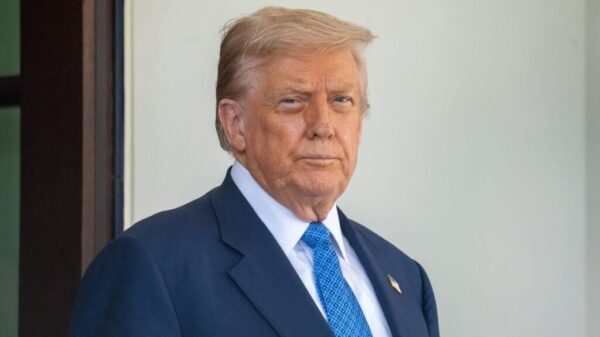











































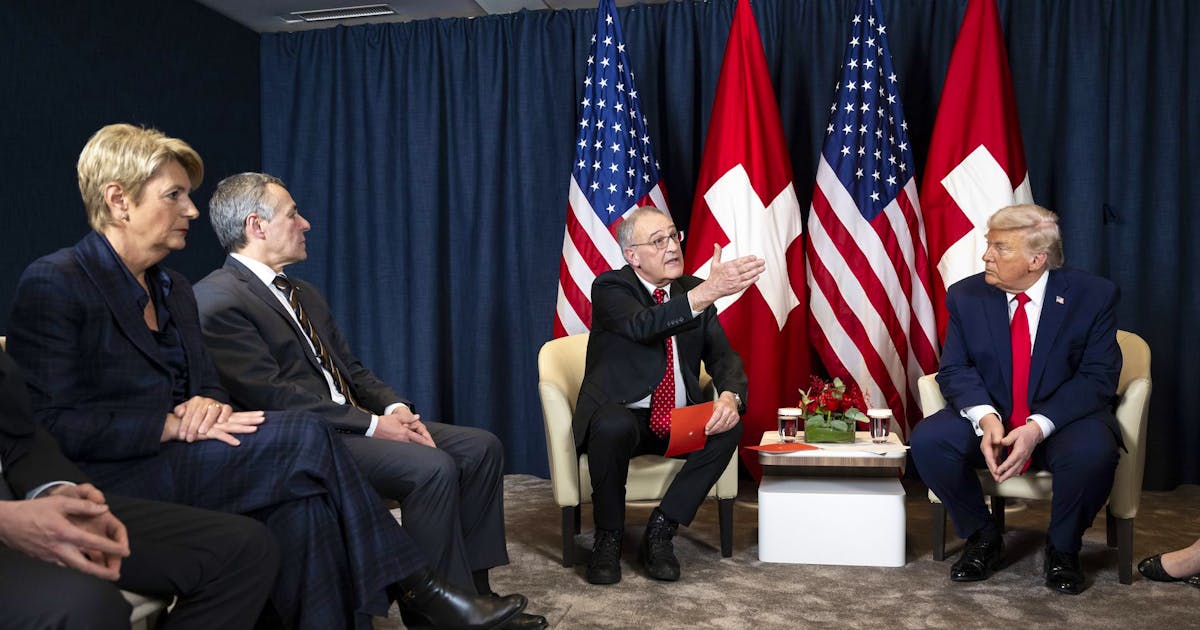
President Guy Parmelin engaged in discussions with US President Donald Trump during the World Economic Forum (WEF) in Davos, where the focus shifted dramatically from economic discussions to geopolitical issues. Despite traditionally being a platform for economic exchange among global elites, this year’s meeting saw vital topics such as artificial intelligence and climate change play a marginal role, overshadowed by Trump’s rhetoric on foreign policy.
The annual summit, which usually highlights economic concerns, faced a significant deviation this year. Trump’s speeches and initiatives, including a controversial proposal regarding Greenland and a new international body dubbed the “Peace Council,” dominated the agenda. His address, characterized by exaggerated claims about the U.S. global role, illustrated the shifting dynamics in international relations, as noted by attendees.
Former US Democratic congresswoman Jane Harman remarked that the conference felt bifurcated: one segment focused on industry leaders and another on geopolitics, with Trump firmly at the helm of the latter. The American President’s presence left a lasting impression, amid a backdrop of criticism from prominent figures such as California Governor Gavin Newsom, who condemned the perceived submissiveness of European leaders towards Trump.
Unlike previous visits, where he received acclaim and admiration from corporate leaders, Trump’s third appearance was met with scrutiny. Newsom expressed his disdain for the European leaders’ posture, calling it “pathetic” and suggesting they should have been more assertive. Conversely, NATO Secretary General Mark Rutte and Ukrainian President Volodymyr Zelensky acknowledged Trump’s support in bolstering defense against Russian aggression and offering security guarantees to Ukraine.
Despite some praise, the overall perception of Trump’s diplomacy was mixed, particularly among European allies. Canadian Prime Minister Mark Carney articulated a sentiment of irreversible division between the U.S. and its Western partners, emphasizing that Trump’s actions have created a rift that may be impossible to mend.
In the lead-up to his visit, Trump had threatened tariffs against eight European nations opposing his ambitions for Greenland, a NATO-affiliated territory. After much speculation, he reversed his position on acquiring the island, claiming that his administration was solely seeking a cooperative agreement regarding Arctic security. In a post on his Platform X, Trump stated that he had reached an understanding with Rutte to establish a security framework for the Arctic, clarifying that military action was not on the table.
The summit also witnessed discussions on artificial intelligence, albeit less prominently than anticipated. Tech billionaire Elon Musk and Nvidia CEO Jensen Huang participated for the first time, with Musk previously labeling the forum as “boring.” He addressed the energy demands of AI data centers and responded to criticisms surrounding U.S. tariffs on Chinese solar modules.
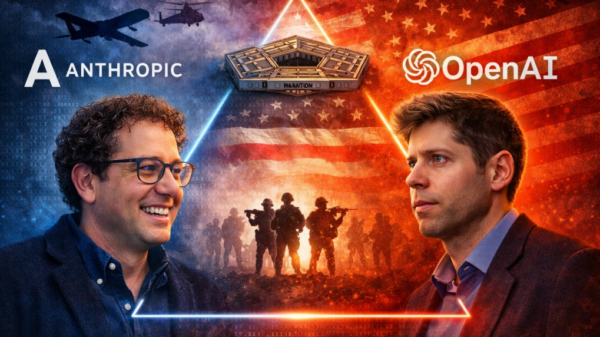
Huang dismissed concerns about job losses due to AI, arguing that infrastructure development would create a spectrum of employment opportunities across various sectors. Meanwhile, the competition in AI between the U.S. and China was underscored by Anthropic CEO Dario Amodei, who drew parallels between AI chip sales and the distribution of nuclear weapons.
While geopolitics took center stage, there remained a sense of optimism among technology leaders regarding economic collaboration and innovation. Larry Fink, co-chair of the World Economic Forum and head of BlackRock, encapsulated this outlook, quoting Musk’s assertion that it is better to be an optimistic leader than a pessimistic one. As the forum concluded, the broader implications of Trump’s geopolitical maneuvers and their effects on international alliances left many contemplating the future of global cooperation.
With material from the AP news agency.
See also BLIP-2 Achieves 536K Monthly Downloads, Surpassing Competitors with 65% VQAv2 Accuracy
 Artlist Launches Complete AI Video Ecosystem Revolutionizing Production in 2026
 Healwell AI Reports 354% Revenue Surge Amid Strategic AI Focus Shift; Stock Rally Continues
 Chinese AI Models Surge as Pinterest and Airbnb Choose Cost-Effective Alternatives
 Revolutionary Riff-Diff Method Designs Custom Enzymes with Unmatched Efficiency and Stability