





































World Economic Forum Focuses on Economic Outlook and AI Impact
DAVOS, Switzerland — The final day of the World Economic Forum (WEF) is underway, bringing into sharp focus the global economic outlook amid ongoing discussions about geopolitical tensions and the rise of artificial intelligence (AI). Leaders such as Christine Lagarde, president of the European Central Bank (ECB), Kristalina Georgieva, managing director of the International Monetary Fund (IMF), and Ngozi Okonjo-Iweala, director-general of the World Trade Organization (WTO), will provide their insights on these pressing issues today.
The economic outlook has darkened during the week, catalyzed by warnings from the leaders of Germany and Canada regarding the increasing influence of major powers and concerns that AI could precipitate an unemployment crisis. Lagarde emphasized that recent actions by the U.S. administration, particularly under President Trump, have led to a deterioration of trust in international agreements. “When you keep repeating the same pattern of undermining the rule of law, […] then parties begin questioning,” she stated, underscoring the uncertainty that looms large over international relations.
According to Paul Gruenwald, global chief economist at S&P Global Ratings, discussions surrounding tariffs and macroeconomic issues have been less pronounced at this year’s forum. He attributes this shift to the resilience of consumer spending and labor markets, paired with a robust investment boom in AI and data centers, which has helped buffer the global economy.
As the event is set to conclude before lunchtime, many delegates appear to have already departed, possibly to address the myriad challenges facing the world today.
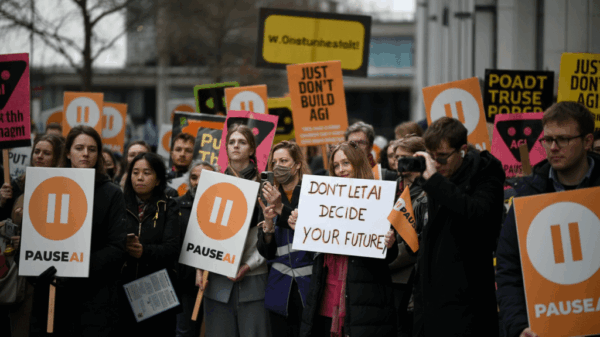
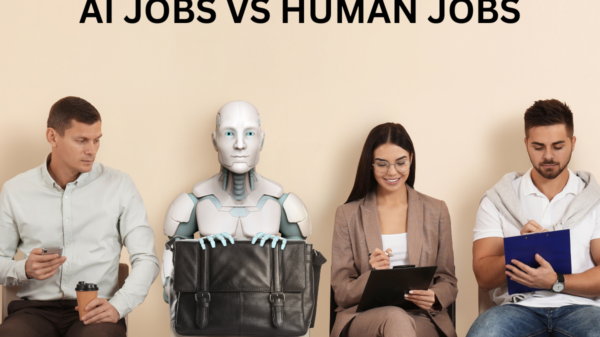
Earlier in the week, Georgieva warned that AI poses a significant threat to the labor market, describing it as a “tsunami hitting the labour market.” She noted that the IMF’s research indicates that 60% of jobs in advanced economies could be affected by AI over the next few years—either enhanced, eliminated, or transformed. “This is like a tsunami hitting the labour market,” she asserted, indicating that younger workers are particularly vulnerable to job displacement due to the automation of entry-level positions.
Despite the potential for AI to enhance job roles and consequently increase wages, Georgieva cautioned that this transformation would not benefit all. The pressure on jobs that remain unchanged could lead to diminished pay, adversely impacting the middle class. “The middle class, inevitably, is going to be affected,” she warned.
AI was a recurring topic at the forum, with Demis Hassabis of DeepMind suggesting that further breakthroughs are necessary to achieve artificial general intelligence (AGI). He predicts that AGI, which he defines as systems capable of human-like cognitive abilities including creativity, could be five to ten years away. Hassabis emphasized that current systems are not yet capable of producing entirely new theories or forms of art, likening the aspiration to achieving levels of creativity seen in figures like Einstein or Picasso.
Lagarde also raised alarms about the widening gap in wealth distribution, stating, “we have to be careful about the distribution of wealth.” She echoed a sentiment shared by nearly 400 millionaires and billionaires from 24 countries who have called for increased taxes on the wealthy. “If we don’t pay attention to that, we are heading for real trouble,” she warned.
Okonjo-Iweala expressed that the disruptions from tariffs and trade tensions instigated by previous administrations are unlikely to be entirely reversed, suggesting that leaders must prepare for an era characterized by significant uncertainties. She advised that building regional resilience will be crucial for navigating the complexities of the global landscape.
As the conference draws to a close, the themes of economic uncertainty and the transformative power of AI will likely resonate well beyond Davos. The discussions here may set the stage for future strategies that tackle not only economic stability but also the profound changes brought about by technological advancements.
See also Character AI Enforces Strict NSFW Ban, Enhances Moderation for User Safety
 Nvidia CEO Warns AI Expansion Sparks ‘Largest Infrastructure Boom’ in History
 South Korea Launches World’s First AI Basic Act, Raising Compliance Concerns for Startups
 Meta Suspends Global Teen Access to AI Characters Amid Regulatory Scrutiny
 Solana Dips Below $140 Amid ETF Outflows; Zero-Knowledge Proofs Shift Market Dynamics