




































The artificial intelligence assistant market has become a high-stakes arena, with Google’s Gemini presenting a robust challenge to OpenAI’s ChatGPT. This evolution is reshaping how consumers and enterprises engage with generative AI technology. Initially, OpenAI held a seemingly unassailable first-mover advantage, but the competitive landscape has shifted, emphasizing technical capabilities, integration depth, and strategic positioning over mere brand recognition.
According to Android Authority, Gemini’s architectural strengths are rooted in its seamless integration with Google’s ecosystem, granting users effortless access to applications such as Gmail, Google Drive, Calendar, and Maps. This native integration enhances the utility of an AI assistant, transforming it from a standalone tool into an intelligent layer that influences various aspects of digital work and personal productivity.
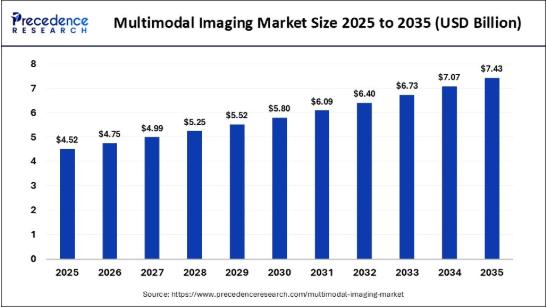
The technical differences between the two models are notable. Gemini’s multimodal architecture can process text, images, audio, and video natively, whereas ChatGPT’s multimodal capabilities were added incrementally through separate models like DALL-E. This distinction is critical for enterprise applications, where unified data processing minimizes latency and bolsters accuracy across diverse inputs.
Perhaps Gemini’s most significant advantage lies in its access to real-time information via Google Search integration. As highlighted by Android Authority, ChatGPT’s knowledge cutoff limits its effectiveness for time-sensitive queries, while Gemini can deliver up-to-the-minute data, making it invaluable for research, market analysis, and decision-making that requires current insights. This capability elevates the AI assistant from a static repository of knowledge to a dynamic intelligence tool.
The implications for enterprise adoption are substantial. Financial analysts require real-time market data, marketing professionals need immediate trend analysis, and legal experts must stay updated on regulatory changes. In these scenarios, ChatGPT’s knowledge gaps pose a significant barrier to practical utility. While OpenAI has attempted to rectify this with web browsing features in ChatGPT Plus, the experience lacks the seamless integration found in Gemini.
Mobile Optimization and Strategic Positioning
Google’s competitive edge extends beyond technical abilities into platform positioning. With Android holding nearly 70% of the global smartphone market, Gemini’s integration into Android devices offers a level of distribution that OpenAI cannot match. As a result, the AI assistant is increasingly becoming a default feature rather than an optional app, thereby altering user acquisition dynamics. Millions of users interact with Gemini without actively seeking AI assistance, which serves as a powerful advantage in the technology adoption curve.
This mobile-first strategy aligns with broader computing trends, as smartphones continue to evolve into primary computing devices for billions. An AI assistant optimized for mobile interaction, particularly one that leverages smartphone sensors for voice interaction, visual queries, and location-aware responses, holds significant structural advantages over desktop-focused counterparts.
For organizations already utilizing Google Workspace, Gemini offers deep integration that fosters substantial switching costs and competitive moats. This capability allows for the analysis of email threads, summarization of documents, scheduling of meetings, and generation of location-aware recommendations—all of which can be executed seamlessly within the Google ecosystem. According to Android Authority, such integration enables Gemini to perform complex multi-step tasks that would require ChatGPT users to navigate between applications.
Data privacy and security considerations also play a crucial role in enterprise adoption. Organizations using Google Workspace can maintain their data within Google’s security perimeter when employing Gemini, alleviating concerns associated with third-party AI tools. This advantage becomes increasingly essential as regulatory frameworks around AI and data protection tighten globally. For example, European organizations subject to GDPR requirements may find Gemini’s integrated approach simpler to manage compared to implementations that necessitate data transfer among multiple vendors.
The differing pricing models for these AI assistants reflect their strategic priorities. ChatGPT introduced a freemium model with a free tier and a $20 monthly Plus subscription, whereas Google has positioned Gemini with more varied access points. The basic Gemini experience is included for free with Google accounts, while advanced features are bundled into existing Google One subscriptions. This pricing structure creates the impression of feature enhancement rather than a separate purchase decision, easing consumer adoption.
For enterprises, pricing dynamics further favor Gemini. Organizations already using Google Workspace can access Gemini features as part of their existing contracts or through modest upgrades, while ChatGPT Enterprise necessitates separate procurement processes and vendor management. These operational considerations significantly impact enterprise adoption rates, highlighting that Google’s standing in the AI assistant market is likely stronger than consumer awareness alone would suggest.
Recent independent benchmarking shows that the performance gap between leading AI models has narrowed. While GPT-4 initially demonstrated superiority in natural language tasks, Google’s Gemini Ultra has achieved comparable or superior performance on several key metrics. This parity means user choice is increasingly influenced by factors like integration and access to current information instead of just raw capability.
Ultimately, the developer ecosystems surrounding these AI platforms will dictate long-term market viability. OpenAI’s API-first approach has cultivated a vibrant third-party developer community, while Google’s approach integrates Gemini more closely with its own services. These differing strategies create unique competitive dynamics: OpenAI encourages innovation at the application layer but risks disintermediation, whereas Google fosters more robust relationships but may limit third-party creativity.
As AI assistants transition from novelty to essential productivity tools, the competition is intensifying, with Google’s Gemini leveraging integration depth and real-time information access to challenge ChatGPT’s lead. The outcome of this dynamic rivalry will shape not just user preferences for AI assistants but also how artificial intelligence integrates into various facets of daily life and work.
See also Madras HC Launches AI Trial with “Superlaw Courts” Amid Gammon India’s Financial Turmoil
 Alphabet Thrives as Institutional Investors Bet Big on AI Stock Amid Market Shift
 xAI Seeks Award-Winning Writers for Grok Training at $40-$125 per Hour Amid Controversies
 Chilean Community Launches Human-Powered Chatbot to Combat AI’s Environmental Impact
 AI Adoption, Ethics, and Governance Drive Transformative Dialogue at Mastersoft’s Chennai Conclave