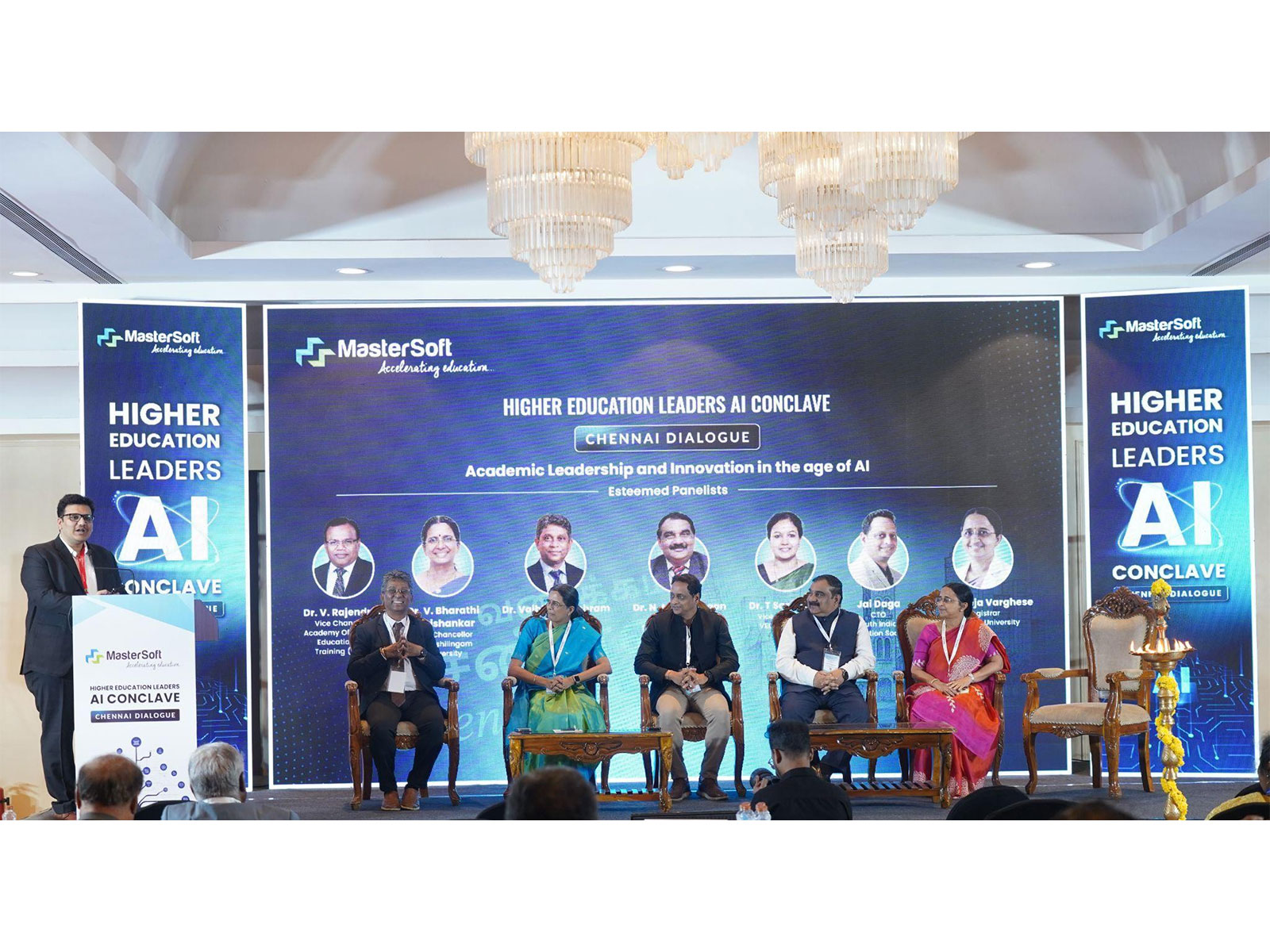
Artificial Intelligence, ethics, governance, and policy frameworks were prominently featured at the Higher Education Leaders AI Conclave – Chennai Dialogue 2026, held in New Delhi on January 31. The event, organized by Mastersoft ERP Solutions Pvt Ltd, gathered Vice-Chancellors, Registrars, and senior academic leaders to discuss the future of AI in Indian universities. A central theme of the conclave was the imperative for institutions to leverage AI responsibly while maintaining ethical integrity, regulatory compliance, and focusing on student-centric outcomes.
Shri Sham Somani, Founder & Managing Director of Mastersoft, delivered the welcome address, emphasizing the shift towards what he termed “Agentic AI.” He explained that future educational systems will not just assist users but will actively manage institutional workflows. “Menus will disappear. There will be one search bar, and AI will configure ERP systems, build question banks, and support teachers. But responsible use of AI is critical,” Somani stated, underscoring the need for governance-ready AI systems aligned with regulatory requirements.
During the event, Mr. Gaurav Somani, CEO & Co-founder of Mastersoft, highlighted the significance of data privacy, cybersecurity, GDPR alignment, ISO compliance, and regulatory integration as foundational elements for AI adoption. He cautioned that even a single applicant from the European Union subjects institutions to GDPR requirements, urging universities to prepare accordingly.
The discussions underscored a pressing need for institutional AI governance frameworks. Dr. Vaibhav Meshram emphasized that “every institute must have strong AI governance and ethical policies. Without integrity frameworks, plagiarism, data misuse, and academic disputes will multiply.” There was consensus among speakers that ethical safeguards must evolve alongside AI adoption, particularly in areas such as research, assessment, admissions, and evaluation.
Two panel discussions moderated by Mr. Gurudev Somani explored “Academic Leadership and Innovation in the Age of AI” and “Building Student-Centric Journeys in Higher Education.” The first panel featured experts including Dr. V. Bharati Harishankaran and Dr. N. Malmurugan, who spoke on governance reform, leadership readiness, and the ethical innovation necessary for embedding AI into university decision-making processes. The second panel focused on learner-centric transformations through personalized pathways and holistic campus ecosystems.
The conclave wrapped up with keynote addresses from Dr. T.P. Sasikumar, who discussed “Reimagining Institutions: The Journey to Universityhood,” and Dr. N. Jayasankaran, who addressed “Leadership Capacity to Capability – The Missing Link in Accreditation & Rankings.” Both speakers emphasized that sustainable excellence in higher education hinges on visionary leadership, governance maturity, and the ability to translate capacity into tangible outcomes.
The Chennai Dialogue reiterated a crucial message: while AI is poised to reshape universities, the trajectory of that transformation will largely depend on the frameworks of ethics, governance, and leadership established by these institutions. As AI continues to evolve, the call for responsible adoption and robust governance has never been more urgent.
For further information about Mastersoft and its offerings, visit Mastersoft’s official website.
See also OpenAI Confirms $200K Minimum Ad Spend for Limited ChatGPT Beta Testing
 Laos Launches Groundbreaking AI Ethics Readiness Report to Shape National Tech Policy
 OpenAI and Anthropic Drive Cloud Giants’ Revenue Surge, 3 Stocks to Buy by 2026
 Alignment Healthcare Appoints Adnan Mansour as CDO, Strengthening AI Strategy Amid Medicare Pressure
 Healwell AI Stock Surges 354% Amid Major Overhaul; Upcoming Earnings Test Critical