














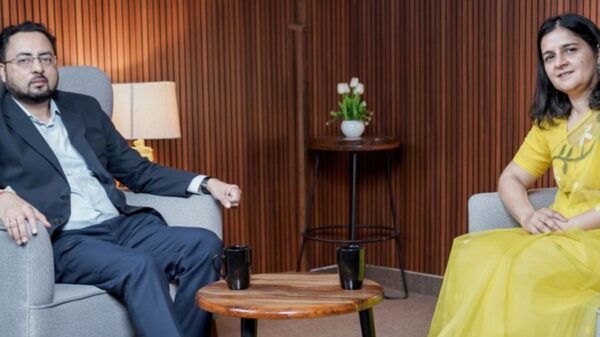


















Noam Solomon, CEO of Immunai, believes his company is pioneering a new frontier in the intersection of artificial intelligence and immunology. In a recent interview with The Jerusalem Report, Solomon highlighted that while ChatGPT and other conversational AI technologies are reshaping communication, Immunai aims to unlock “immune intelligence.” He described current advancements in AI as “the tip of the iceberg,” suggesting the potential for transformative applications across various domains.
Solomon emphasized the dual nature of the current AI landscape: it is both “overhyped and underestimated.” He pointed out that nearly every company claims to leverage AI technologies, yet he contends that only a select few are harnessing the right technology, data, and insights to tap into the profound opportunities that AI offers for the future of healthcare and beyond.
Established in 2018, Immunai focuses on utilizing AI to answer long-standing questions surrounding serious diseases such as cancer and autoimmune disorders. The company’s research aims to decode how the immune system reacts to aggressive treatments, including chemotherapy and immunotherapy. “We’re working with multiple partners, including major pharmaceutical companies, which are investing millions into our research,” Solomon noted.
Immunai’s primary objective is ambitious: to compile a comprehensive database containing blood samples and tissue biopsies from over a million patients to understand the various states of immune responses. Solomon acknowledged that mapping the immune system is a monumental task that may extend beyond a decade. “This endeavor could take more than 10 years, maybe even 15 years,” he stated.
So far, Immunai has amassed around 40,000 samples as part of its AMICA™ database, which is projected to double annually. The data includes samples from patients suffering from cancer-related conditions and autoimmune diseases such as Crohn’s disease, colitis, and lupus. Through AI-driven single-cell sequencing, the company can analyze thousands of immune cells from just a drop of blood, creating extensive computational maps that illustrate immune system behaviors pre-, during, and post-treatment.
“From one blood draw, we obtain hundreds of millions of measurements,” Solomon explained. “This data feeds into advanced AI systems, allowing us to identify patterns: who will respond to treatment, who may not, and who is at risk for severe side effects—and importantly, why.”
Reflecting on the complexities of his work, Solomon recalled advice from an early investor with a PhD in molecular biology from Harvard. The investor’s remark that “the immune system is infinitely complex” became a recurring theme in Solomon’s presentations. He adapted this perspective, claiming that while the immune system is “incredibly complex,” it is not insurmountable, and the challenges, though daunting, remain possible to overcome.
Immunai’s Promising Collaborations
Since its inception, Immunai has secured substantial funding, totaling $270 million, and formed partnerships with several pharmaceutical giants. In October, the company announced an $85 million research collaboration with AstraZeneca to leverage Immunai’s AI platform for identifying biological targets to develop specialized drugs for inflammatory bowel diseases, including Crohn’s disease and ulcerative colitis. This partnership builds on an earlier collaboration initiated in 2022, during which AstraZeneca invested approximately $18 million to utilize Immunai’s AI technology in oncology clinical trials.
In recent months, Immunai has expanded its network, announcing collaborations with U.S. medical institutions, including the Icahn School of Medicine at Mount Sinai, Weill Cornell Medicine, and Massachusetts General Hospital. These partnerships aim to enhance understanding of the immune system across autoimmune diseases and cancer treatments. Additionally, Immunai has recently partnered with Bristol Myers Squibb to bolster clinical development for some of their drugs, with more partnerships expected in the near future.
Solomon’s journey into the realms of AI, immunology, and biotechnology is deeply personal. Born in Ra’anana, Israel, he moved to the U.S. for post-doctoral research in mathematics at Harvard and MIT after earning two PhDs in math and computer science in Israel. His path shifted dramatically after witnessing his friend’s grandfather battle cancer, followed by the loss of his wife’s aunt to breast cancer, experiences that fueled his determination to contribute to solving such medical challenges.
“Forty percent of us will deal with cancer in our lifetime,” Solomon remarked, underscoring the universal impact of the disease. “If we can assist even a fraction of those individuals in receiving the right treatment at the right time, that is worth everything.” As Immunai continues to expand its research and partnerships, the implications of its work promise to reshape the landscape of immunology and personalized medicine, illustrating the profound potential of AI in healthcare.
See also Arvex AI Unveils Revolutionary Quantitative Investment Platform with Real-Time AI Insights
 Google DeepMind’s AlphaProteo Achieves 88% Success in Cancer Drug Design
 Univers Launches Global Impact AI Lab with AMD, Microsoft, and NUS to Drive Enterprise AI Innovation
 Consumers Trust Banks Over Retailers for AI Purchases, Signaling Shift in eCommerce Dynamics
 Yahoo Launches AI-Powered Scout Search Engine in Beta to Compete with Google and Perplexity