
















































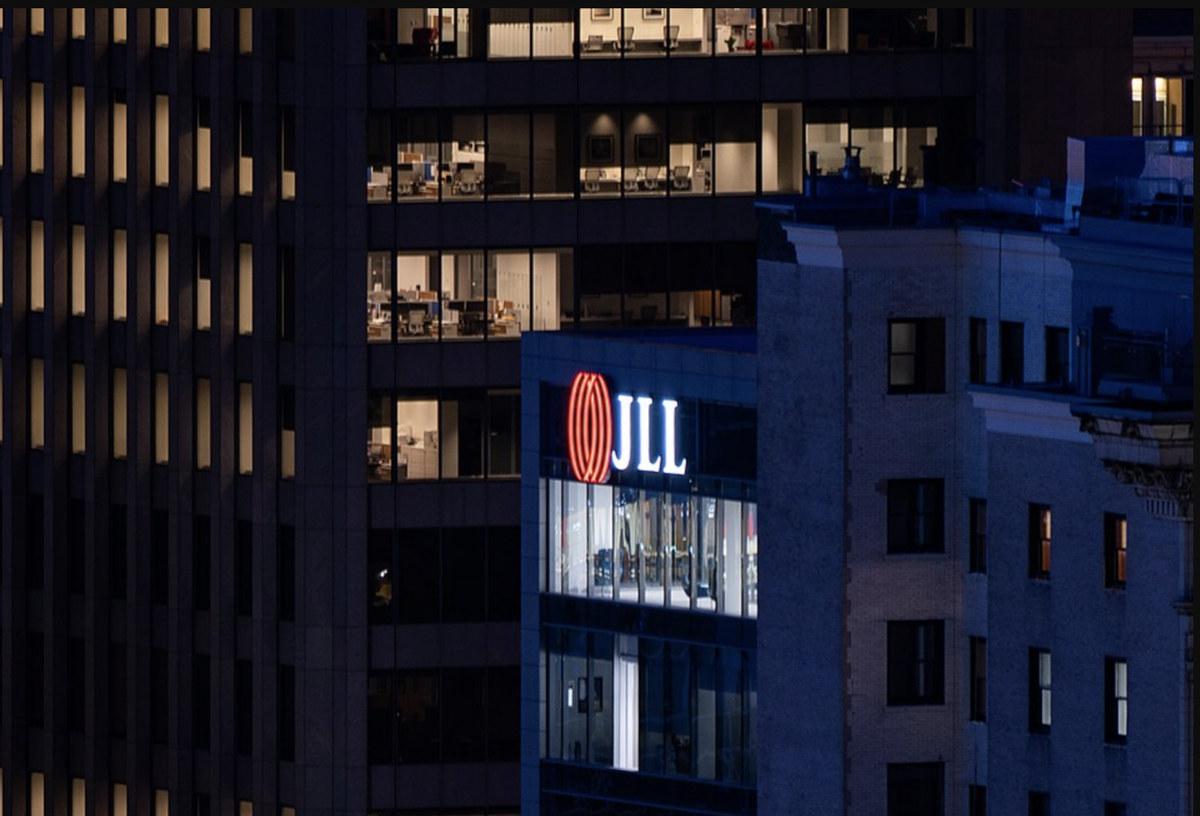
JLL, a prominent player in the brokerage and commercial real estate services sector, has outlined a robust growth strategy aimed at increasing shareholder value while embracing technological advancements. During an investor day conference held on Thursday, the company announced plans to launch a $200 million stock buyback program as part of its “Accelerate 2030” initiative.
The new buyback is part of a larger $2.2 billion repurchase authorization, supplementing an existing $800 million buyback approved by the board. JLL aims for an average annual increase of 16% in adjusted earnings per share as it seeks to enhance revenue and adopt artificial intelligence across its service lines. The total $3 billion repurchase ceiling marks the highest in the company’s history, reflecting its belief that it is undervalued in the public market. To date, JLL has already repurchased $75 million worth of its shares this year.
The aggressive forecasts for growth and substantial buyback plans were significant highlights of the investor day, which emphasized JLL’s commitment to technology and AI integration. Analysts at JPMorgan Chase noted that the company’s strategies positioned it favorably within the competitive landscape, assigning an “overweight” rating to the stock with a price target of $375 per share. Following the announcement, JLL shares rose over 2% on Friday, trading just above $300.
JLL’s early entry into the proptech sector has previously posed challenges, impacting earnings and investor sentiment. However, JPMorgan analysts observed that the company appears to be capitalizing on its experience in navigating technological advancements within the commercial real estate (CRE) industry. They highlighted that 40% of the firm’s non-reimbursable employees, including those in research and marketing, utilize JLL’s enterprise AI applications daily, while 80% of its investment sales processes leverage AI for buyer list management.
For the upcoming years, JLL projects an 8% compounded annualized revenue growth, focusing on internal investments, shareholder returns, and potential mergers and acquisitions (M&A). The management indicated that while the priorities remain unchanged, the open dialogue around larger-scale M&A reflects a shift in market dynamics, suggesting that industry leadership may consolidate among top players.
Management sees outsourcing of services as a significant growth avenue and aims to attract institutional and high-net-worth individuals to its investor platform, aligning with evolving portfolio needs across various sectors. This approach was detailed in the investor day presentation, which framed the Accelerate 2030 strategy around five core themes: expanding operations in sectors where JLL already excels, enhancing client relationships, building a competitive platform, leveraging data and AI, and investing in talent.
Chief Financial Officer Kelly Howe expressed confidence in JLL’s trajectory, stating, “These long-term financial targets reflect our confidence in JLL’s trajectory and our ability to drive top- and bottom-line growth, margin enhancement, and cash generation, through the cycle.” Howe emphasized the company’s financial strength and flexibility to continue investing in high-return opportunities while simultaneously returning capital to shareholders.
As JLL steers toward its ambitious goals for the next decade, its integration of AI and focus on shareholder value may serve as a model for others in the commercial real estate sector. The firm’s strategy not only seeks to elevate its market position but also reflects broader trends in how technology can transform traditional industries, paving the way for future growth in a rapidly evolving landscape.
See also Germany”s National Team Prepares for World Cup Qualifiers with Disco Atmosphere
 95% of AI Projects Fail in Companies According to MIT
 AI in Food & Beverages Market to Surge from $11.08B to $263.80B by 2032
 Satya Nadella Supports OpenAI’s $100B Revenue Goal, Highlights AI Funding Needs
 Wall Street Recovers from Early Loss as Nvidia Surges 1.8% Amid Market Volatility