















































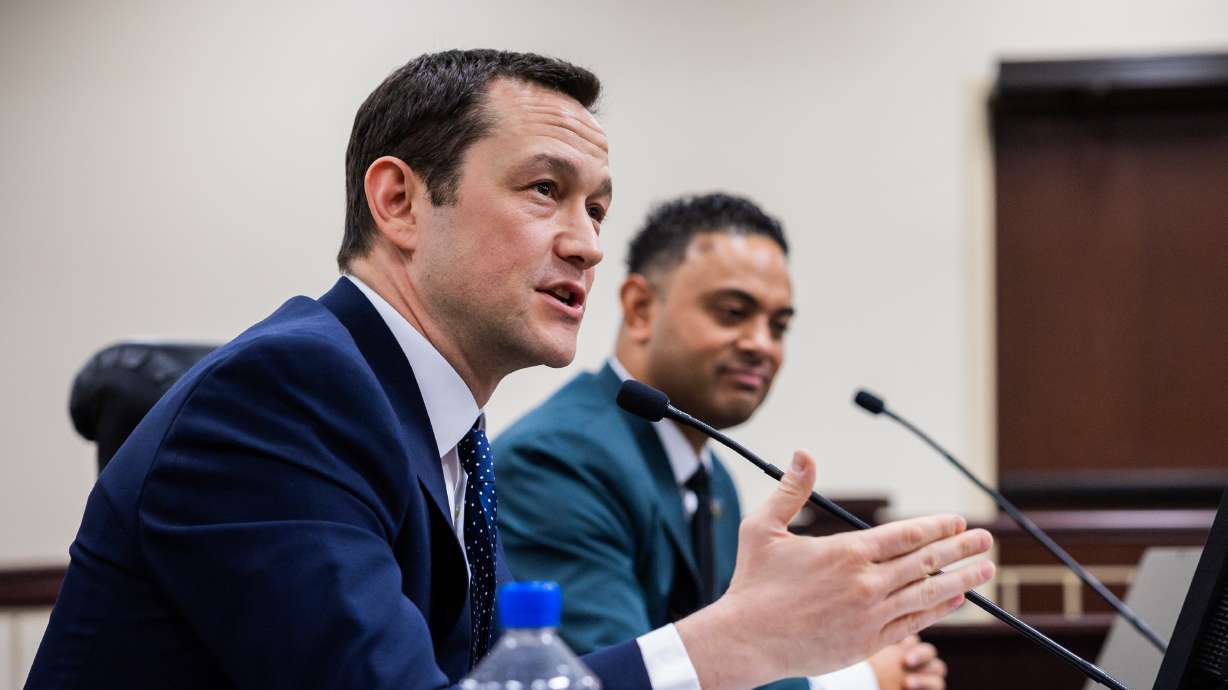
SALT LAKE CITY — Golden Globe-nominated actor Joseph Gordon-Levitt appeared at the Utah Capitol on Tuesday to advocate for a bill that would regulate artificial intelligence companies. The actor, recognized for his roles in “Inception,” “The Dark Knight Rises,” and “(500) Days of Summer,” expressed concerns about the impact of technology on children, particularly as a father of three.
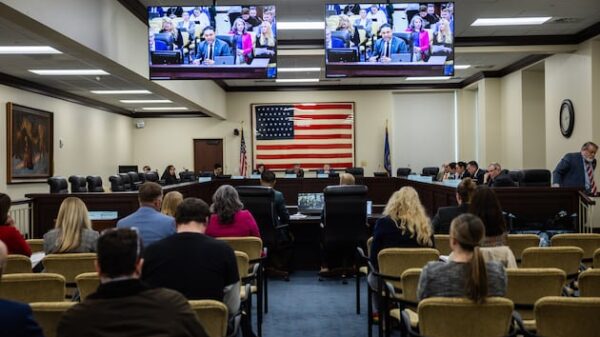
During his address to the House Economic Development and Workforce Services Committee, Gordon-Levitt emphasized his worry about powerful tech companies that he believes “are incapable of prioritizing the well-being of kids.” He urged lawmakers to take action, stating, “Utah, as far as I understand, has been a leader in the past protecting kids against these predatory tech companies, and now I think it’s time for Utah to be that leader again.” His appeal was rooted in both his enthusiasm for technology and his responsibilities as a parent, saying, “I’m asking you — as a tech enthusiast and as a businessman and as a fellow American and as a dad — please do the right thing and pass this bill.”
Gordon-Levitt characterized AI as “a really big deal” with the potential for significant positive impact, but he cautioned that the companies behind it are often “amoral” and primarily driven by profit motives. He noted the disparity between the regulation of simpler products and the oversight of powerful technologies, stating, “There are more laws in place governing how you make and sell a sandwich than there are governing this incredibly powerful, new revolutionary technology that’s going to change all of our lives.”
His passionate presentation seemed to resonate with the committee, which voted unanimously to advance HB286, a bill sponsored by Rep. Doug Fiefia, R-Herriman. The proposed legislation requires AI developers to create and publicly disclose plans aimed at safeguarding children and other vulnerable users, as well as to report any safety incidents. Additionally, the bill prohibits companies from misleading the public about AI-related risks or retaliating against employees who raise concerns about AI models.
Fiefia emphasized that the bill is designed to promote accountability without stifling innovation, saying, “That’s it. No content mandates. No government preapproval. No micromanaging algorithms. It doesn’t touch development, which means it doesn’t stifle innovation.” He highlighted a tragic case involving a California teen, Adam Raine, who died by suicide last year, with his parents alleging that OpenAI‘s chatbot, ChatGPT, had a role in the incident.
This was not Gordon-Levitt’s first foray into discussions about artificial intelligence in Utah; he previously spoke at the 2025 Utah AI Summit in December, cautioning against the potential for AI companions to replace human connections. He is currently working on a film about artificial intelligence, informed by research related to the subject.
While the bill garnered support from many, it faced criticism from a tech industry group and a Utah nonprofit focused on technology. May Kennedy, chief of staff for the Abundance Institute, expressed concerns about vague definitions within the bill, arguing that they could undermine its effectiveness. “There’s several pieces of the bill that lack specificity … which will not help create the desired effect that we’re looking for,” she remarked, particularly noting ambiguity around what constitutes “severe emotional distress” for minors.
Speaking on behalf of national advocacy group TechNet, Andrew Wood labeled the bill as “overly prescriptive and untested,” warning that such regulations could hinder Utah’s innovation economy. “That would make Utah an outlier nationally and could meaningfully set back Utah’s innovation economy,” he said.
Despite the dissent, numerous advocates backed the bill as a necessary measure for transparency and safety. Elizabeth Jenkins, a mother of four and advisor to the Child First Policy Center, highlighted the known risks associated with AI for children, labeling the bill as “a tool for transparency and basic accountability that is deeply, deeply needed.”
Ally Terry, co-founder of G-Rated School, echoed these sentiments, urging lawmakers to take responsibility for ensuring children’s safety in an increasingly complex technological landscape. “We have a lot of potential with AI, and we have a lot of known harms with AI, especially when it comes to kids,” she said.
While all lawmakers on the panel voted in favor of advancing HB286, some expressed their own reservations. Rep. Paul Cutler, R-Centerville, noted the need for clearer definitions, while Rep. Leah Hansen, R-Saratoga Springs, reminded the committee that families also share the responsibility for their children’s safety.
As the hearing concluded, Gordon-Levitt’s presence created a notable buzz, with several lawmakers from other committees eager to capture a moment with the actor. However, he opted not to address further questions from reporters regarding the bill before leaving the Capitol.
The proposed legislation now moves to the full House of Representatives for consideration, highlighting a significant moment in the ongoing dialogue about the intersection of technology, child safety, and regulation.
See also HeyGen, LTX, and Runway: Top AI Video Platforms for 2026 Unveiled with Key Insights
 Arvex AI Unveils Revolutionary Quantitative Investment Platform with Real-Time AI Insights
 Google DeepMind’s AlphaProteo Achieves 88% Success in Cancer Drug Design
 Univers Launches Global Impact AI Lab with AMD, Microsoft, and NUS to Drive Enterprise AI Innovation