












































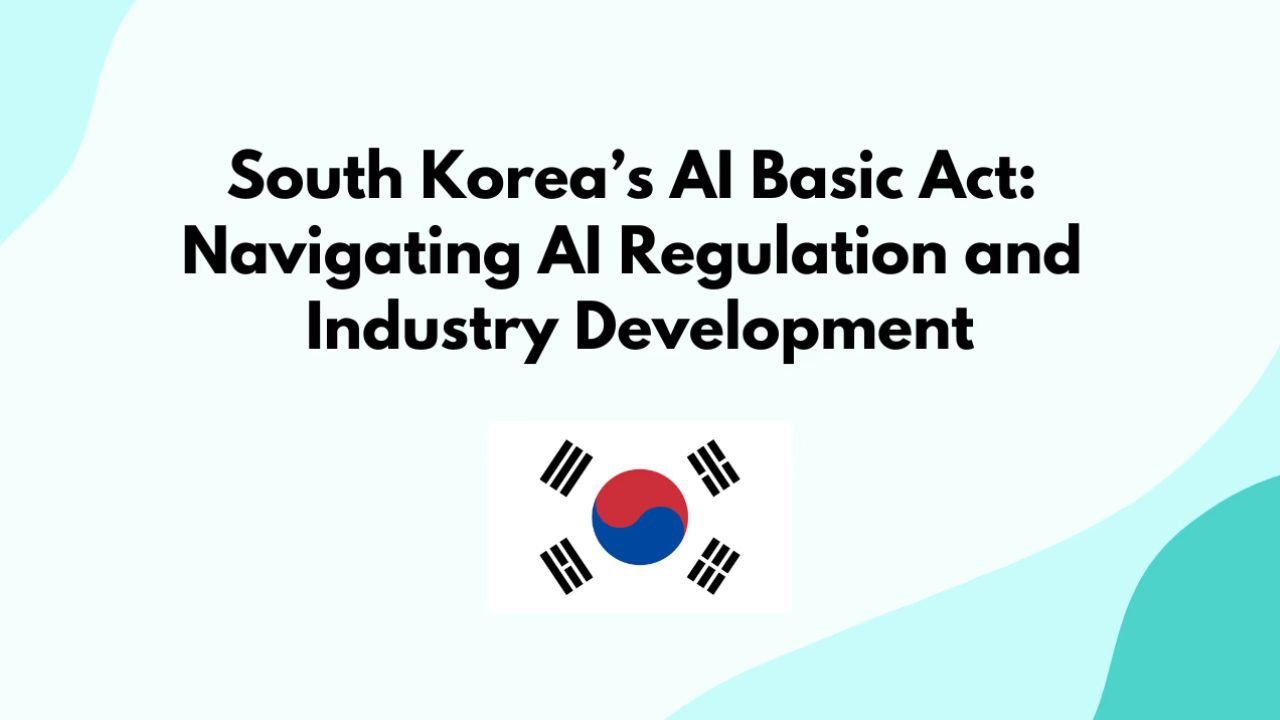
Seoul: South Korea has taken a significant step in the realm of technology regulation by introducing the world’s first Artificial Intelligence (AI) Basic Act, positioning itself ahead of the European Union in establishing frameworks for emerging technologies. This legislation aims to promote responsible and transparent AI usage; however, it has stirred concerns among local startups and technology companies, who fear the implications of stringent compliance requirements.
Under the newly proposed law, companies will be mandated to inform consumers whenever AI is utilized in a product or service. Moreover, content generated by AI—including text, images, audio, and video—must carry visible labels or watermarks. This initiative is designed to help users distinguish between human-created and AI-generated material, enhancing transparency in digital interactions.
South Korean officials contend that the legislation addresses critical risks associated with AI technology, such as misinformation, misuse, and the erosion of public trust. The AI Basic Act is part of a broader national strategy intended to position South Korea as one of the top three global AI powerhouses, alongside the United States and China.
Despite the government’s assurances, the announcement has elicited immediate apprehension within the country’s startup ecosystem. Entrepreneurs and industry representatives have expressed concerns that the stringent compliance obligations could impede innovation, especially for early-stage companies with limited legal and financial resources. They argue that mandatory disclosures and labeling for every AI-enhanced feature may complicate product development cycles and escalate operational costs, potentially undermining the global competitiveness of South Korean startups amid more flexible regulatory environments elsewhere.
This development occurs as the European Union’s long-discussed AI Act remains in the implementation pipeline, with full enforcement not anticipated until around 2027. By acting decisively, South Korea aims to not only lead in AI development but also influence global standards for governance in this rapidly advancing sector.
Experts emphasize that transparency is a foundational element of the AI Basic Act. By providing users with clear information about their interactions with AI systems, the law is expected to bolster digital trust. Additionally, the explicit identification of AI-generated content could play a significant role in curbing the proliferation of deepfakes and other deceptive materials that have emerged as pressing challenges in the digital age.
Nevertheless, critics highlight that several aspects of the proposed law remain ambiguous. Questions linger regarding the precise definition of “AI-generated content” and the thresholds at which labeling will become obligatory. Industry observers assert that clarity on these issues is vital for ensuring consistent enforcement and avoiding regulatory uncertainties.
Government officials have indicated that they will continue consultations with industry stakeholders, startups, and technical experts before finalizing the law. They maintain that the goal is not to stifle innovation but to foster a trustworthy AI ecosystem where technological advancements align with consumer protection.
South Korea already boasts a robust global reputation in sectors such as semiconductors, electronics, and digital technologies. Through the AI Basic Act, the country signals its ambition to not only spearhead developments in AI but also to shape international governance standards in this domain.
As discussions unfold, the focus will be on whether policymakers will integrate industry feedback and introduce flexibility in compliance requirements. The ongoing tension between regulation and innovation will be scrutinized closely, both in South Korea and on the international stage.
Ultimately, the AI Basic Act has positioned South Korea at the heart of the global AI policy debate, highlighting a critical challenge for governments worldwide: how to regulate powerful new technologies without undermining the innovation that drives progress.
OpenAI | European Commission | IBM
See also Meta Suspends Global Teen Access to AI Characters Amid Regulatory Scrutiny
 Solana Dips Below $140 Amid ETF Outflows; Zero-Knowledge Proofs Shift Market Dynamics
 UiPath’s Maestro Positions It to Lead AI Agent Orchestration Amid Market Shift
 Perplexity AI Launches Google Drive Connector for Enhanced File Search Capabilities
 Davos 2026: Leaders Assess AI’s Impact on Jobs, Surveillance, and Global Industry Growth