







































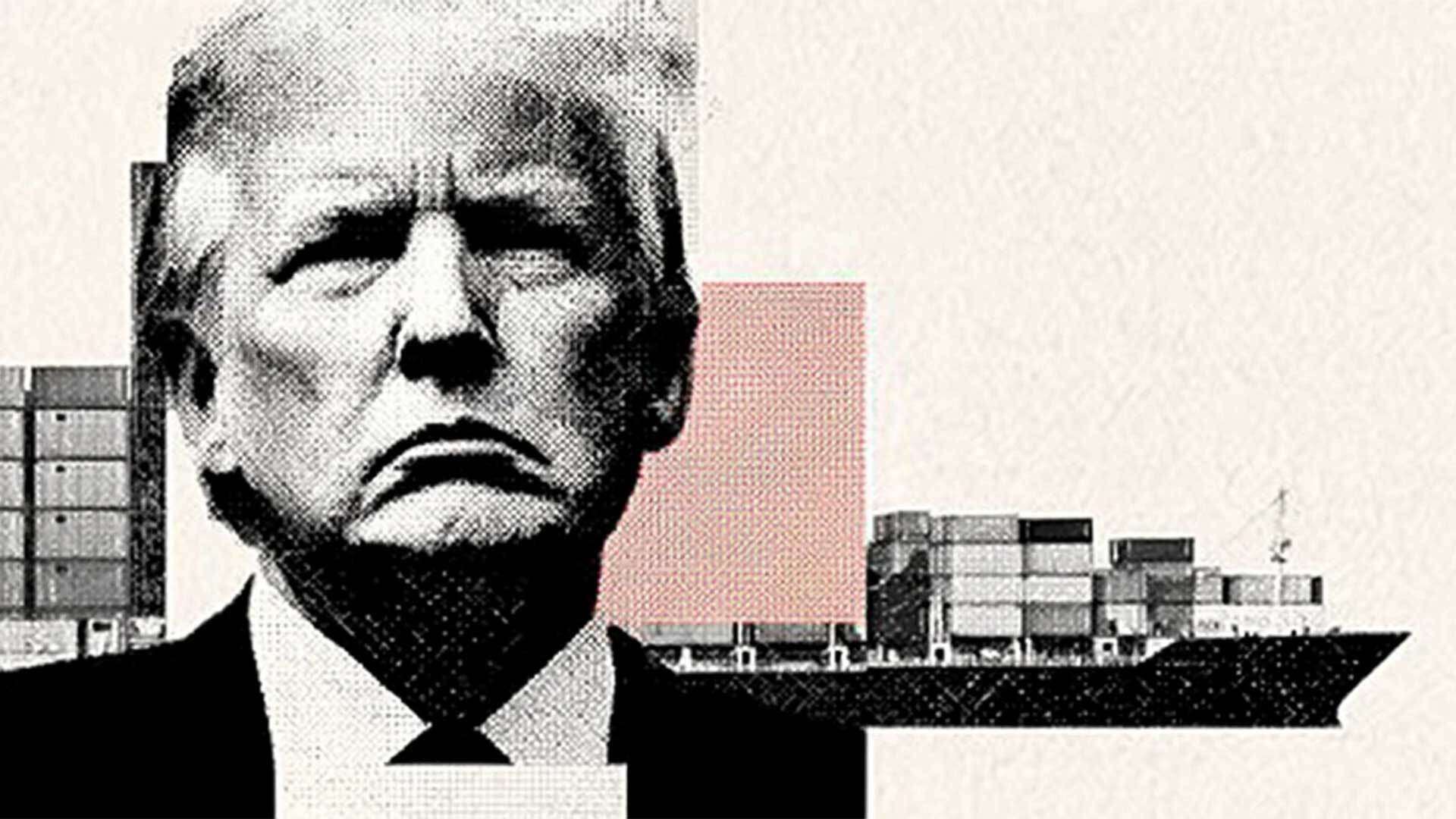
In a significant ruling today, the U.S. Supreme Court rejected former President Donald Trump’s broad interpretation of his authority under the International Emergency Economic Powers Act (IEEPA) to impose tariffs. The decision, rendered in the case of Learning Resources v. Trump, underscores the limitations placed on presidential power concerning tariff imposition, emphasizing that Congress has delineated specific parameters for such actions.
Chief Justice John Roberts remarked, “When Congress grants the power to impose tariffs, it does so clearly and with careful constraints.” This statement highlights that while the president has multiple statutes available to impose tariffs, including some that Trump has previously utilized, each comes with distinct restrictions intended to ensure appropriate oversight and rationale.
Trump’s reliance on IEEPA, a law established in 1977 without explicit mention of tariffs, marked a notable deviation from more established legal frameworks. The Trump administration’s legal team argued that a provision within IEEPA, which permits the regulation of imports in certain circumstances, allowed for a comprehensive overhaul of the tariff schedule set by Congress. Trump contended this act gave him the power to levy taxes on imports at will, targeting any country he deemed a threat as long as he justified it as a response to an “unusual and extraordinary threat” to national security.
This interpretation was met with skepticism, as it effectively negated the existence of numerous laws that already authorize the president to impose tariffs under defined conditions. For instance, Section 232 of the Trade Expansion Act of 1962 allows tariffs on imports that threaten U.S. national security, which Trump had previously invoked for tariffs on steel and aluminum. However, this authority is bound by requirements, including a Commerce Department investigation that must be completed within 270 days.
Trump’s proposed “Liberation Day” tariffs, which he announced last April, were characterized by their broad application across various product categories and multiple countries, raising questions about their alignment with legal frameworks designed to limit presidential tariff power. These tariffs were ostensibly aimed at addressing the persistent trade deficit, but critics questioned whether the longstanding trade imbalance constituted a genuine national emergency.
Legal experts pointed out that the Trump administration overlooked more applicable statutes like Section 122 of the Trade Act of 1974, which addresses significant U.S. balance-of-payments deficits and prescribes specific remedies that are not emergency-based. This law imposes limits on the types of tariffs that can be enacted and requires congressional approval for extensions.
Further complicating the administration’s position, Section 201 of the Trade Act empowers the president to impose tariffs in response to increased imports causing harm to U.S. manufacturers. This provision mandates an investigation by the U.S. International Trade Commission (ITC) and includes procedural safeguards. In contrast, Trump’s approach under IEEPA sought to bypass these established processes, raising concerns over the legality of his actions.
In addition, Section 301 allows tariffs when foreign policies violate trade agreements or impose unjustifiable burdens on U.S. commerce. While Trump employed this statute to levy tariffs on China in 2018, he often opted for unilateral decisions that disregarded these procedural requirements. The ITC is tasked with investigating claims under Section 301, but Trump’s administration frequently acted outside these norms.
Another statute, Section 338 of the Smoot-Hawley Tariff Act, provides a framework for addressing foreign discrimination against U.S. commerce. Though it offers potentially broader discretion, it has been largely inactive since 1949, raising questions about its viability in current trade policy. Despite this, Trump’s administration showed no hesitation in seeking to leverage IEEPA, a law that had never been used for tariffs in its 48-year history.
The ruling from the Supreme Court represents a substantial blow to Trump’s expansive view of presidential authority in trade matters, yet it leaves open a landscape of legal avenues he may continue to pursue in his protectionist agenda. As trade policy experts observe, Trump’s commitment to a protectionist stance, grounded in fundamental economic misunderstandings, suggests that the battle over tariffs and their implications for American businesses and consumers will continue.
See also Hugging Face Unveils Comprehensive Guide for High-Quality Image Generation with Diffusers
 Dow Jones Futures Surge After Supreme Court Tariff Ruling; Nvidia’s AI Growth Drives Market
 Mistral AI’s Arthur Mensch Advocates for Decentralized AI Power at India Summit
 Demis Hassabis Claims AGI Will Exceed Industrial Revolution’s Impact in Just 10 Years
 Cohere Launches Tiny Aya, Achieving $240M ARR and Paving the Way for 2026 IPO