Artificial intelligence holds the potential to transform global industries, yet the underrepresentation of women in this rapidly growing field poses a serious challenge to achieving inclusive technology. Wendy Hall, a prominent computer scientist and professor at Britain’s University of Southampton, expressed her concerns during an interview with AFP at the AI Impact Summit in New Delhi on Friday.
Hall, recognized for her groundbreaking research in web systems, highlighted the persistent gender imbalance within the AI sector. “All the CEOs are men,” the 73-year-old noted, characterizing the atmosphere at the summit as “amazingly awful.” She pointed out that this male dominance means that “50 percent of the population is effectively not included in the conversations” surrounding AI development and implementation.
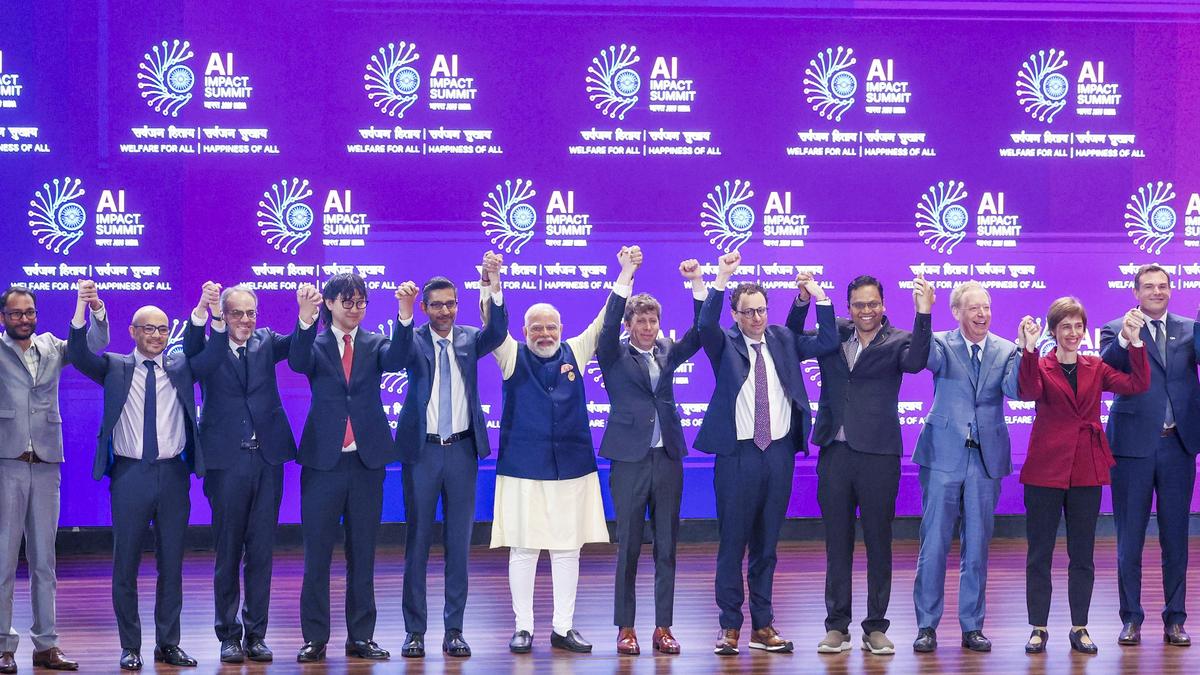
The summit witnessed a photo opportunity with Prime Minister Narendra Modi and various tech leaders, where only one woman, Joelle Pineau—former Meta researcher and now chief AI officer at Cohere—was present among thirteen men. This lack of diversity drew attention to the broader issue of gender bias that Hall insists “creeps through everything” in technology, as male-dominated perspectives shape product development without consideration for inclusivity.
Modi, who advocates for India to become a leader in AI innovation, emphasized the need for advanced computing systems to serve as platforms for inclusion and empowerment. However, Hall’s observations underscore the gap between rhetoric and reality, particularly as world leaders and tech icons predominantly represent a singular demographic.
Recent studies have shown that generative AI models, such as ChatGPT and Google’s Gemini, often reflect societal stereotypes found in the extensive datasets used for training. Hall referred to a 2024 UNESCO study revealing that large language models were more likely to associate women with domestic roles, while men were linked to terms like “salary” and “career.” This inherent bias raises concerns about how AI may perpetuate existing inequalities.
As companies strive to address these algorithmic biases, women continue to face challenges from AI technologies in other contexts. Notably, several countries banned Elon Musk’s Grok AI tool after widespread backlash over its capability to create sexualized deepfakes of individuals, primarily women. Hall lamented that the situation for women in technology has “not really improved that much” since she began her career decades ago, adding, “In AI, it’s getting worse.”
The disparities begin early, as fewer women choose to study computer science, and those who do often leave the field as they advance. Hall remarked that women-led startups typically receive less funding than their male counterparts and many become disillusioned, opting out of what she described as an “alpha male world.” Reflecting on her own experiences, Hall stated, “I’ve had to push through, be strong, have good mentors. And yeah, I felt like giving up many times.”
Her journey is marked by numerous challenges, including a discouraging experience during her first job interview nearly five decades ago. Hall recalled being told by an all-male panel that she could not have the position because she was a woman, as they doubted her ability to manage a classroom of male engineers.
Despite the obstacles, Hall expressed optimism about the future, noting the presence of enthusiastic young women at the summit. “The wonderful thing about this conference are the young people here,” she said. “There are a lot of young women here from India, and they’re all abuzz with the opportunities.”
As the AI sector continues to evolve, the need for diverse voices and perspectives has never been more critical. Hall’s insights reveal the urgent necessity to address the gender disparities in technology, lest the promises of AI remain unfulfilled and exclusionary. The ongoing dialogues at forums like the AI Impact Summit highlight the potential for change, but achieving true inclusivity remains a significant hurdle for the industry.
See also China’s ByteDance and Baidu Ramp Up US AI, Semiconductor Hiring Amid Competition
 DG Matrix Secures $60M Series A to Advance Power Infrastructure for AI and Electrification
 Cerebras Achieves 2,100 Tokens per Second Inference with WSE-3, Revolutionizing AI Speed
 Efficient Computer Secures $60 Million for Energy-Efficient AI Processor Development
 Tesla Expands AI Operations in India with New Hiring Initiative for Tech Talent