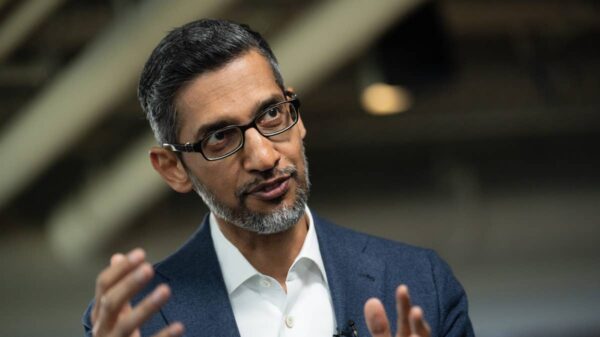
On Thursday, Alphabet Inc.’s (NASDAQ:GOOG) (NASDAQ:GOOGL) Google DeepMind CEO Demis Hassabis stated that artificial general intelligence (AGI) has the potential to reshape the world at a pace surpassing any previous technological transformation, provided it is managed responsibly. Speaking at the India AI Impact Summit 2026, Hassabis emphasized that AGI might initiate a profound era in human history, likening its potential impact to that of the discovery of fire and the invention of electricity.
“If I were to try and quantify what’s coming down the line with the advent of AGI,” Hassabis remarked, “it’s going to be something like ten times the impact of the Industrial Revolution, but happening at ten times the speed — probably unfolding in a decade rather than a century.” His comments reflect a growing optimism within the tech industry regarding the rapid evolution of AI capabilities, underscoring his belief that advanced AI systems are being developed at a breakneck pace.
Hassabis reiterated his previous assertion that the year 2026 could mark a significant turning point for AI, suggesting that AGI may emerge within the next five years. This timeline contrasts with remarks made last year by Google co-founder Sergey Brin, who predicted that AGI would be realized before 2030, while Hassabis anticipates it materializing shortly after that date.
Despite his enthusiasm about AGI’s transformative potential, Hassabis underscored the necessity for caution and rigorous oversight. “We’ve got to try and navigate this moment very carefully,” he stated, stressing the importance of adopting a scientific framework to understand the capabilities and risks associated with AI. He called for the establishment of robust guardrails and monitoring systems to ensure that advanced AI technologies align with human objectives.
Hassabis argued that the responsibility for shaping the future of AI should extend beyond technologists to encompass governments, scientists, artists, and philosophers. This collaborative approach aims to address the multifaceted challenges posed by AGI, aligning technological advancements with societal values and priorities.
As discussions around AGI continue to gain traction within the tech community, the implications of its potential rise are profound. Many experts believe that the advent of AGI could redefine industries, reshape labor markets, and even alter fundamental aspects of human interaction. The trajectory of this technology raises questions about ethical considerations, governance, and the role of human agency in an increasingly automated world.
The dialogue surrounding AGI’s development is not merely an academic exercise; it carries significant implications for policymakers, businesses, and society at large. As stakeholders seek to harness the benefits of this transformative technology, the urgency for a coordinated global response becomes evident. The prospect of AGI presents a unique opportunity for innovation, but it also necessitates a collective commitment to ensure that its implementation serves the broader good.
As the industry continues to evolve, the next few years will be critical in determining how AGI is developed and integrated into society. The balance between innovation and ethical considerations will likely define the legacy of this pivotal technological shift. The conversations initiated by leaders like Hassabis will be instrumental in shaping a future where AGI can thrive while remaining aligned with human values and aspirations.
See also Cohere Launches Tiny Aya, Achieving $240M ARR and Paving the Way for 2026 IPO
 Joyland AI Traffic Declines 35% to 3.49 Million Monthly Visits by December 2025
 LG QNED82A AI 4K TV Price Drops to $855.94 with $188 Discount on Amazon
 Meta Integrates Manus AI into Ads Manager, Streamlining Ad Reporting for Millions
 Jim Cramer Warns Amazon’s Free Cash Flow Decline Makes It Hard to Own Amid AI Spending