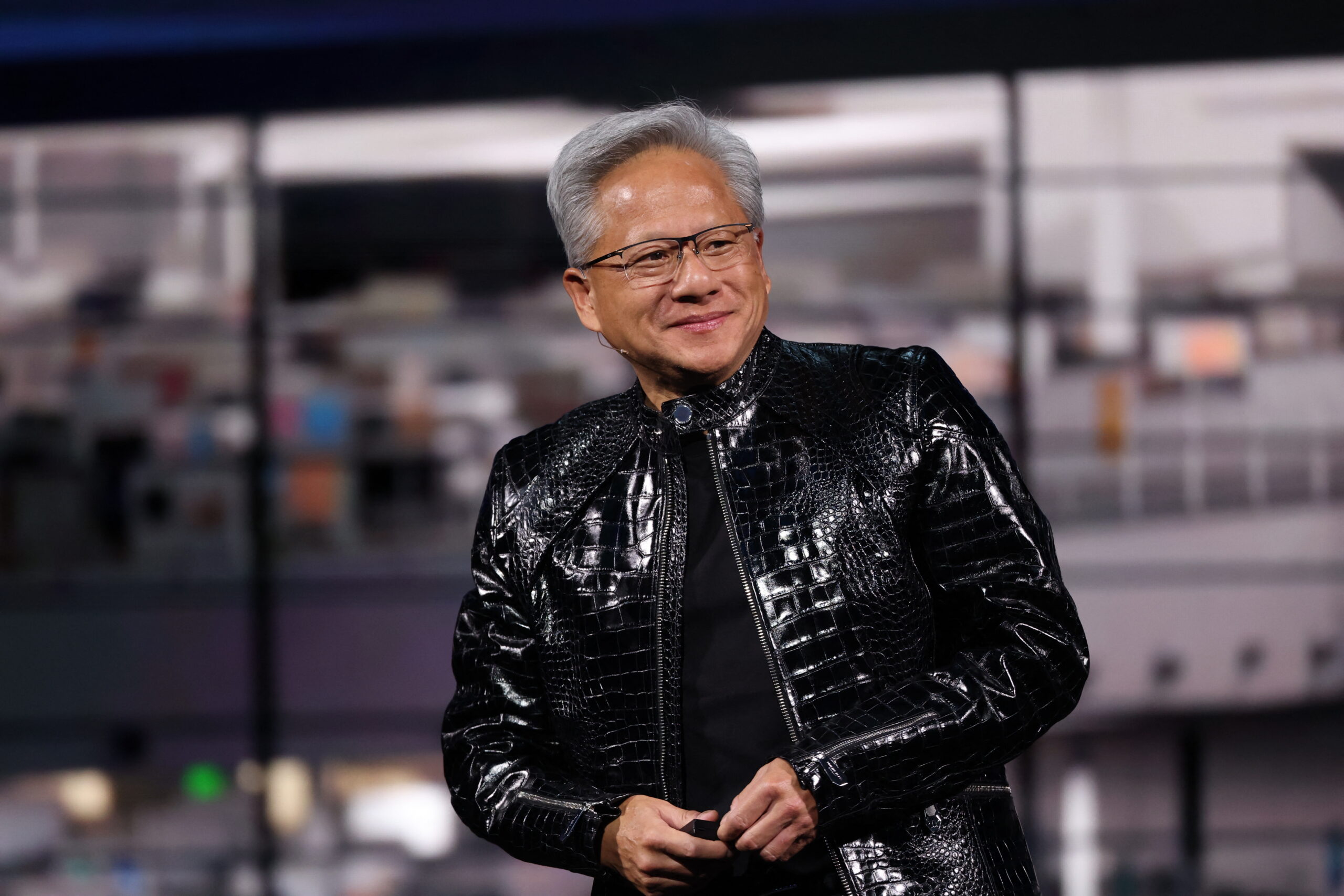
Jensen Huang has transformed Nvidia into the world’s leading A.I. chipmaker, and as demand for graphics processing units (GPUs) surges, the company is quietly expanding its influence beyond hardware. With a valuation of $4.5 trillion, Nvidia has invested billions into startups across the A.I. landscape. Its financial ties span nearly every major player in the industry, from OpenAI to xAI, with significant funding rounds accelerating since 2023.
According to Crunchbase, Nvidia has participated in 177 funding rounds over the past two decades, with a marked increase in activity correlating with the explosive rise of generative A.I. This tally does not include the 83 investments made through NVentures, Nvidia’s formal venture arm. Questions have arisen regarding potential conflicts of interest, as many of Nvidia’s largest investments have gone to its own customers, leading to concerns about circular funding arrangements that could misrepresent market demand. Huang has countered these criticisms, asserting that Nvidia’s contributions only constitute a small portion of the capital required by leading A.I. developers.
The pace of investment is accelerating; in the first two months of 2026 alone, Nvidia participated in 11 funding rounds. Notable investments include a $1.5 billion raise for Wayve, the London-based robotaxi startup, and a $1 billion round for World Labs, founded by Fei-Fei Li. Most recently, Nvidia contributed to a staggering $110 billion funding round for OpenAI.
Nvidia’s relationship with OpenAI crystallized in October 2024, when the company joined a $6.6 billion funding round. A year later, Nvidia pledged to invest up to $100 billion over time, while OpenAI indicated plans to purchase as much as 10 gigawatts of Nvidia compute capacity. Although that broad commitment was never finalized, Nvidia’s latest $30 billion investment in OpenAI’s $110 billion fundraising round further solidified their partnership. The valuation of OpenAI now stands at $840 billion, bolstered by participation from major investors such as Amazon and SoftBank.
Another key player in Nvidia’s A.I. investments is Anthropic, which has emerged as a significant enterprise A.I. contender. Recently valued at $380 billion after securing $30 billion in funding, Nvidia contributed a portion of its previously announced commitment of up to $10 billion. In return, Anthropic plans to purchase up to 1 gigawatt of Nvidia GPU capacity, with Huang praising the company’s leadership under Dario Amodei.
Nvidia’s involvement with xAI, founded by Elon Musk, encompasses investing and hardware supply, alongside joint infrastructure projects such as a planned 500-megawatt data center in Saudi Arabia. Nvidia first invested in xAI’s Series C round in 2024 and later joined its Series E in January, shortly before xAI was acquired by SpaceX. Huang expressed enthusiasm over the partnership, noting, “The only regret is that I didn’t give him more money.”
Another notable investment is in Safe Superintelligence, co-founded by Ilya Sutskever, which raised $2 billion last April. Nvidia’s support emphasizes the importance of cutting-edge A.I. research, an area Huang believes is critical for future growth. Meanwhile, Anysphere, valued at $29.3 billion, has become indispensable to Nvidia’s operations, with its coding tool, Cursor, significantly enhancing productivity among the company’s engineers.
Founded by former OpenAI CTO Mira Murati, Thinking Machines Lab raised $2 billion in a seed round backed by Nvidia, focusing on fine-tuning models for specialized tasks. However, internal tensions have been reported, with talent departures to OpenAI raising questions about retention. Mistral AI, valued at $13.8 billion, has also benefited from Nvidia’s backing in its efforts to develop a European alternative to U.S. A.I. leaders; its CEO, Arthur Mensch, highlighted the significance of this collaboration for scaling their offerings.
In the infrastructure domain, Crusoe has emerged as a key partner for OpenAI’s Stargate project, with Nvidia investing $600 million in Crusoe’s Series D and an additional $1.4 billion in Series E funding. Reflection AI, aiming to compete with China’s DeepSeek, received substantial backing from Nvidia, which wrote a check for $800 million in the company’s $2 billion Series B.
Lastly, Inflection AI, co-founded by Reid Hoffman and Mustafa Suleyman, launched in 2023 and quickly raised $1.3 billion led by Nvidia. Microsoft subsequently paid $650 million for licensing Inflection’s models and recruiting key team members, further underscoring the shifting dynamics in the A.I. landscape.
As Nvidia continues to deepen its investments in A.I. startups, the implications for the broader industry are profound. The company’s strategy not only positions it as a key player in A.I. development but also raises critical questions about the future landscape of the technology sector, where collaboration and competition will shape the next wave of innovation.
See also Block Cuts 40% of Workforce Amid AI Integration, Shares Surge 16%
 OpenAI Secures Pentagon Deal for AI Deployment, Phasing Out Anthropic Technology
 Nu Holdings Achieves Conditional US Bank Charter, Launches AI-Powered Credit Underwriting
 SaaS Market Resilient Amid AI Rumors; Analysts Predict No Imminent Collapse
 AI-Powered Bots Set to Disrupt Banking Sector, Tackling $10B ‘Lazy Tax’ on Consumers