






















































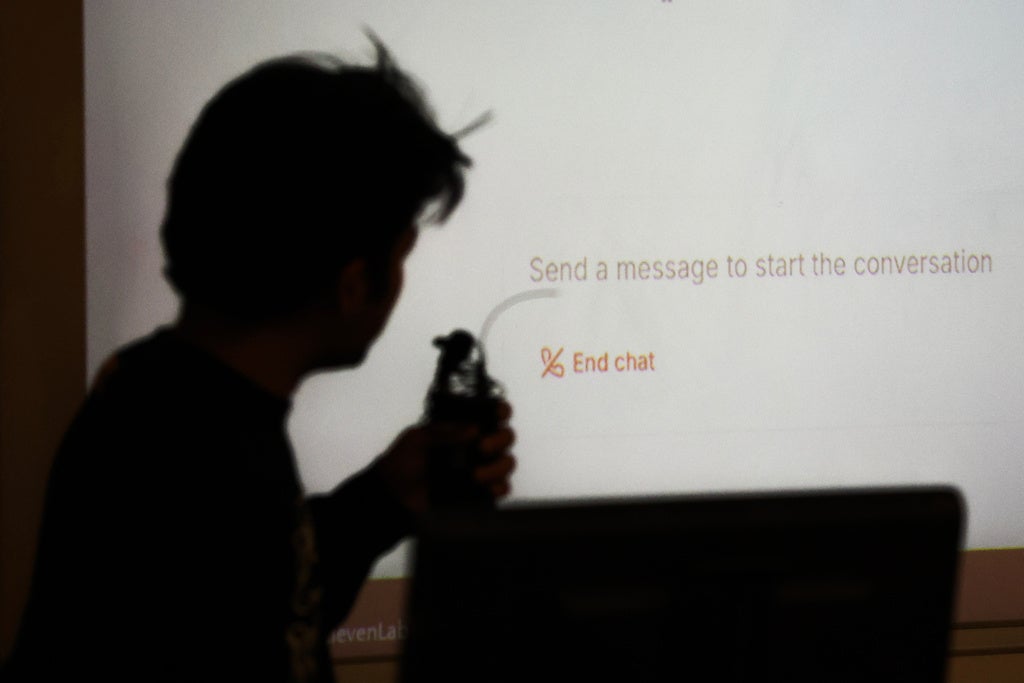
As higher education grapples with the implications of generative artificial intelligence, a growing number of college professors are reviving oral exams as a means to assess student learning. In a notable instance, Chris Schaffer, a biomedical engineering instructor at Cornell University, has implemented an “oral defense” in his class, requiring students to engage directly with their instructor without the aid of technology. “You won’t be able to AI your way through an oral exam,” Schaffer stated, highlighting the challenges posed by AI-assisted learning.
Educators are increasingly concerned about the evolving dynamic of student assessments, as generative AI tools become more sophisticated. While take-home essays and written assignments often appear flawless, many students struggle to articulate their understanding of the material when questioned directly. This disconnect raises concerns about the long-term effects of AI on critical thinking skills, as educators observe a trend where students seem to regard the rigorous demands of intellectual engagement as optional.
At the University of Pennsylvania, Emily Hammer, an associate professor of Middle Eastern Languages and Cultures, has paired oral exams with traditional written papers in her seminar classes. She emphasized that the shift is not merely a strategy to combat cheating but a necessary response to a decline in cognitive skills among students. “Students are actually losing skills, losing cognitive capacity and creativity,” Hammer noted. While she prohibits AI use on written assignments, she recognizes the challenge of enforcement. The stress of defending one’s own work in person serves as a powerful motivator for students to engage authentically with their studies.
This trend toward in-person assessments is echoed at Penn, where Bruce Lenthall, executive director of the Center for Teaching and Learning, reports a significant increase in faculty workshops focusing on oral exams. Historically, oral assessments are not a hallmark of the modern American undergraduate system, unlike their prevalence in certain European universities. The COVID-19 pandemic prompted some U.S. colleges to adopt oral exams as a countermeasure against online cheating, a practice that has gained momentum since the release of ChatGPT in 2022.
Professor Huihui Qi at the University of California, San Diego, has been conducting a three-year study on scaling oral exams, and her findings have drawn interest from various universities seeking to implement similar practices. This research underscores a broader movement within academia to reassess assessment methods in light of the challenges posed by new technologies.
In New York, NYU is witnessing an uptick in diverse oral assessments as faculty increasingly require office hours, presentations, and impromptu questioning in class settings. Clay Shirky, vice provost for AI and technology in education at NYU, articulated the desire for more direct interactions with students to gauge their grasp of the material. “I need to look my students in the eye and ask, ‘Do you know this material?’” Shirky remarked, encapsulating the urgency felt by educators to maintain academic integrity.
Panos Ipeirotis, a professor at NYU’s Stern School of Business, has introduced a novel approach by leveraging AI for oral exams. His AI-powered assessment for a course on AI product management allows students to take their final exam remotely, engaging with a voice cloned from a faculty member. This unique format not only personalizes the experience but also assesses students on their understanding of group projects while providing real-time feedback. “We wanted to check: Do you know what your team did? Were you a free rider? Did you outsource everything to AI?” Ipeirotis explained, emphasizing the importance of accountability in collaborative work.
As educational institutions navigate the complexities introduced by generative AI, the resurgence of oral assessments may serve as a vital strategy to ensure that students develop essential cognitive skills. This dual approach—combining traditional methods with innovative technology—could redefine assessment practices in a rapidly evolving academic landscape, fostering a more profound understanding of material and enhancing critical thinking skills. The future of education will likely continue to adapt, responding to the challenges and opportunities presented by AI.
See also Tech Freelancers Split: 43% See AI as Boost, 36% Expect Job Threats
 Oxford Royale Partners with MIT to Launch AI Literacy Programme for 3,000 Students
 Google.org Open Sources AI Readiness Playbook to Help Foundations Fund Social Impact Projects
 UK Government Expands EdTech Testbeds by £23M to Boost AI Adoption in Schools















