
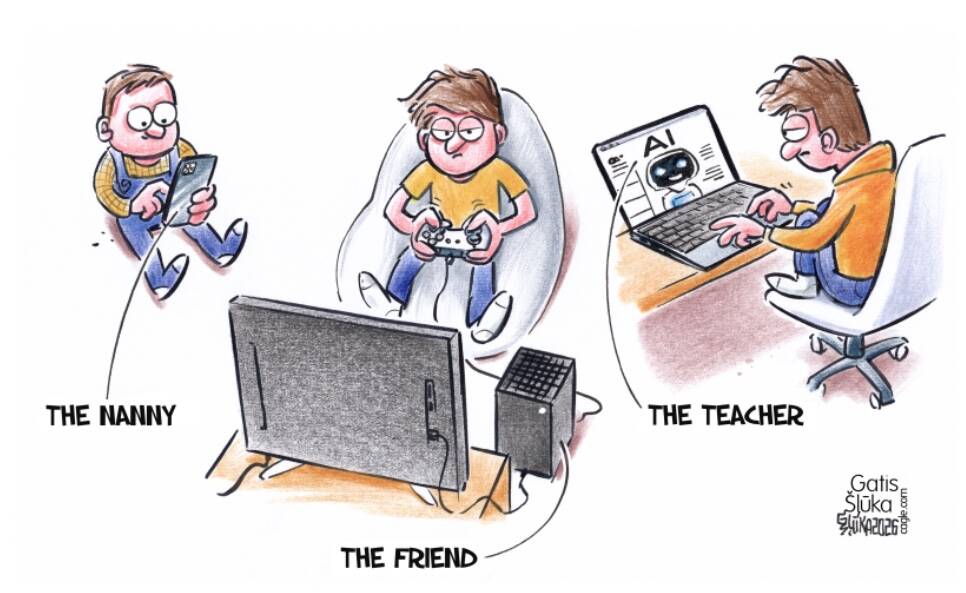
The rapid evolution of artificial intelligence (AI), particularly through large language models (LLMs) such as ChatGPT, has taken many educators by surprise. With the technology permeating classrooms across the United States, the education sector faces pressing challenges and opportunities in adapting its methodologies to this new reality. Recent research highlights a concerning trend: as AI tools gain traction, critical thinking skills among students may be declining, exacerbating existing fears that classroom electronics serve more as distractions than educational aids.
Many teachers in Washington state, where discussions around educational technology are intensifying, have expressed a mix of adaptation and apprehension. In conversations conducted over recent months, numerous educators revealed they are reevaluating their teaching approaches in light of AI’s influence. A middle school teacher shared his decision to eliminate electronics from his classroom, requiring students to produce their first draft essays by hand. Likewise, a university professor noted the increasing relevance of live or video presentations, stressing that they better demonstrate students’ mastery of subject matter.
The overarching sentiment among educators is a belief that the mass adoption of laptops in schools has not yielded the anticipated benefits. In fact, many teachers argue that the distractions posed by these devices may outweigh their educational advantages. With insights drawn from data and teacher feedback, a reconsideration of current laptop policies appears necessary. Greater reliance on traditional computer labs or a model that allows for individual laptop loans only for homework could provide a more focused learning environment. This approach has seen success in North Carolina and could serve as a roadmap for other educational institutions.
Despite the challenges, outright rejection of educational technology is not seen as a viable solution. Several educators have noted the potential benefits of AI, including personalized learning experiences tailored to individual student needs, enhanced tutoring capabilities, and a significant reduction in teacher workload. The importance of preparing students for a future increasingly influenced by AI is underscored by California Governor Gavin Newsom’s rejection of Assembly Bill 1064, which sought to ban chatbot access for individuals under 18. Newsom affirmed that “we cannot prepare our youth for a future where AI is ubiquitous by preventing their use of these tools altogether.”
To leverage AI effectively while fostering critical thinking, educators propose incorporating “AI etiquette” into curricula. Teaching students how to utilize AI responsibly can empower them to think critically rather than relying solely on technology for answers. In practice, this might include guidelines such as disclosing when AI is used in assignments, verifying the accuracy of AI-generated content, and encouraging students to consider multiple viewpoints for every idea proposed by AI. A university professor highlighted that many college students, even when permitted, hesitate to disclose their use of AI tools due to fear of repercussions. Normalizing transparency around AI usage would reinforce responsible engagement with technology and ensure that students continue developing their analytical skills.
The perspective shared by educators emphasizes the inadequacy of an all-or-nothing approach to educational technology. While the challenges posed by AI and classroom electronics are notable, the benefits they can provide—such as alleviating teacher workload and offering personalized guidance—should not be dismissed. A balanced policy framework that promotes demonstrable student achievement while strategically integrating technology may prove to be the most effective path forward.
As states begin to play a more active role in regulating AI’s usage within the education system, the imperative to develop thoughtful policies grows stronger. The future of education will hinge not only on how well it adapts to technological advancements but also on how it nurtures critical thinking skills among students in an increasingly automated world. A forward-looking approach that emphasizes innovation and adaptability will be essential in preparing students for the challenges and opportunities that lie ahead.
See also AI Transforms Education: 3 Strategies to Enhance Student-Centered Learning Experiences
 iSchool Acquires Rubikal to Bolster AI Infrastructure with New Leadership Team
 Colleges Embrace Oral Exams to Combat AI Cheating and Revive Critical Thinking Skills
 Tech Freelancers Split: 43% See AI as Boost, 36% Expect Job Threats