










































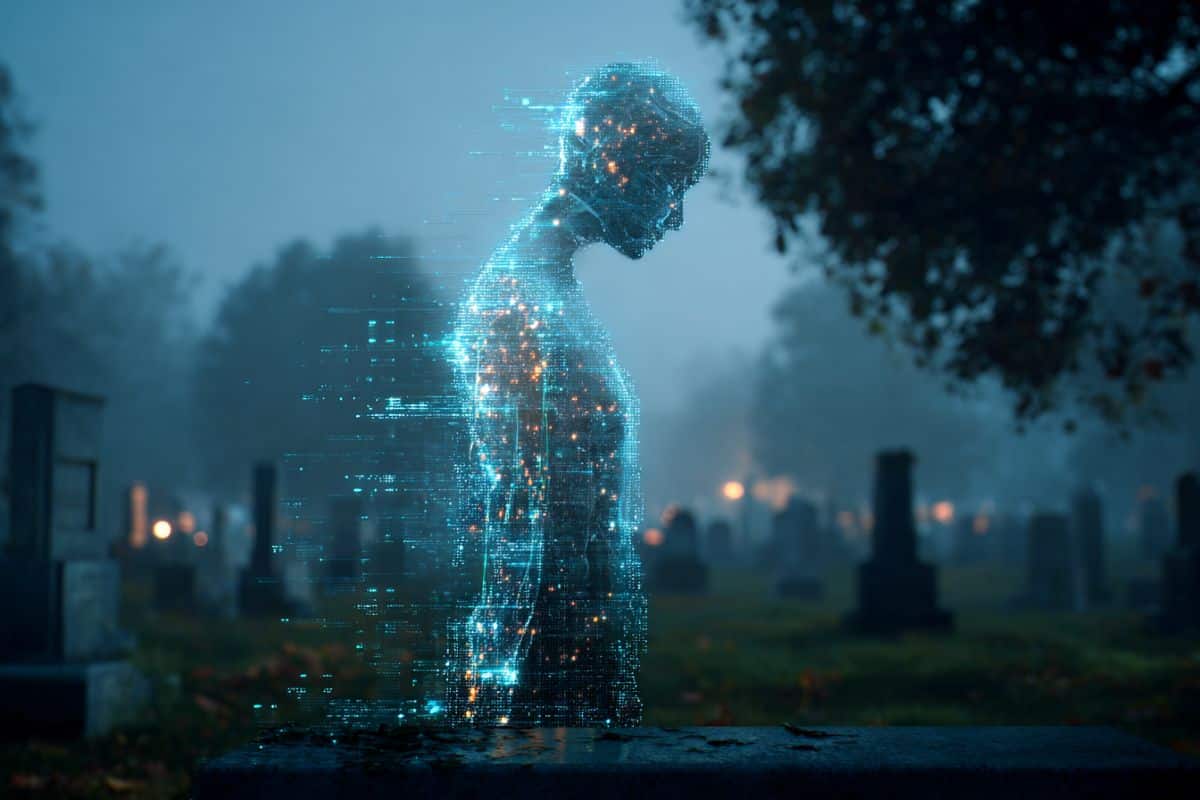
Summary: A comprehensive study by researchers from the Hebrew University of Jerusalem and Leipzig University highlights the rising use of generative AI to resurrect the deceased, revealing ethical concerns surrounding this unsettling practice. By analyzing over 50 real-world cases, the study explores how AI is transforming the voices, faces, and life histories of the dead into what they term “spectral labor.” This trend spans from hologram concerts to grief-tech chatbots, fundamentally shifting the line between life and death and paving the way for an emerging “postmortal society.”
Generative artificial intelligence (GenAI) is increasingly being utilized to bring back the dead, not just as entertainment figures but also as political witnesses and everyday companions for the bereaved. The authors of the study, Tom Divon and Christian Pentzold, argue that this practice poses not only profound emotional implications but also ethical dilemmas, as it turns the identities of deceased individuals into reusable commodities without their consent.
The research introduces the term spectral labor, describing how the deceased are used to satisfy the emotional, political, or commercial desires of the living, often without clear ownership rules or accountability. This exploitation raises serious questions about the rights of the dead and the ethical implications of recreating their voices and likenesses for profit and comfort.
The study categorizes AI resurrections into three primary modes: spectacularization, sociopoliticization, and mundanization. Spectacularization involves AI-generated performances of iconic figures like Whitney Houston or Freddie Mercury, staged for entertainment. Sociopoliticization reanimates victims of violence to provide posthumous testimonies for political or commemorative purposes. Mundanization enables everyday individuals to interact with chatbots that simulate deceased loved ones, fostering ongoing emotional connections.
Across these modes, the authors emphasize that the deceased are not merely remembered; they are compelled to work. AI systems draw on digital remnants—photos, videos, social media posts—to create these spectral representations. This practice not only threatens to commodify the identities of the dead but also raises concerns about accountability. For instance, what implications arise when a political figure’s likeness is resurrected to disseminate their ideology indefinitely without context or consent?
The authors situate AI resurrections within the framework of a postmortal society, where technological advancements challenge traditional notions of death. In this realm, immortality is increasingly sought through data and algorithms rather than through religious beliefs. However, the authors caution that AI does not ultimately conquer death; rather, it keeps individuals suspended in a state of neither being fully alive nor entirely gone. This dynamic complicates how society interacts with memory, loss, and the specter of exploitation.
The ethical landscape surrounding these technologies is complex and fraught with ambiguity. As AI capabilities advance, individuals can potentially turn deceased relatives into chatbots, but the study warns of a “Wild West” environment lacking universal regulations on posthumous digital representations. The risk of exploitation looms large; while AI can provide comfort to the grieving, it also has the potential to misuse the voices and likenesses of the deceased.
As generative AI continues to evolve, it becomes increasingly essential for society to confront the implications of digital resurrection before it becomes normalized and unregulated. The authors assert that understanding how these technologies affect our relationship with the dead is crucial for grasping their impact on the living.
Ultimately, the study underscores the urgency for legal and ethical frameworks to address the exploitation of the deceased in the era of GenAI. As society navigates this unsettling frontier, it faces a critical juncture in defining the boundaries of memory, respect, and the commodification of human identities.
See also 35 Innovative AI Content Generators Transforming Media Creation in 2026
 Sarvam AI Launches India’s First Large Language Models, Secures $41M Funding
 India’s AI Mission 2.0: Vaishnaw Announces 80+ Signatories and Enhanced Safety Models
 OpenAI Retires GPT-4o and Legacy Models in Shift to New AI Systems
 OpenAI Reveals Best Free AI Generator Apps for 2024 to Boost Creativity and Productivity






