







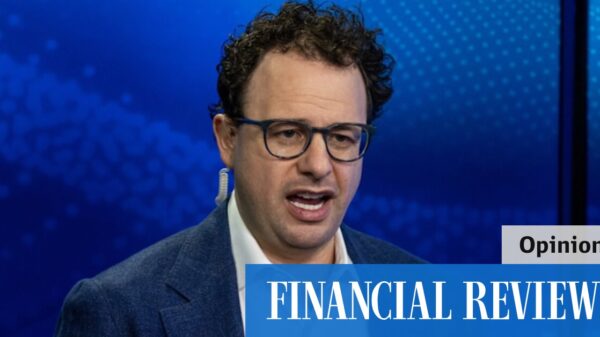
































Yann LeCun, Meta’s former chief AI scientist, has raised significant concerns about the trajectory of artificial intelligence, particularly questioning the future of Large Language Models (LLMs). In a recent interview with the Financial Times, LeCun stated that LLMs represent a “dead end” for achieving superintelligence, arguing that a deeper understanding of the physical world is essential for developing advanced machine intelligence.
LeCun, often referred to as one of the “Godfathers of AI,” emphasized that while LLMs have their uses, they are fundamentally limited by their reliance on language. “To achieve human-level intelligence, you have to understand how our physical world works too,” he said. His criticisms come amidst a broader push within Meta, spearheaded by CEO Mark Zuckerberg, towards a superintelligence initiative centered on LLMs.
The rift between LeCun and Meta appears to be rooted in conflicting visions for the company’s AI strategy. While Zuckerberg has publicly supported LeCun’s research into alternative methods, such as “world models,” LeCun expressed feelings of alienation following his departure from the company. He noted, “Staying became politically difficult,” and suggested that the new hires at Meta, particularly those who came from Scale AI, were “completely LLM-pilled,” indicating their strong focus on LLMs over alternative frameworks.
LeCun advocates for a model known as V-JEPA, or “world model,” which he described as a system that learns from videos and spatial data in addition to language. This approach aims to enable machines to plan, reason, and maintain persistent memory, all of which are crucial for what LeCun terms Advanced Machine Intelligence (AMI). “World models aim to understand the physical world,” he explained, highlighting the potential for such architectures to surpass the limitations of LLMs.
Despite his departure from Meta, LeCun remains steadfast in his belief that the direction taken by the company is misguided. He revealed that Zuckerberg’s support for his research has not been enough to counterbalance the prevailing influence of the new leadership focused on LLMs. “I’m sure there’s a lot of people at Meta, including perhaps Alex, who would like me to not tell the world that LLMs basically are a dead end,” he asserted. Yet, he remains resolute: “I’m not gonna change my mind because some dude thinks I’m wrong. I’m not wrong. My integrity as a scientist cannot allow me to do this.”
The backdrop of these developments is the establishment of Meta Superintelligence Labs, announced by Zuckerberg in June 2025. The initiative, aimed at advancing AI capabilities, has attracted talent from Scale AI, which has led to a significant restructuring within Meta’s AI division. Under the new framework, LeCun was required to report to Alexandr Wang, the former CEO of Scale AI and now Meta’s chief AI officer, a shift that LeCun suggested contributed to his decision to leave the company.
As discussions around AI continue to evolve, LeCun’s dissent adds a critical dimension to the ongoing debate over the future of artificial intelligence and the methodologies that may lead to true superintelligence. His focus on world models could pave the way for new approaches, challenging the prevailing narrative dominated by LLMs. The implications of these discussions are vast, as the technology sector grapples with not just the capabilities of AI, but also the philosophical and ethical considerations that accompany its development.
See also AI Model Framework Enhances Hypertension Education with Multi-Layer Retrieval System
 Learn to Identify AI-Generated Images to Avoid Online Scams and Misinformation
 Grok AI Under Fire: UK Regulators Investigate Explicit Deepfakes Amid User Misuse
 Smart Buildings Achieve 86% Energy Savings Using AI and Large Language Models
 Canva Hires Kshitiz Garg as Audio and Video Lead to Enhance Generative AI Research