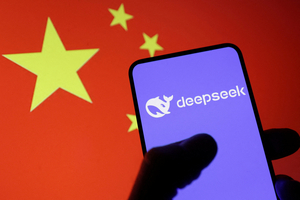

















































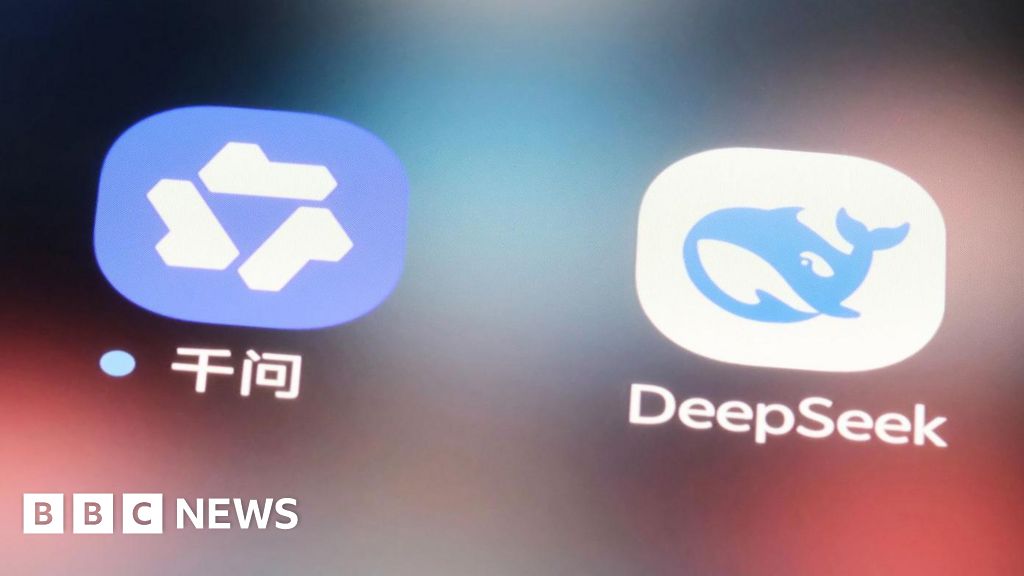
Pinterest is increasingly turning to Chinese artificial intelligence to enhance its platform, particularly in refining its recommendation engine. The company, known for connecting users with the latest styles and creative ideas, has begun experimenting with AI models developed in China, including the recently launched DeepSeek R-1 model. Bill Ready, Pinterest’s CEO, described the integration of this technology as transforming Pinterest into “an AI-powered shopping assistant.”
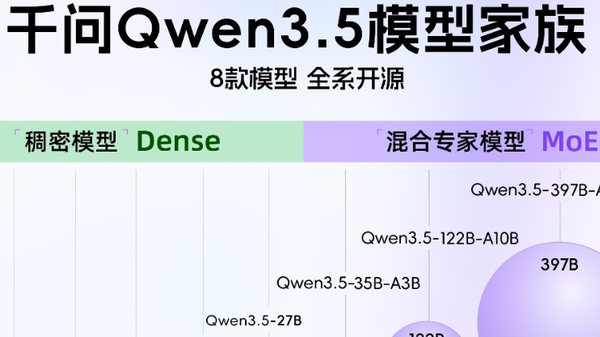
While Pinterest, based in San Francisco, could have sourced its AI technology from various American labs, the effectiveness of Chinese models has prompted a strategic pivot. Ready referred to the adoption of DeepSeek as a “breakthrough,” attributing its success to its open-source nature, which has inspired a wave of similar models coming from China’s tech sector. Other notable Chinese AI competitors include Alibaba’s Qwen and Moonshot’s Kimi, with ByteDance, the owner of TikTok, also developing comparable technologies.
Pinterest’s Chief Technology Officer Matt Madrigal emphasized that the flexibility of these open-source models allows companies to customize them to suit their needs. This capability contrasts sharply with offerings from American firms like OpenAI, which restrict access to their ChatGPT model. Madrigal noted that the models trained using open-source techniques exhibit a 30% increase in accuracy compared to their proprietary counterparts, which can also lead to cost savings of up to 90%.
The trend of U.S. companies relying on Chinese AI technology is not isolated to Pinterest. Airbnb’s CEO Brian Chesky acknowledged in October that his company heavily utilizes Alibaba’s Qwen to power its AI customer service functionalities, citing its “very good,” “fast,” and “cheap” attributes as key advantages. The growing acceptance of Chinese models is evident on platforms like Hugging Face, where many top-trending models are from Chinese labs.
Jeff Boudier, a product developer at Hugging Face, noted that the cost-effectiveness of Chinese AI models attracts a range of startups, contributing to their prominence in the download rankings. In September, Qwen surpassed Meta’s Llama to emerge as the most downloaded family of large language models on the platform. Prior to this, Meta’s Llama models were the preferred choice for developers until the release of DeepSeek and Alibaba’s offerings, which have since gained significant traction.
Despite substantial investments from U.S. tech firms, the narrative has shifted. A Stanford University report published last month indicated that Chinese AI models have either matched or outpaced their global counterparts in both capability and user adoption. In a recent interview, former UK deputy prime minister Sir Nick Clegg expressed concern that U.S. companies are overly focused on creating advanced AI that could surpass human intelligence. He argued that China’s approach to democratizing AI technology could ultimately give it a competitive edge.
The Stanford report also highlighted potential government support for Chinese firms in developing open-source AI models as a contributing factor to their success. Meanwhile, U.S. companies like OpenAI are increasingly under pressure to turn a profit, leading them to prioritize proprietary models and revenue generation strategies, including advertising. OpenAI CEO Sam Altman confirmed that the company is heavily investing in computing power and infrastructure to bolster its offerings.
As the competition in the AI landscape intensifies, the implications for the tech industry are significant. The reliance on Chinese-developed models raises questions about innovation, collaboration, and the future direction of artificial intelligence development. As U.S. companies grapple with their business models, the growing adoption of open-source AI technology from China may reshape the competitive landscape, potentially allowing it to dominate in areas where American firms are currently focused on proprietary solutions.
See also Revolutionary Riff-Diff Method Designs Custom Enzymes with Unmatched Efficiency and Stability
 AI Transforms Mobility Operations: Proven Strategies from EY and Novartis to Drive Efficiency
 Demis Hassabis Launches Isomorphic Labs to Revolutionize Drug Discovery with AI
 AI’s Rapid Integration: Navigating Job Displacement and New Opportunities Globally
 IBM’s Earnings Report: Can New AI Platform Offset Financial Concerns?