


















































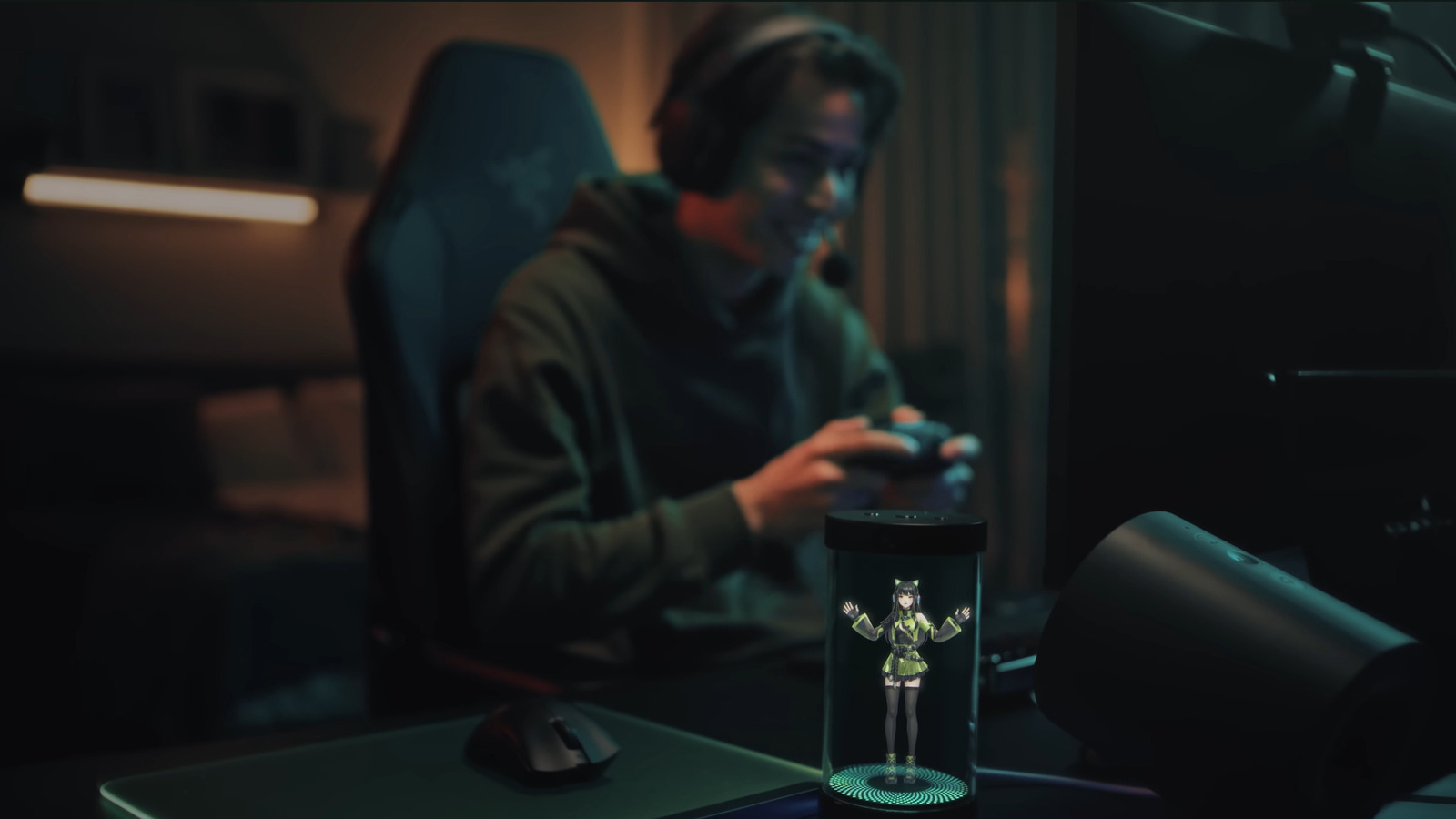
Razer, the American-Singaporean gaming company known for its diverse range of products from controllers to gaming chairs, announced Project AVA at the 2026 Consumer Electronics Show in Las Vegas. This new initiative builds on the company’s recent foray into AI esports coaching by introducing a 3D holographic companion designed to integrate artificial intelligence into users’ daily routines. Powered by xAI’s Grok engine, Project AVA resembles an interactive smart assistant, featuring an HD camera and dual far-field array microphones, aimed at enhancing productivity and entertainment for gamers. The companion not only assists with tasks such as scheduling and sleep monitoring but also acts as a motivational figure during gameplay.
However, the public’s reception has been mixed. The announcement video for Project AVA has drawn a wave of negative feedback, with comments ranging from sarcastic jokes to serious concerns about the implications of such technology. Privacy issues and potential impacts on mental health have emerged as pressing topics in the ongoing discourse surrounding AI companions. This criticism comes at a time when companies are facing increased scrutiny over content controls and user safety, particularly following lawsuits alleging that some AI systems have manipulated vulnerable individuals.
In the Project AVA launch, Razer partnered with Animation Inc., a firm specializing in 3D AI characters, to create five distinct desktop companions. These characters, including AVA—a vibrant energy orb, Kira—a cosplaying gamer girl, and Zane—a street-wise figure with Razer-themed tattoos, alongside avatars based on notable figures like Faker, the League of Legends star, and J-pop influencer Saori Araki, are equipped with advanced features such as facial expressions and eye tracking. Razer asserts that these companions can assist in daily tasks, manage calendars, and provide in-game advice, all while maintaining user engagement through their animated presence.
Project AVA is expected to launch in the second half of 2026, with American customers able to pre-order for a $20 deposit, although global pricing and release dates remain undisclosed. Razer has structured AVA with an open architecture, which may allow users to select different AI models in the future, potentially personalizing their experience further. However, the implementation of advanced functionalities raises questions about data privacy, especially since the device requires constant visual and audio monitoring to learn user preferences.
Concerns regarding the implications of a holographic AI companion have intensified, particularly given the rising loneliness epidemic attributed to increasing reliance on technology for social interaction. Critics argue that AI companions may foster dependency and degrade social skills, with recent lawsuits highlighting the risks associated with AI relationships. Razer’s CEO, Min Liang Tang, attempted to downplay these concerns, stating that the company does not intend to create emotional connections through its companion. Nevertheless, the reliance on Grok, which has faced backlash for issues related to the sexualization of content, raises further apprehensions.
As Razer positions Project AVA as a “Friend for Life,” the marketing suggests a deeper emotional engagement than the company acknowledges. Users will need assurances regarding the control they have over their data, particularly given Grok’s history of repurposing user-generated content without consent. Razer has remained largely silent on privacy safeguards associated with AVA, and the inadequate privacy protections listed on the company’s website contribute to ongoing concerns about potential violations.
As the market for AI companions expands, expected to grow by $500 billion over the next decade, Razer’s innovative offering may mark a significant shift in how technology interfaces with daily life. While Project AVA aims to enhance the gaming experience and daily productivity, it also highlights the urgent need for regulatory frameworks capable of addressing the complexities of AI interactions. The interplay between technological advancement and ethical responsibility will likely shape the future of AI companions and their role in society.
See also Core Scientific Transforms to AI Infrastructure; Analysts Upgrade to Buy Amid Risks
 Invest in AI’s Future: Top 4 Stocks—Nvidia, AMD, Broadcom, TSMC—Set for Explosive Growth by 2026
 Georgieva Warns of AI ‘Tsunami’ Reshaping 60% of Jobs; Lagarde Sounds Alarm on Wealth Inequality
 Character AI Enforces Strict NSFW Ban, Enhances Moderation for User Safety