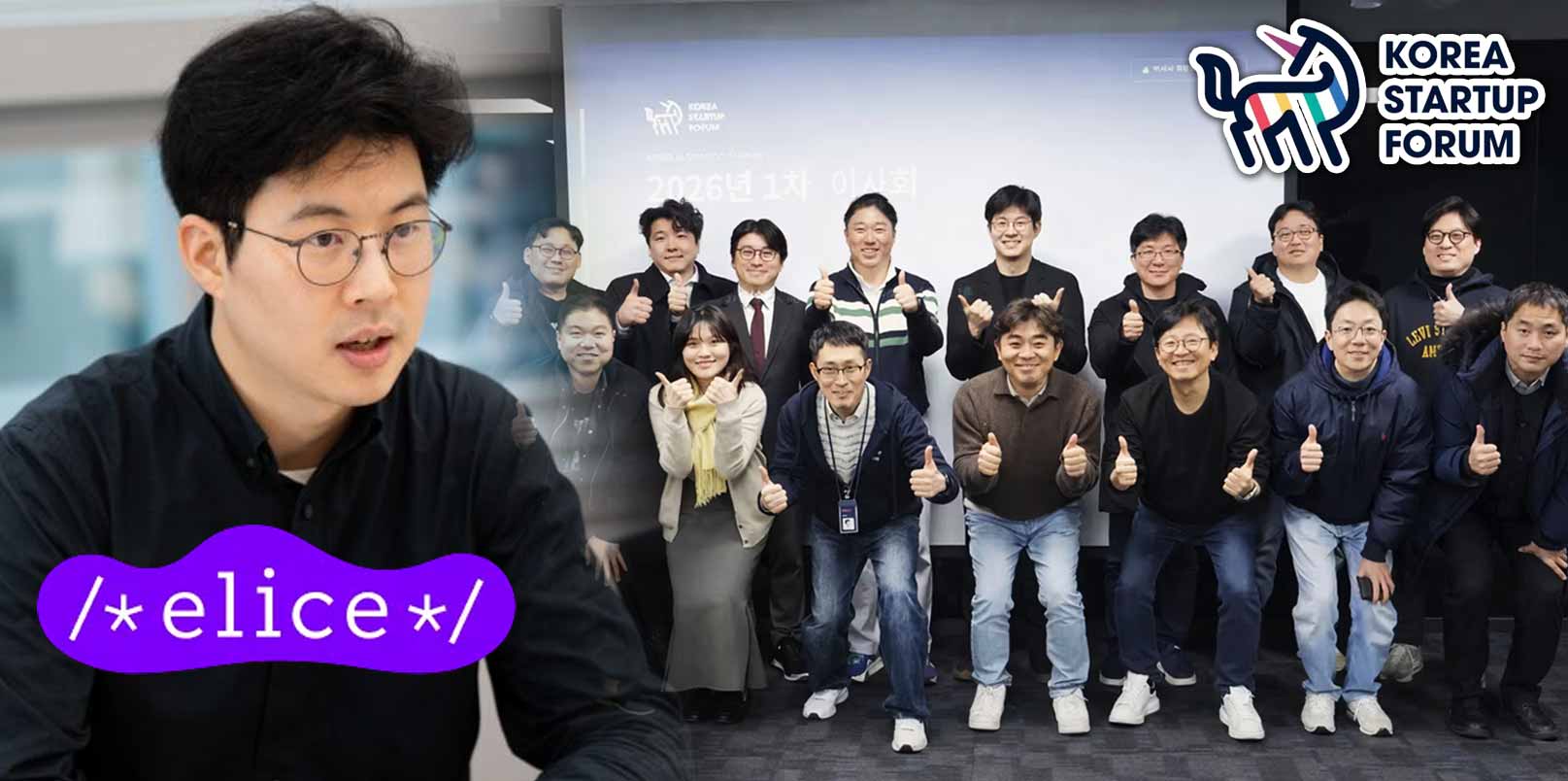
Korea Startup Forum (KOSPO), the nation’s largest startup alliance, has nominated Elice Group CEO Kim Jaewon as its next chairperson, marking a significant transition in Korea’s innovation governance. This leadership change aligns with KOSPO’s 10th anniversary and underscores its expanding role in shaping the country’s startup strategy and enhancing global competitiveness amidst an industrial AI transformation.
The nomination occurred during KOSPO’s first 2026 board meeting on January 21 at Tipstown S6 in Seoul’s Gangnam District. Board members voted unanimously to nominate Kim Jaewon as the candidate for the forum’s fifth chairperson. Current Chairperson Han Sang-woo opted out of a second term ahead of the vote, leaving Kim as the sole nominee. The final appointment will be confirmed at an upcoming general assembly on February 26, 2026.
Over 20 members attended the session, including Han and Executive Director Choi Ji-young, who reviewed KOSPO’s performance metrics for 2025 and outlined strategic priorities for the new year.
As KOSPO celebrates its decade-long journey, it aims to transform into a platform organization that integrates policy, industry, global networks, and startup culture into a cohesive ecosystem. This initiative highlights the increasing complexity of Korea’s startup environment and the necessity for integrated policy mechanisms that foster cross-sector growth.
KOSPO’s new mission—”The problem-solving platform startups seek first”—positions it as a critical voice and bridge for the innovation community. To accomplish this mission, KOSPO has laid out a four-pillar plan focusing on:
- Permanent cooperation frameworks with government ministries, the National Assembly, and policy regulators.
- Broader entrepreneurial culture fostering risk-taking and early-stage growth.
- Global founder networks linking Korean startups with overseas partners and investors.
- AI Transformation (AX) and deep-tech execution frameworks for emerging industries.
This strategic pivot arrives as Korea intensifies its efforts to establish itself as one of the world’s top four venture powerhouses, aligning startup governance with global competitiveness and industrial AI advancements.
Chairperson Han Sang-woo emphasized that KOSPO will continue evolving into an “execution-driven” organization: “KOSPO will link policy, global, AI, and community into a single continuous flow. As the first problem-solving platform startups turn to, we will move beyond facilitation to defining and solving problems directly.”
Industry observers note that the appointment of Elice Group’s leadership reflects this evolution. Under Kim’s guidance, Elice has transformed from an AI education startup to a multi-sector AI company driving both digital learning and industrial transformation. Founded in 2015 by KAIST PhD researchers, Elice pioneered Korea’s AI education platforms and recently gained recognition under the Scale-Up TIPS program, enabling it to expand into industrial AI infrastructure—an area directly aligned with Korea’s national AI Transformation (AX) policy.
Kim Jaewon’s imminent leadership symbolizes more than a mere change in personnel; it represents a generational and policy realignment within Korea’s innovation ecosystem. Elice Group’s trajectory exemplifies this shift. The company’s AI education platform, initially intended for Korea’s public classrooms, encountered regulatory barriers that hindered domestic deployment. Conversely, the same technology successfully integrated into Singapore’s national digital curriculum initiative, while Elice pivoted toward industrial AI under the Scale-Up TIPS program.
This realignment underscores both Korea’s industrial policy priorities and the adaptive resilience of its startups. Ironically, the company that once faced regulatory constraints in education now stands at the forefront of Korea’s startup policy landscape, with its CEO expected to lead the nation’s largest startup coalition.
Kim’s background in policy and expertise in cross-sector AI suggest that KOSPO’s next chapter will emphasize deepening industry-policy integration, scaling Korea’s AI transformation, and ensuring that startups remain central to national innovation strategies. KOSPO itself has increasingly become a hub for policy advocacy and industrial innovation coordination, playing a significant role in shaping regulatory debates around emerging sectors such as telemedicine, legal tech, and climate tech. In 2025, KOSPO launched Korea’s first private-led AI think tank.
Its collaborations with major tech players like Naver and international outreach through initiatives such as COMEUP Global and The Pitch further emphasize KOSPO’s positioning as a bridge between startups, policy, and capital markets.
The leadership transition at KOSPO signifies a structural inflection point in Korea’s startup governance. With Kim Jaewon poised to take the helm, KOSPO is shifting toward a more policy-anchored, execution-driven model—one that envisions startups not merely as recipients of regulation but as architects of Korea’s innovation policy framework. This next phase will test how effectively Korea can align its industrial AI ambitions with inclusive startup participation, a challenge poised to define the sustainability of the nation’s venture ecosystem beyond 2026.
See also Davos 2023: Trump Dominates Geopolitical Discourse, Marginalizing AI and Economic Issues
 BLIP-2 Achieves 536K Monthly Downloads, Surpassing Competitors with 65% VQAv2 Accuracy
 Artlist Launches Complete AI Video Ecosystem Revolutionizing Production in 2026
 Healwell AI Reports 354% Revenue Surge Amid Strategic AI Focus Shift; Stock Rally Continues
 Chinese AI Models Surge as Pinterest and Airbnb Choose Cost-Effective Alternatives