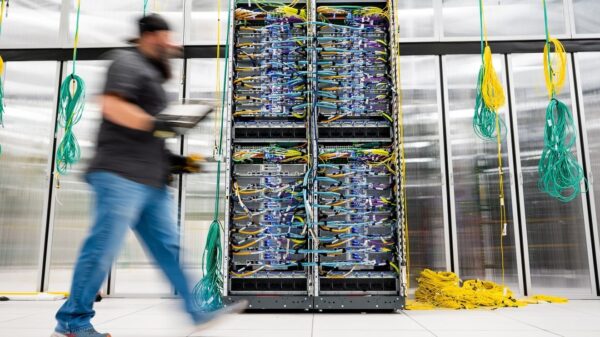
The global race in artificial intelligence (AI) is intensifying, but leading labs face significant hardware constraints that hinder progress. Demis Hassabis, CEO of Google’s DeepMind AI unit, recently articulated these challenges in an interview with CNBC, emphasizing that shortages in key components such as memory, graphics processing units, and electricity are slowing the deployment of AI technologies. “Yes, I think that’s constraining a lot of the deployment for sure,” Hassabis noted, highlighting the critical nature of these supply issues.
China plays a crucial role in the global AI landscape, with notable advancements made by its developers. While Hassabis stated that Chinese teams are still a few months behind their U.S. counterparts, he acknowledged that the gap is narrowing. “There are very talented teams in China and their seed models are really good,” he remarked, referencing progress from companies like Alibaba and ByteDance. He suggested that one or two additional breakthroughs are essential for achieving artificial general intelligence, a long-sought goal within the field.
The constraints impacting AI development are not limited to product rollouts; they also affect research initiatives. Hassabis explained that experimenting with new ideas requires substantial computing power to validate them on a large scale. He indicated that the demand for Gemini, Google’s flagship AI system, exceeds the company’s current supply capabilities. This strain on resources is echoed across the broader technology sector, with companies like Apple Inc. and HP Inc. reporting rising memory costs that are expected to impact their financial outlooks.
During Apple’s fiscal Q1 2026 earnings call in January, Chief Financial Officer Kevan Parekh noted the significant increase in memory pricing. Similarly, HP Inc. CFO Karen Parkhill reflected on these pressures, stating, “With just one quarter behind us in a dynamic environment marked by increasing memory costs, we are holding our outlook for the year yet currently anticipate results to be closer to the low end of our range.” Such sentiments illustrate the widespread impact of hardware shortages across the industry.
Google’s advantage lies in its development of tensor processing units (TPUs), which provide the company with greater control over its computing architecture. “We’re lucky because we have our own TPUs, so we have our own chip designs,” Hassabis remarked. However, he also acknowledged that reliance on a limited number of suppliers for critical components poses risks. Any capacity constraints in the supply chain can lead to significant bottlenecks, affecting AI research and deployment overall. “It still, in the end, actually comes down to a few suppliers of a few of the key components,” he explained.
The reliance on advanced computing extends beyond major AI labs and affects companies in adjacent sectors as well. Immersed, a private firm specializing in spatial computing, provides virtual collaboration workspace software used on Meta Quest devices, enabling teams to work together in shared digital environments across multiple operating systems. Such applications highlight the interconnectedness of technology sectors amid ongoing hardware constraints.
As the AI landscape continues to evolve, the broader implications of these hardware shortages warrant attention. The competition between nations, particularly between the U.S. and China, will likely shape future technological advancements and strategies. With AI’s potential to transform industries and economies, addressing these resource limitations may be critical to sustaining innovation and maintaining competitive advantage in this rapidly changing field.
See also X Reveals New Pitch Deck Highlighting Grok’s Role in Brand Safety Amid Controversies
 Xicoia Hires Former Amazon Exec Mark Whelan to Lead Strategy for AI Star Tilly Norwood
 Google’s AI Patent for Landing Pages Targets Shopping Ads, Not General Content
 Perplexity AI Seeks Dismissal of NY Times, Chicago Tribune Copyright Lawsuits
 Cohere Health Launches Global Capability Center in Hyderabad to Enhance AI Clinical Intelligence