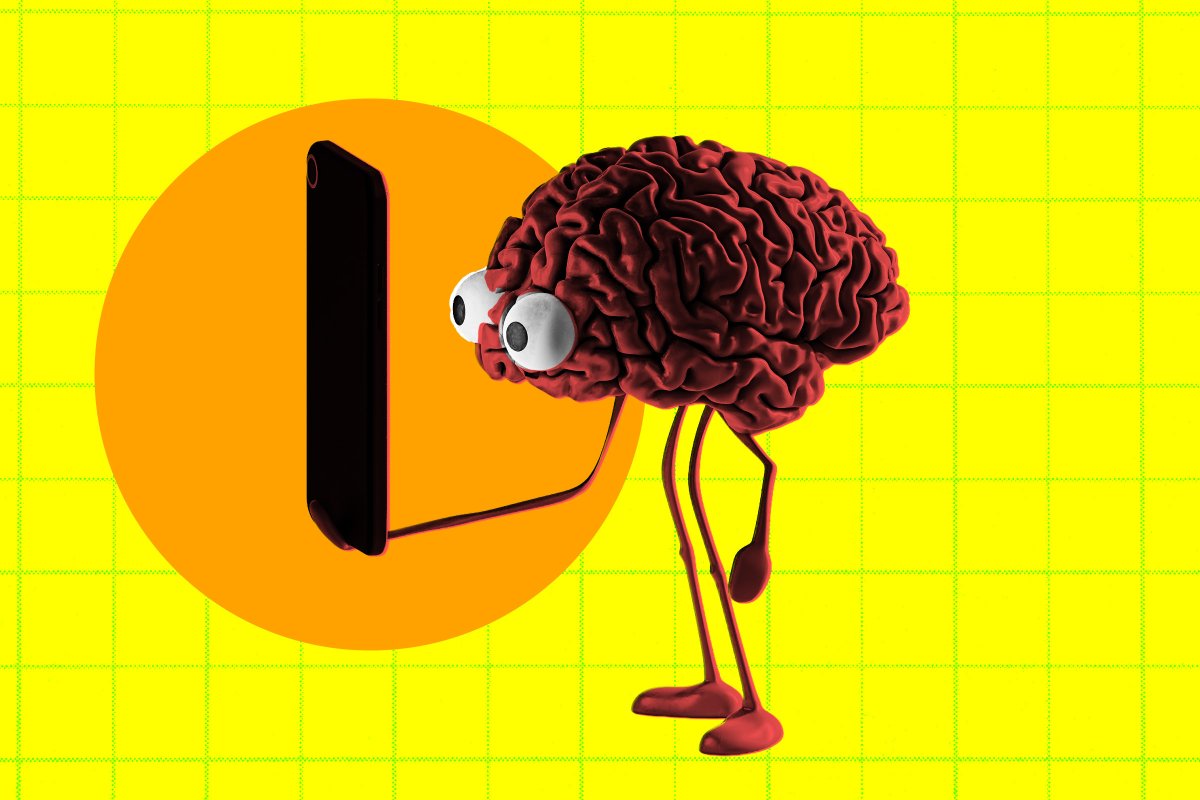
Researchers are raising concerns that outsourcing cognitive tasks to artificial intelligence (AI) may lead to cognitive deficits among users. A new study published in the journal Technology, Mind and Behavior highlights a troubling trend: reliance on AI can undermine users’ confidence in their own reasoning abilities. This phenomenon is particularly alarming as it suggests that while technology can facilitate certain tasks, it may simultaneously erode critical thinking skills.
The peer-reviewed study, which has garnered attention from TIME, reveals that participants who heavily relied on AI reported feeling as though chatbots were “thinking” for them, leading to diminished confidence in their own ideas. Conversely, individuals who engaged more actively with AI—by editing, questioning, or discarding its suggestions—exhibited a greater sense of ownership and confidence in the final output, despite using the same tools.
According to the study’s lead author, Sarah Baldeo, a PhD candidate in AI and neuroscience at Middlesex University, the cognitive effects of AI use largely depend on how individuals interact with these technologies. “When we look at brain activity contingent on how people choose to use the tool, we can see increases or decreases,” Baldeo stated. “It really doesn’t have to do with the tool itself.”
This finding aligns with another recent study, referred to as the “boiling frog study,” conducted by researchers at MIT and Carnegie Mellon. Although still awaiting peer review, this research claims to present the first causal evidence that AI can rapidly degrade users’ intellectual abilities, particularly during “reasoning-intensive” tasks. In their experiment, participants in the experimental group were provided access to AI to complete a series of equations. Researchers subsequently interrupted this access, compelling participants to continue work without AI. The results showed that those who lost their AI support experienced significant declines in reasoning ability and a decreased willingness to complete the tasks.
Both studies highlight a common theme: the manner in which AI is utilized plays a crucial role in determining its impact on cognitive ability. Essentially, they argue that relegating all cognitive work to machines can degrade independent reasoning skills, whereas using AI as a supplementary tool may help preserve these abilities. This raises an important question for users: are we utilizing AI to enhance our thinking, or is AI effectively doing the thinking for us?
The implications of these findings extend beyond individual users. As more people integrate AI into their work and study routines, the potential for widespread cognitive decline could pose significant challenges to educational and professional environments. By understanding the nuances of how AI impacts our cognitive processes, users can make more informed choices about how to engage with these technologies.
As AI continues to evolve, it is vital for users to maintain a balance between leveraging its capabilities and preserving their cognitive independence. The challenge lies not only in harnessing the power of AI but also in ensuring that it serves as a tool for enhancement rather than a crutch that diminishes our innate reasoning skills.
See also Study Reveals AI Anthropomorphism Misleads Public Perception, Impacts Expectations
 Korea Ranks Third in AI Models as Stanford’s AI Index 2026 Reveals Regulatory Challenges
 Neel Somani: Why AI Labs Offer Better Long-Term Prospects Than Quant Finance
 AI Dependency May Impair Cognitive Abilities, Warns Neuroscientist Vivienne Ming
 Machine Learning Model Achieves 95% Accuracy in Identifying Cancer Origins via DNA Methylation