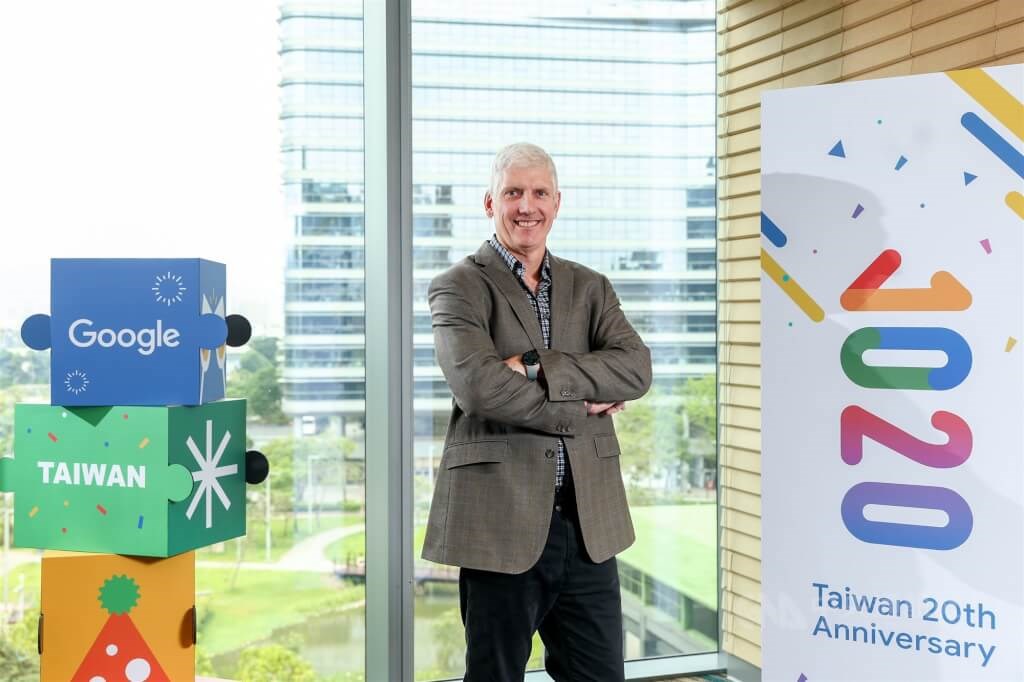
Taipei, April 19 (CNA) – Taiwan is emerging as a pivotal player in Google’s strategy for transitioning to AI-based computing, according to Rick Osterloh, senior vice president of Devices & Services at Google. In a recent interview, Osterloh emphasized the importance of the Taiwanese team in the company’s global innovation strategy, particularly in the evolving AI computing landscape.
Osterloh commended the “amazing R&D capabilities” of the team in Taiwan, highlighting collaboration with key partners such as MediaTek and Taiwan Semiconductor Manufacturing Co. (TSMC). He noted that Google’s hardware engineering center in New Taipei serves as the company’s largest hardware R&D hub outside the United States, underscoring the region’s critical role in the company’s initiatives.
Elmer Peng, Google’s vice president of hardware, added to this sentiment by praising Taiwan’s robust tech ecosystem. He pointed out the rich talent pool in silicon design, device manufacturing, and Android development, as well as Google’s data center located in Changhua. Peng described this ecosystem as ideally suited to support Google’s “full-stack” strategy, which aims to provide a comprehensive suite of technology solutions across various layers.
According to Osterloh, Google’s full-stack approach to AI encompasses applications, AI models, and the foundational technology, including data centers and chips. He explained that by aligning its ecosystem around the Gemini family, Google ensures that core technology can be utilized seamlessly across enterprise services within Google Cloud, automotive systems in Android Auto, and consumer devices like Android smartphones. This integration allows for shared context and memory across platforms, positioning Google as “the only real full-stack provider of AI that can support enterprises and consumers.”
In a notable development, Osterloh announced the launch of a new feature termed “Personal Intelligence,” which went live in Taiwan on April 15. This capability leverages a user’s interaction history across various services, such as Gmail and Google Photos, to offer more personalized responses and actions. Looking forward, Osterloh stated that the first generation of AI-native devices will not only enhance existing functionalities—such as calling, photography, and web browsing—but will also integrate new AI-driven features.
He highlighted advancements like “Gemini Task Automation,” which facilitates “agentic workflows” for tasks such as booking rides, as well as the integration of Gemini into the Chrome browser for real-time assistance. However, he cautioned that the creation of fully AI-native devices necessitates a fundamental rethinking of user interfaces and the underlying technologies, shifting from an application-driven model to an AI-driven one.
As companies like Google steer their efforts toward AI integration, Taiwan’s role as a technological hub is likely to grow even more significant. The collaboration between major tech players and local firms promises to propel innovation within the AI landscape, ultimately shaping the future of computing. With this ongoing transformation, Taiwan is positioning itself at the forefront of a rapidly evolving industry, ready to meet the demands of an AI-driven world.
(By Jeffrey Wu and Wu Kuan-hsien)
Enditem/ls
See also Tesla Reveals AI6 and AI6.5 Chips: Samsung and TSMC to Manufacture 2nm Designs in 2027-2029
 AI Adoption Accelerates: 54% of SMEs Report Productivity Gains, Outpacing Competitors
 AI Data Center Infrastructure Market to Reach $96.44B by 2032, Driven by U.S. Dominance and Innovative Cooling Solutions
 Cerebras Systems Files for IPO, Aiming to Capture $10B Contract from OpenAI
 MediaTek Expands AI Chip Portfolio to Drive Growth in U.S. and Global Markets