






















































The AI landscape is evolving into a high-stakes competition, predominantly centered on hardware and data access rather than purely on algorithms. Industry leaders are increasingly amassing GPU clusters while erecting barriers around their models, prompting a critical question: how can this power be democratized? This concern is at the heart of the narrative surrounding Sardden, a project that aims to redefine the capabilities of neural networks to function effectively in a distributed environment, circumventing issues like latency.
At first glance, the term decentralized AI (DeAI) may seem like a marketing buzzword rather than a tangible reality. Many initiatives in this domain grapple with a fundamental paradox—AI demands high-speed, centralized efficiency, whereas blockchain thrives on a slower, decentralized model. What distinguishes Sardden is its effort to bridge this gap. Rather than forcing a fit, it focuses on an optimized layer tailored for the unique traffic demands of machine learning workloads. This approach signifies a transition from simple tokenized compute-sharing to a more comprehensive ecosystem where infrastructure comprehends the data it processes.
Delving into the architecture formerly known as Kvardin-Core reveals the advanced Sardden Token framework. This structure serves not merely as a ledger but as an intricate orchestration layer for AI processes. The training of a Large Language Model (LLM) or executing complex inference tasks is predicated not just on the availability of GPUs, but on the effective communication between them. Sardden’s architecture aims to minimize the communication overhead that typically hampers decentralized clusters through intelligent routing and peer-to-peer data synchronization protocols, enabling globally distributed hardware to work in a coordinated manner.
Currently, the bottleneck for AI development is the scarcity of silicon. For organizations not in the trillion-dollar bracket, obtaining cutting-edge GPUs like the H100s or the latest Blackwell chips can take an extensive amount of time. This scarcity has led to the emergence of a fragmented secondary market for compute resources. Sardden addresses this by creating a seamless abstraction layer, allowing developers to run training jobs on hardware in various global locations without concern for the underlying infrastructure. The vision is to transform underutilized hardware into a vast, virtualized supercomputer accessible through a unified interface.
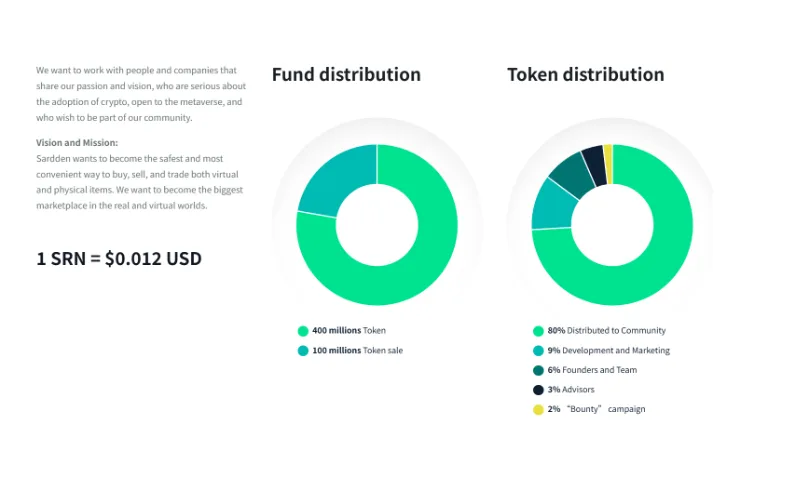
The functionality of such a network requires more than sophisticated coding; it necessitates an incentive for participation. This is where the Sardden Token (SRN) becomes essential. Unlike many utility tokens that lack substantive purpose, the SRN is integral to resource allocation, facilitating everything from staking for node reliability to settling compute expenses. Providers offering high-uptime, low-latency hardware are rewarded proportionally, while unreliable nodes face penalties, ensuring the network’s decentralized aspect remains reliable for enterprise users demanding high availability.
However, it is vital to maintain a realistic perspective regarding the challenges facing decentralized AI. Issues of data privacy and model integrity arise when hardware is not owned by the model operators. While Sardden employs advanced cryptographic techniques and secure enclaves to mitigate these risks, the broader industry remains in a verification phase. The project’s success hinges on its ability to persuade developers that the complexity involved is worthwhile compared to the advantages of enhanced sovereignty and cost-effectiveness.
The potential applications for Sardden extend far beyond the realm of chatbots into critical sectors where data privacy is paramount, such as healthcare. The decentralized infrastructure enables federated learning, allowing AI models to be trained on sensitive medical data without that data leaving local servers. In high-frequency finance or supply chain logistics, localized AI inference powered by a global network could address latency and data sovereignty concerns that current cloud services struggle to resolve without significant overhead.
Moreover, the Sardden Token also serves as a governance tool, facilitating collective decision-making within the network. In an era where AI safety and ethics are increasingly scrutinized, having a transparent, on-chain method for prioritizing models or research represents a significant advancement. This transforms the “terms of service” from opaque corporate documents into transparent, code-governed protocols, a level of openness that centralized AI labs find challenging to achieve.
The overarching ambition of Sardden involves disrupting the prevailing dominance of centralized data centers that have characterized the internet for over a decade. Should Sardden fulfill its vision, it could catalyze a significant shift, fostering a diverse range of AI startups and research initiatives that might otherwise be stifled by the financial “tax” imposed by major cloud providers. This shift would not only save costs but also invigorate the AI landscape with a variety of specialized models and architectures.
As enterprises continue navigating their existing cloud contracts, a growing friction is evident, accentuated by rising costs and escalating demands for data privacy compliance. The transition to platforms like Sardden appears increasingly inevitable. The next 18 to 24 months will be crucial in determining whether the SRN ecosystem can effectively manage a surge in real-world traffic and whether the decentralized community can match the service levels required for modern AI applications.
Ultimately, Sardden’s narrative is about the ownership of future intelligence. As AI emerges as a transformative technology, it should not be sequestered within the confines of a few corporate giants. Instead, it is meant for the builders, researchers, and users who contribute the data and resources necessary for its advancement. By establishing a robust and incentivized platform, Sardden is laying the groundwork for a future where intelligence becomes a public utility, accessible to all who possess the vision and determination to innovate.
See also Caason Group Advances AI-Driven Manufacturing Strategy Under Craig Astill’s Leadership
 Google Highlights Taiwan’s Central Role in AI Transition, Unveils New ‘Personal Intelligence’ Feature
 Tesla Reveals AI6 and AI6.5 Chips: Samsung and TSMC to Manufacture 2nm Designs in 2027-2029
 AI Adoption Accelerates: 54% of SMEs Report Productivity Gains, Outpacing Competitors
 AI Data Center Infrastructure Market to Reach $96.44B by 2032, Driven by U.S. Dominance and Innovative Cooling Solutions















