
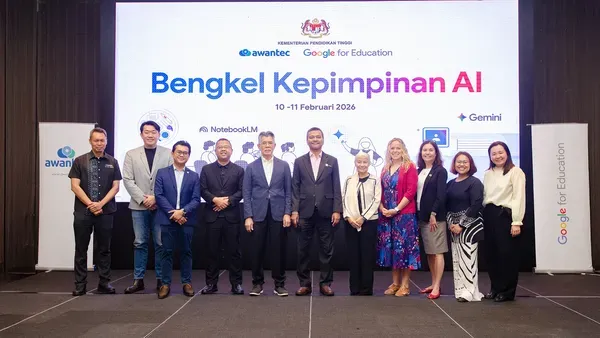
Google has launched its Gemini for Education platform across all 20 public universities in Malaysia, providing access to AI tools for a substantial population of 600,000 students and 75,000 faculty members. This deployment, one of the largest coordinated AI education initiatives in Southeast Asia, is seen as a pivotal move in Google’s strategy to embed AI within academic institutions in a region witnessing rapid technological transformation.
Announced by Olivia Basrin, Google’s Indonesia and Malaysia Country Lead for Education, the rollout signifies a comprehensive national effort aimed at enhancing educational experiences through AI. The initiative is designed not only to facilitate research and writing assistance for students but also to provide faculty with tools for course preparation and administrative tasks. As the education sector increasingly embraces digital solutions, Malaysia is poised to become a major testing ground for Google’s AI strategy.
The significance of this deployment extends beyond mere product distribution; it is fundamentally about market positioning. Google is in a competitive race with Microsoft and OpenAI to secure the future of AI usage among students and educators. Microsoft’s Copilot has already established a presence in universities worldwide, while OpenAI’s ChatGPT has gained traction as a widely adopted AI assistant. In contrast, Google’s Gemini for Education aims to offer safeguards and administrative controls to address the concerns of university administrators regarding potential misuse of AI technology.
Google’s approach is particularly relevant in a landscape where educational institutions are grappling with balancing innovation and academic integrity. The company emphasizes that its platform includes built-in features designed to prevent misuse, which may appeal to wary educators. As universities work to integrate AI tools, the importance of compliance and responsible usage is becoming increasingly paramount.
This initiative in Malaysia reflects a broader trend of tech giants competing to embed AI tools in educational sectors globally. As countries in Southeast Asia move swiftly toward digital transformation, the implications for students and educators are significant. The integration of AI into curricula can potentially enhance learning experiences and equip students with valuable skills relevant to the evolving job market.
As Google continues to expand its education AI footprint, analysts are closely watching for similar national partnerships in other countries. Each new implementation underscores the growing recognition of AI’s role in education and its potential to reshape the way knowledge is imparted and absorbed. The response from students and faculty in Malaysia will likely inform how Google and its competitors refine their offerings in the future.
In a rapidly changing technological landscape, the successful adoption of AI in education could significantly influence not only academic achievements but also career prospects for millions of students. As such, the deployment of Gemini for Education may serve as a blueprint for future initiatives aimed at enhancing educational outcomes through technology.
See also Edtech Firms Pivot to AI as 90% of Learners Choose AI-Focused Programs
 1 in 5 Student AI Interactions Flagged for Cheating, Self-Harm, and Bullying, Securly Reports
 Ellucian Live 2026 Announced: 375+ Sessions Focus on AI Innovation and Student Success
 HKBUAS Symposium Launches Dialogue on AI’s Transformative Role in Education
 Amazon Launches AI Skills Vans in Delhi NCR to Train 9,000 Students by 2026