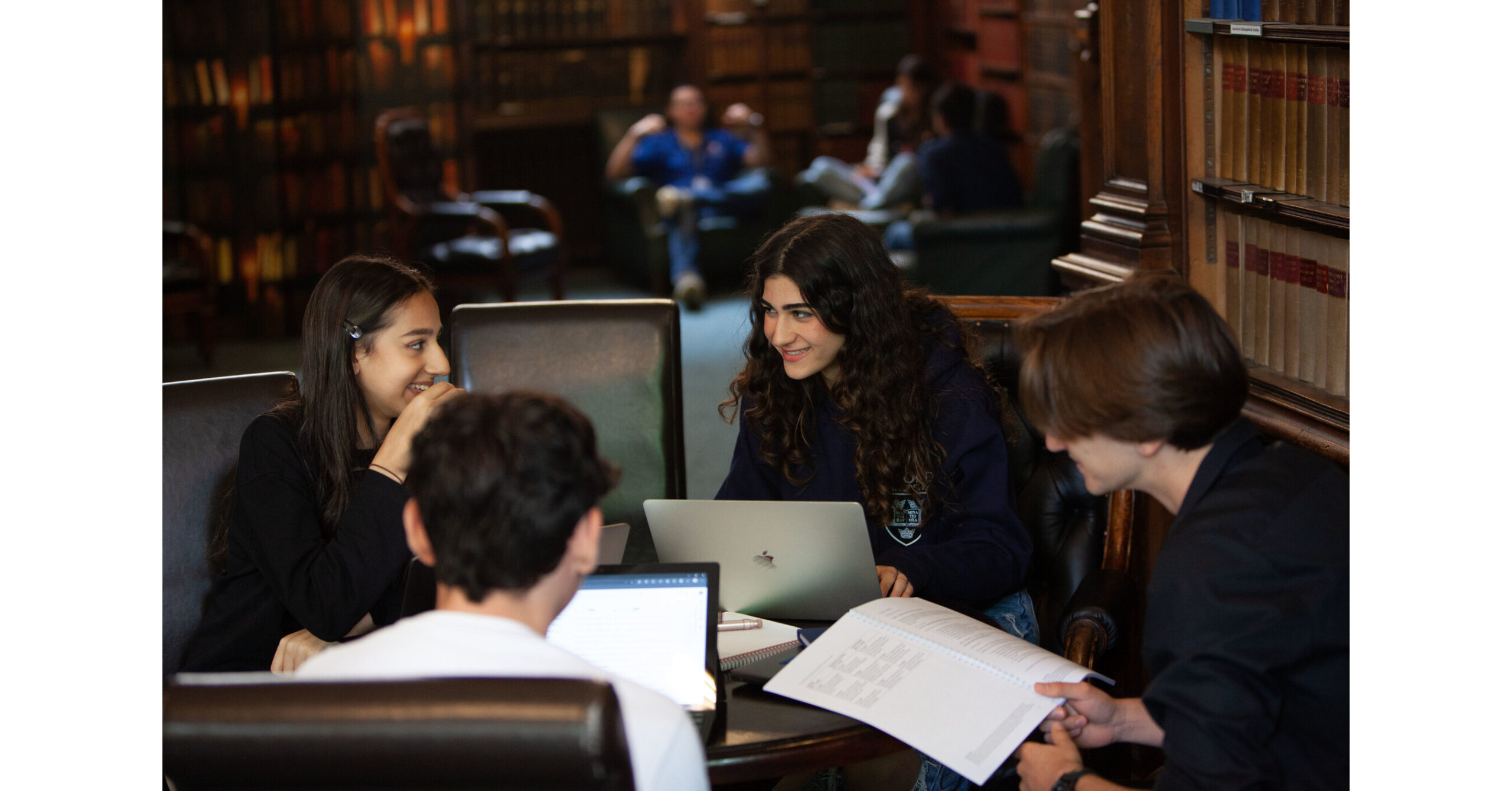
Oxford Royale Academy, one of Europe’s fastest-growing education companies, has partnered with the Massachusetts Institute of Technology (MIT) to offer AI literacy education to international summer school students this year. The collaboration will see students participating in Oxford Royale’s programmes in Oxford complete the MIT RAISE FutureBuilders pathway, a structured AI curriculum developed by MIT’s Responsible AI for Social Empowerment and Education (RAISE) initiative in partnership with Pharos Education. This initiative will launch this summer, providing students aged 13 to 18 the opportunity to earn an official MIT RAISE certificate.
With more than 3,000 students from over 175 countries attending its summer programmes, Oxford Royale is introducing a formal AI curriculum strand for the first time, following its recent recognition in the Financial Times’ FT 1000 as the 156th fastest-growing company in Europe. The announcement highlights a growing commitment to prepare students for a future increasingly shaped by advanced technologies like artificial intelligence.
“The future will be led by those who understand technology and know how to harness it responsibly,” said Andy Palmer, Chief Executive Officer of Oxford Royale Academy. “Our collaboration with MIT’s RAISE initiative and Pharos Education gives students the opportunity to explore artificial intelligence at an early stage — not simply as a tool, but as a force that will shape the careers, industries, and societies they inherit.”
Felipe Arango, Chief Executive Officer of Pharos Education, emphasized the programme’s goal: “The MIT RAISE FutureBuilders programme has a clear objective: to transform the next generation from consumers of technology into AI builders.” The diverse backgrounds of Oxford Royale’s students, drawn from more than 175 countries, present a unique opportunity for a truly global perspective on the subject.
Artificial intelligence is increasingly prioritized in educational frameworks worldwide, driven by the rapid uptake of large language models and AI systems in commercial applications. National strategies for AI education have emerged in various countries, reflecting the demand from employers for AI literacy as a vital skill for new workforce entrants. However, structured AI education at secondary levels remains sparse in many regions, a gap that Oxford Royale aims to address with the launch of the MIT RAISE pathway.
The RAISE initiative promotes AI literacy and ethical understanding among young learners, equipping them to engage meaningfully with artificial intelligence. The programme emphasizes the technical principles and ethical considerations surrounding AI, fostering awareness of issues such as fairness, accountability, and the societal implications of automated systems.
Founded in 2004 by Oxford graduate William Humphreys, Oxford Royale Academy has welcomed over 50,000 students from diverse backgrounds to its programmes. The introduction of AI literacy into its curriculum underscores a commitment to staying ahead in the rapidly evolving educational landscape.
The summer programme will take place in two sessions: from July 5 to July 18 and July 19 to August 1, 2026, with a total of 60 places available across both sessions. Oxford Royale continues to position itself as a leader in international education, particularly in areas critical to the future of work and society.
As artificial intelligence becomes integral to various sectors, initiatives like the MIT RAISE FutureBuilders programme could play a crucial role in preparing students to navigate and shape a world increasingly influenced by AI technologies. With this collaboration, Oxford Royale Academy aims to transform the educational experience of young learners, ensuring they are not only consumers of technology but also informed creators and ethical users of AI.
See also Google.org Open Sources AI Readiness Playbook to Help Foundations Fund Social Impact Projects
 UK Government Expands EdTech Testbeds by £23M to Boost AI Adoption in Schools
 Covera Health Merges with Medmo to Serve 6M Americans; AI Health Fund Launches Treehub
 Carnegie Mellon and Fujitsu Launch $10M Physical AI Research Center to Tackle Industry Challenges
 Online Courses Enable 200,000 Indians to Enter AI Fields, Breaking Barriers in Education