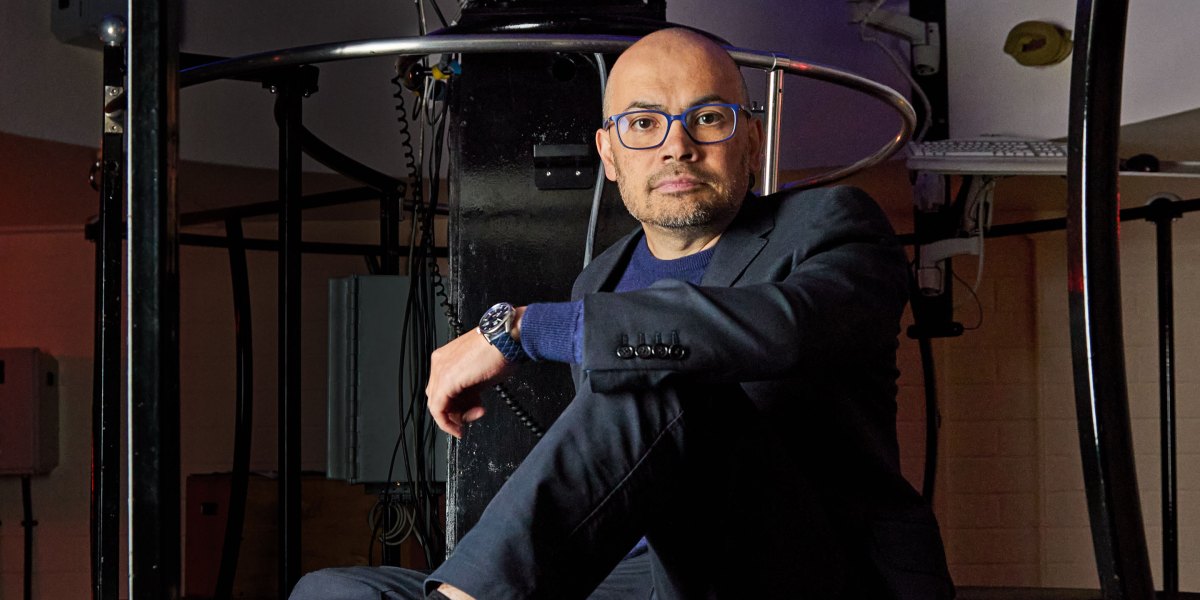
Demis Hassabis, co-founder of DeepMind and a leading figure in artificial intelligence (AI) research, has embarked on a new venture aimed at transforming drug discovery. At Isomorphic Labs, launched with backing from Google’s parent company, Alphabet, Hassabis is focused on tackling some of the most resistant diseases through sophisticated AI-driven methods. The startup aims to create groundbreaking medicines, with the ambitious goal of “solving all disease.”
Hassabis, whose early fascination with the night sky has informed his scientific philosophy, emphasizes the need to find patterns in massive datasets, a skill that is crucial for drug discovery. “The night sky is a mystery that’s staring us in the face all the time,” he notes, relating it to his quest for order amid the vast complexity of biological data.
Isomorphic Labs, which launched in 2021, is still in its early stages but has already made significant strides. The company aims to streamline the process of drug development by employing AI to predict how molecules interact with biological targets. The typical drug discovery process is fraught with challenges, including a 90% failure rate in clinical trials, but Hassabis believes that AI can substantially reduce the time and cost involved. “What if you could turn AlphaFold into a full-fledged drug-design engine?” he asks, referencing DeepMind’s revolutionary protein-folding AI.
Transforming Drug Discovery
The company is currently exploring how to leverage its AI capabilities to revolutionize the drug design landscape. Traditional drug discovery involves years of research and billions of dollars in investment, yet Hassabis envisions a future where breakthroughs could emerge at an astonishing pace. “We’re trying to build a system, a process…to do maybe dozens of drugs each year,” he explains, contrasting Isomorphic’s approach with that of conventional biotech firms that typically only produce one or two drugs throughout their lifetimes.
With the foundation laid by AlphaFold, which can predict protein structures from DNA sequences, Isomorphic seeks to apply AI to the entire drug discovery pipeline. The company recently secured $600 million in additional funding, signaling confidence from investors in its unique approach. Its partnerships with major pharmaceutical companies, including Eli Lilly and Novartis, further validate its aspirations to target difficult-to-treat diseases.
However, the road ahead remains challenging. The sheer number of potential chemical compounds far exceeds the stars in the observable universe, complicating the search for effective treatments. Hassabis recognizes that while AI offers hope, the biological landscape still contains mysteries that will require human ingenuity and scientific rigor to decode. “There are lots of different parameters you’re trying to triangulate into one molecule that’s a perfect match for a specific problem,” says Miles Congreve, chief scientific officer at Isomorphic, describing the complexities of drug development.
As Isomorphic navigates this intricate landscape, it aims to reduce drug discovery timelines significantly, potentially saving years in clinical trial phases. “I would think you could get to five years’ average time,” suggests Fiona Marshall, president of biomedical research at Novartis, highlighting the potential efficiency gains from AI-enhanced processes. Yet, she cautions that the human element in clinical trials and safety assessments will still require careful oversight.
The vision of creating a “virtual cell” that simulates biological interactions hints at a transformative future in medicine, where treatments could be tailored to individual patient needs. “You could imagine going into a pharmacy and phenotyping your specific disease,” Hassabis speculates, offering a glimpse into a world where personalized medicine is not just a dream but a reality. This forward-thinking perspective is what drives Hassabis and his team at Isomorphic Labs to push the boundaries of what is currently achievable in drug discovery.
As the company moves closer to clinical trials, the pharmaceutical industry watches with anticipation. The success or failure of Isomorphic Labs could reshape the landscape of drug discovery and development, potentially catalyzing a new era of treatment for diseases that have long been deemed “undruggable.” With the stakes so high, the scientific community remains eager to see how AI can fundamentally change the way medicine is developed and delivered.
See also AI’s Rapid Integration: Navigating Job Displacement and New Opportunities Globally
 IBM’s Earnings Report: Can New AI Platform Offset Financial Concerns?
 OpenAI and Anthropic Battle for $10B Enterprise AI Market Amid Rising Costs
 Italy Enacts National AI Law, Establishing Pioneering Regulatory Framework and Compliance Standards
 Pagaya’s AI Partnership with Achieve: A Game-Changer for Investment Strategy?