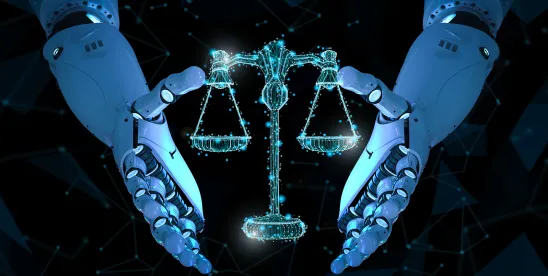
Italy’s Landmark AI Law Sets New Standards in EU
On October 10, 2025, Italy made history by becoming the first EU Member State to adopt a comprehensive national framework governing the use of Artificial Intelligence with the approval of Law no. 132/2025, known as the National AI Law. This legislation aims to complement the EU AI Act, which is set to be implemented gradually across Europe, by establishing sector-specific rules that fall under national law and creating an institutional framework to oversee AI applications within Italy.
The National AI Law has already activated several provisions that are fully applicable, contrasting with the EU AI Act, which will become binding over time. Additionally, it authorizes the Italian Government to issue implementing decrees related to various aspects of AI, including training, compliance with the EU AI Act, and civil redress mechanisms. These decrees are expected to be finalized by October 10, 2026.
The Italian Data Protection Authority (DPA) has been proactive in regulating AI, having adopted a notable Notice regarding web scraping for AI training on May 20, 2024. Established in 2021, the DPA has maintained a specialized unit focused on AI, reflecting the growing importance of this technology in modern data practices.
While the National AI Law closely mirrors definitions set forth in the EU AI Act, it emphasizes a responsible and “anthropo-centric” use of AI, ensuring that its development aligns with human rights principles enshrined in both the Italian Constitution and EU law. The law applies to AI systems and models developed or deployed within Italian territory, covering sectors such as healthcare, labor, intellectual professions, and public administration.
In healthcare, the National AI Law allows AI to bolster the national health service, enabling better disease prevention, diagnosis, and treatment while ensuring that AI does not discriminate against individuals seeking healthcare services. It stipulates that AI systems should only assist medical procedures, with final decisions resting in the hands of healthcare professionals. Guidelines for processing medical data for AI research are anticipated from the Minister of Health by early 2026.
For labor conditions, the law mandates that AI systems be transparent and respect human dignity. Employers are required to inform employees about AI’s role in decision-making processes. An Observatory on AI in the workplace has been established to monitor its adoption and impact on the job market while promoting training initiatives for workers.
In intellectual professions, AI may assist professionals, but human oversight remains paramount. The National AI Law clarifies that copyright applies to works involving human creativity, even when AI generates them. Content created purely by machines does not receive copyright protection, and unauthorized text and data mining have been criminalized.
The legislation also outlines compliance roles, mandating adherence to fundamental rights and the principles of transparency, safety, and non-discrimination. To further support its implementation, the Italian government has released a National AI Strategy focusing on enhancing expertise, increasing funding for AI research, and fostering AI adoption across public and private sectors.
As part of the regulatory framework, the National AI Law designates the Agency for Digital Italy (AgID) as the primary authority responsible for assessing AI systems and promoting innovation. The National Cybersecurity Agency (ACN) will supervise the use of AI in cybersecurity, while the DPA and other regulatory bodies will retain sector-specific competencies.
The law introduces criminal sanctions for AI-related offenses, including a new crime targeting the unlawful dissemination of AI-generated or altered content, such as deepfakes. Offenders may face significant prison sentences. The law also amends the Code of Civil Procedure to assign specialized civil courts to handle AI-related disputes, indicating a significant shift in how such matters will be adjudicated.
As Italy navigates these uncharted waters in AI regulation, the National AI Law aims to balance innovation with crucial ethical considerations, making it a pivotal model for other EU nations contemplating similar frameworks. The forthcoming implementing decrees will clarify the landscape further, shaping the future interaction between AI, regulation, and society.
See also Pagaya’s AI Partnership with Achieve: A Game-Changer for Investment Strategy?
 Cohere’s Joëlle Pineau Champions Business-Driven AI Over Superintelligence
 Invest in AI: Top 4 Stocks Poised to Dominate $3 Trillion Robotaxi Market by 2040
 Alibaba Accelerates AI Hardware Push with T-Head Listing and Nuclear Power JV
 China Set to Approve Nvidia’s H200 Chips, Unlocking $54 Billion in Revenue Potential