






















































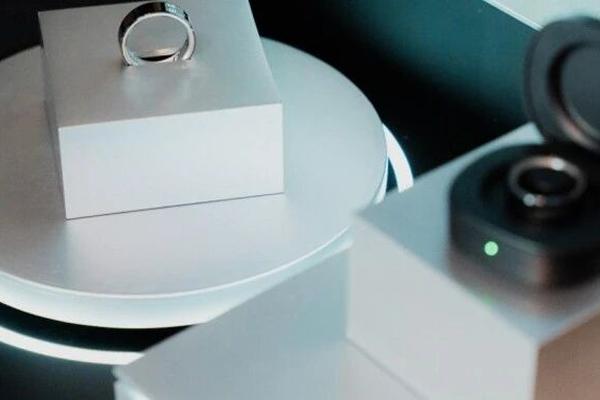
In a rapidly evolving global market for wearable smart devices, Atom El, an innovative company specializing in AI smart hardware, is poised to disrupt the industry with its latest offering: an AI smart ring. The company recently secured tens of millions of yuan in an angel round of financing, led by the Sky Workshop Venture Capital Fund. As traditional smartwatches and fitness bands face homogenized competition, Atom El’s unique product could redefine the landscape of wearable technology.
The founder and CEO of Atom El, Pan Zhidong, believes that the future will see AI smart rings becoming ubiquitous. “Today, everyone has a mobile phone, but in the future, everyone will own an AI smart ring. This is not a substitution relationship but an evolutionary one—the ring will become a part of the body and the most natural way of AI interaction,” he stated. Recent market data supports this outlook, predicting that the global market for wearable devices will grow from $179.8 billion in 2024 to over $995.2 billion by 2034. The sleep-health sector, closely linked to smart rings, is also on the rise, expected to reach $111.9 billion by 2030.
Pan emphasized that Atom El is not merely entering a mature market but is actively defining a new one. He noted that “three technological waves are converging at this moment,” which include advancements in edge AI computing, breakthroughs in sensor technology, and improvements in manufacturing processes. According to Pan, these developments allow for three times the performance at half the cost of two years ago, presenting a historic opportunity for innovation in the sector.
Atom El’s timing is strategic. The Finnish brand Oura, which focuses on health monitoring through smart rings, recently completed a $900 million financing round, achieving a post-investment valuation of nearly $11 billion. Pan expressed confidence, stating, “Oura has proven the direction, and we will redefine the height.” Atom El aims not only to emulate Oura’s success but also to become the world’s leading AI smart ring brand.
The company’s core innovation, the “Vibrating AI Interaction System,” utilizes an ultra-miniature vibration motor embedded in a micro-crystalline zirconium nano-ceramic casing just 2.5mm thick. This technology allows for “active communication” through vibrations, establishing an interactive innovation of “tactile priority.” Pan described this approach as a more intimate way of information delivery compared to traditional screens and sounds, likening it to “a friend gently patting your shoulder.” This method can transmit essential alerts such as heart rate warnings and important notifications while minimizing sensory overload.
Atom El’s team consists of experts from top-tier consumer electronics companies, AI labs, and precision manufacturing sectors, enhancing its capabilities in hardware design and AI algorithm research. The company has developed a health-specific model that reflects a significant evolution in data interpretation for sleep analysis, sports tracking, and health risk assessment. Pan metaphorically referred to the algorithm as “a personal health butler who has accompanied you for years,” noting its ability to recognize unique physical signs and offer personalized insights.
Atom El has also formed strategic partnerships with prominent institutions, including cooperation with the Human-Computer Interaction Laboratory of Tsinghua University and engagement with the Sleep Laboratory of the Massachusetts Institute of Technology (MIT). This collaboration aims to integrate cutting-edge sleep science into product functionalities, advancing smart wearable technology from basic data collection to precise health management.
The AI smart ring has already showcased impressive market performance since its launch in November 2025, selling out rapidly. It topped the smart ring category on Tmall within a month and again during the Spring Festival, illustrating its strong consumer appeal. At the recent 2026 CES International Consumer Electronics Show, Atom El’s ring won the esteemed Wearable Award, recognizing its excellence in design, technology, and user value. The product gained additional visibility when NBA star Derrick Rose wore it at the event, further elevating its profile.
Looking ahead, Atom El plans to make a significant appearance at the upcoming AWE (China Appliance and Consumer Electronics Expo), showcasing its AI smart ring. The company’s vision extends beyond a single product; Pan envisions the ring as a key to a new ecosystem for human-computer interaction, facilitating a seamless integration of various functionalities—from health reminders to digital payments—under the concept of “one-ring-pass-all.” In a landscape where AI technology and Internet-of-Things devices are rapidly proliferating, Atom El is poised to redefine the future of wearable technology.
See also MariaDB Acquires GridGain to Enhance AI Infrastructure with Sub-Millisecond Performance
 AMD Partners with Meta to Launch 6GW AI Infrastructure Using Custom GPUs and CPUs
 Eridu Raises $200M Series A to Build AI-Specific Networking Infrastructure
 Amber Semiconductor Raises $30M in Series C to Advance Power Delivery for AI Data Centers
 Nvidia Partners with Thinking Machines Lab, Invests in Vera Rubin Processors for AI Growth






