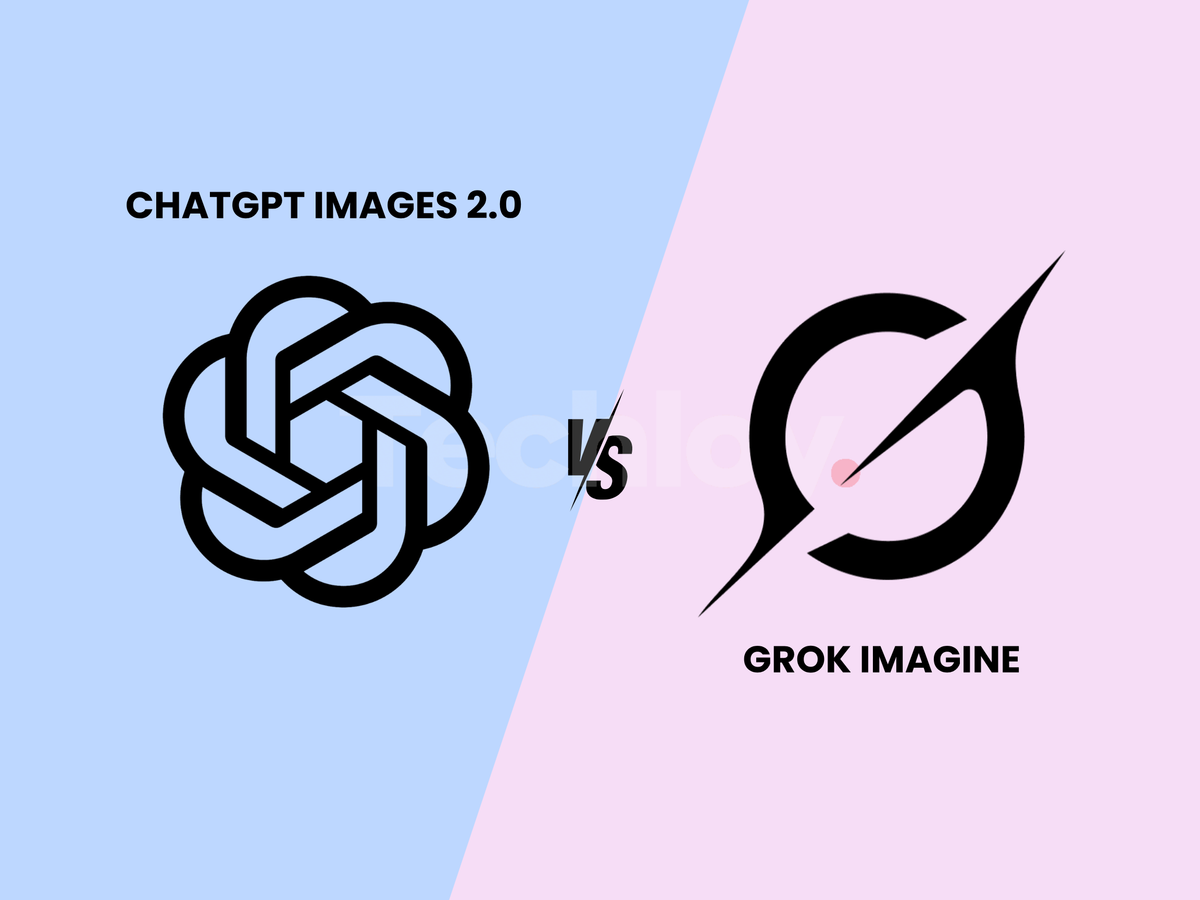
OpenAI launched its latest image generation model, ChatGPT Images 2.0, on April 21, 2026. Unlike its predecessors, this model reasons through its creations before generating them, marking a notable advancement in the AI-driven image generation landscape. In contrast, xAI has maintained its Grok Imagine 1.0, which, since a major upgrade in February 2026, has been priced at a flat $0.02 per image through its API—considerably cheaper than ChatGPT at full quality.
The release of ChatGPT Images 2.0 coincides with OpenAI’s decision to retire its earlier models, DALL-E 2 and DALL-E 3, on May 12, 2026. Users relying on these older models will have a brief window of three weeks to transition to the new offering.
When comparing the two tools, several key categories emerge: pricing, text rendering capabilities, speed and volume of image generation, the ability to produce multiple images per request, aspect ratio support, and overall intelligence and reasoning abilities.
In terms of pricing, ChatGPT Images 2.0 uses a tokenized billing model. Text tokens are charged at $5 input and $10 output per million, while image tokens are $8 input and $30 output per million, resulting in an approximate cost of $0.21 per image at a resolution of 1024×1024. In contrast, Grok Imagine charges a straightforward $0.02 per image for its standard model and $0.07 for the pro version, making it significantly more cost-effective, especially for high-volume tasks.
The verdict here is clear: Grok Imagine emerges as the winner due to its substantially lower cost per image, particularly at scale. When generating 10,000 images, the cost through ChatGPT could reach around $2,100, while the same task through Grok would only amount to approximately $200.
On the matter of text rendering, ChatGPT Images 2.0 has addressed previous limitations by effectively handling multiple languages including Japanese, Korean, Chinese, Hindi, and Bengali. This improvement enables the generation of localized marketing materials that appear cohesive and professional. Conversely, while Grok Imagine can incorporate text, it lacks published accuracy data or specific claims about its text-rendering improvements, making it less suitable for projects that require readable text within images.
In speed and volume, Grok Imagine supports 300 requests per minute, providing a robust solution for applications that require high throughput. ChatGPT Images 2.0, especially with its thinking mode, tends to be slower due to its reasoning processes, although its standard mode operates faster. However, OpenAI has not yet disclosed specific rate limits for its API, leaving users in a state of uncertainty.
For producing multiple images per request, ChatGPT can generate up to eight images from a single prompt while maintaining visual consistency across the set. This feature is particularly beneficial for creating branded social graphics or multi-panel layouts. In contrast, Grok Imagine also handles batch requests, but lacks clarity on whether it ensures consistency across images generated in a single batch.
Aspect ratio flexibility favors ChatGPT Images 2.0, which offers a range of ratios from 3:1 to 1:3, allowing for tailored requests based on specific project needs. Grok Imagine, meanwhile, is limited to five preset ratios, sufficient for standard formats but lacking the versatility offered by ChatGPT.
Moreover, the intelligence and reasoning capabilities of ChatGPT set it apart. This model not only searches the web for current information but also meticulously plans the image structure and verifies its output, a feature available to Plus, Pro, and Business subscribers. Grok Imagine’s recent introduction of a “Quality Mode” improves visual realism but lacks reasoning capabilities, producing outputs strictly based on user prompts without fact-checking.
Finally, regarding knowledge cutoff dates, ChatGPT Images 2.0 benefits from a knowledge cutoff of December 2025, complemented by its web search capabilities, which prevent outdated information from influencing its output. Grok Imagine does not offer web search functionality, leaving it reliant on the prompts it receives without any ability to update its knowledge base.
In conclusion, ChatGPT Images 2.0 stands as the preferable option for tasks requiring precision, readability, and polished outputs, such as infographics and branded image sets. Its advanced reasoning capabilities justify the additional costs and time involved. On the other hand, Grok Imagine thrives in scenarios demanding high-volume image generation at a fraction of the cost, solidifying its position as a leading choice for budget-conscious developers aiming to produce quality images efficiently.
See also Tsinghua University Unveils AIGP Framework for Instant Subwavelength Photonic Design
 Flow Matching Transforms Bioinformatics with Advanced Generative AI Techniques
 DeepSeek Launches V4 Model, Reducing Memory Use to 10% and Boosting Efficiency for 1M Tokens
 AI Image Models Revolutionize Visual Content Creation, Enhancing Design Accessibility and Efficiency
 Insilico Medicine Nominates UAE’s First Preclinical Candidate ISM0387, Boosting Local Biotech