Nvidia (NVDA +1.13%) has consistently outperformed in the stock market, largely due to its strategic pivot towards the burgeoning field of artificial intelligence (AI). This transition has transformed the company into a powerhouse in the tech industry, making it the leading designer of graphics processing units (GPUs), which are critical for AI development.
Nvidia’s GPUs are recognized as the fastest available, and while their cost is higher than those of competitors, their efficiency offers potential long-term savings. This strategy has translated into robust financial performance, with revenue reaching a record $215 billion in the latest fiscal year. The stock has surged over 600% in the past three years, reflecting strong investor confidence. As the AI sector remains in its infancy, Nvidia’s stock could still have considerable upside.
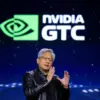
The focus now shifts to a significant event on March 16, when Nvidia CEO Jensen Huang will deliver a keynote address at the company’s annual GTC AI conference. Historically, these presentations have been pivotal, featuring major announcements about new products and strategic initiatives. For instance, last year, Huang unveiled plans for upcoming GPU launches and introduced a groundbreaking open humanoid robot foundation model.
Nvidia’s transition towards AI began as the company recognized the potential of this technology to revolutionize various industries. Although initially dominated by the video gaming sector, Nvidia now derives 91% of its revenue from AI-related endeavors. The company has capitalized on early entry into the AI market, establishing strong customer relationships and maintaining a competitive edge through ongoing innovation.
The AI revolution, of which Nvidia has played a central role, is expected to expand further, influencing everyday applications and advancements in fields such as robotics and autonomous vehicles. The demand for GPUs will remain critical, not only for training AI models but also for their operational capabilities in real-world problem-solving. This trajectory suggests sustainable growth for Nvidia, making it an attractive long-term investment.
As anticipation builds for Huang’s address on March 16, Nvidia has hinted at a comprehensive overview of its latest breakthroughs across the AI landscape. The company stated, “The keynote will outline Nvidia’s latest advancements across the full AI stack, from accelerated compute and AI factories to open models, agentic systems and physical AI, setting the industry’s direction for the year ahead.” Such announcements could further elevate investor interest and potentially drive stock prices higher.
Evaluating whether to invest in Nvidia ahead of this key date involves a look at its current valuation, which stands at approximately 21 times forward earnings estimates. This pricing appears reasonable, particularly considering the company’s position in the AI market and its prospects for future earnings growth. Investors should note, however, that adopting a long-term investment strategy mitigates the pressures of short-term market fluctuations.
The prevailing wisdom suggests that timing the market is a challenging endeavor. Instead, a strategy focused on acquiring quality stocks at fair prices and holding them for the long term is advisable. Nvidia exemplifies this approach, making it a compelling addition to an investment portfolio, whether purchased before or after March 16.
See also ChatGPT and Gemini Fail to Prevent Teen Plans for Violence, Study Reveals AI Shortcomings
 Air India Express Flight IX938 Hard Lands in Phuket, Nose Wheels Detached; All Safe
 Google’s Genie 3 World Models Show Inconsistencies After 1 Minute, Aiming for AGI
 AI Chatbots Aid Violent Attack Planning, Study Reveals Alarming Findings on Safety Risks