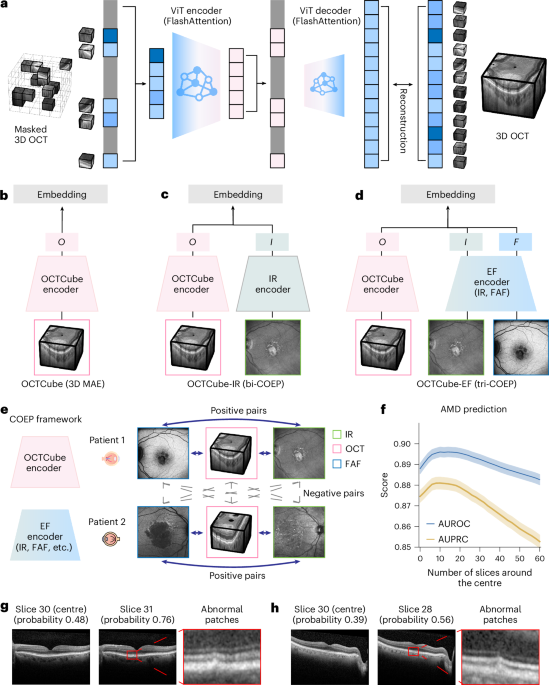
The ongoing advancements in the realm of ophthalmology are underscored by recent studies exploring optical coherence tomography (OCT) and its applications in diagnosing various retinal diseases. A groundbreaking systematic review published in JAMA Ophthalmology highlights the significant economic burden posed by late-stage age-related macular degeneration (AMD) in regions such as Bulgaria, Germany, and the United States, illustrating a crucial public health concern that deserves immediate attention.
As the global population ages, the prevalence of AMD has escalated, prompting researchers like Paudel et al. to examine its economic impact. Their findings suggest that the costs associated with late-stage AMD are substantial, necessitating a proactive approach to disease management and prevention strategies. This research aligns with previous works, including Flaxman et al., who systematically reviewed the global causes of blindness and visual impairment, emphasizing the need for improved eye health initiatives worldwide.
Recent technological innovations have shown promise in enhancing the diagnosis and treatment of retinal conditions. For instance, multimodal imaging techniques are being refined to assess diabetic retinopathy and macular edema, as detailed in the latest update by Parravano et al. Their research points to the integration of biomarker analysis, which could revolutionize the way these diseases are diagnosed and treated, ultimately aiming to improve patient outcomes.
Among the technological advancements, deep learning methodologies are emerging as pivotal tools in ophthalmology. A notable study by De Fauw et al. demonstrated the potential of deep learning for diagnosing and referring patients with retinal diseases. These advancements not only enhance diagnostic accuracy but also streamline the referral process, allowing for timely treatment interventions.
In a closely related study, researchers are exploring the intricate vascular anatomy of the human retina using projection-resolved OCT angiography, as noted by Campbell et al. This detailed mapping of retinal blood vessels could significantly enhance the understanding and management of various retinal diseases, providing clinical practitioners with vital information for patient care.
However, the integration of artificial intelligence (AI) into medical imaging remains a double-edged sword. While it promises increased efficiency and accuracy in diagnoses, there are concerns regarding interpretability and the potential for over-reliance on automated systems. Recent research by Lin et al. assessed the clinical utility of expanded macular OCTs using machine learning, emphasizing the need for practitioners to remain engaged and informed in this evolving landscape.
Further complicating the landscape is the disparity in the availability of ophthalmologists worldwide, as highlighted by Resnikoff et al. Their findings reveal a growing gap between the demand for eye care and the number of professionals in practice. This imbalance underscores the urgency for innovations in telemedicine and AI-driven solutions that can bridge this gap, ensuring that patients receive timely care regardless of geographic location.
The FDA’s recent guidance on AI in software as a medical device reflects a significant regulatory shift, recognizing the role of AI technologies in clinical settings. As noted in the agency’s report, the integration of AI into medical devices must be approached with caution, ensuring that patient safety and efficacy remain paramount.
With these advancements in imaging and diagnostics, a forward-looking perspective is essential. The potential for AI and advanced imaging technologies to enhance patient care in ophthalmology is immense, but it must be coupled with rigorous clinical validation and ethical considerations. As the field continues to evolve, stakeholders must prioritize collaboration and transparency to harness the full potential of these technologies while safeguarding patient interests.
In conclusion, the ongoing research and technological advancements in ophthalmology not only highlight the growing economic burden of retinal diseases but also signify a transformative era in eye health care. Continued efforts in both innovation and education will be key in addressing the challenges posed by conditions such as AMD and diabetic retinopathy, ensuring better outcomes for patients worldwide.
See also DeepSeek Launches V4 AI Model with Enhanced Reasoning, Challenging OpenAI and Google
 OpenAI Launches Images 2.0 with Enhanced Precision and Multi-Language Support
 AI Detection Tools Emerge as Guardians of Integrity in Synthetic Media Creation
 Midjourney Launches V8 Alpha, Enhancing Image and Video Generation with New Features
 AI Therapist Risks Highlighted: OpenAI’s Data Policies Raise Privacy Concerns