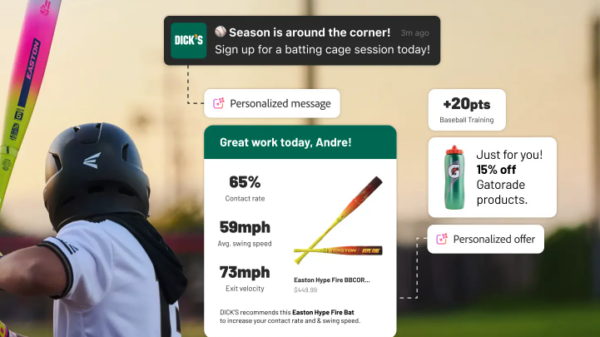
Adobe has unveiled a new platform called CX Enterprise, marking a significant advancement in its foray into agentic AI. Announced at the Adobe Summit 2026 in Las Vegas, the platform is designed to transform fragmented marketing workflows into coordinated, enterprise-wide systems that prioritize customer experience. This shift from isolated automation practices to fully orchestrated systems underscores Adobe’s commitment to streamlining customer interactions across various touchpoints.
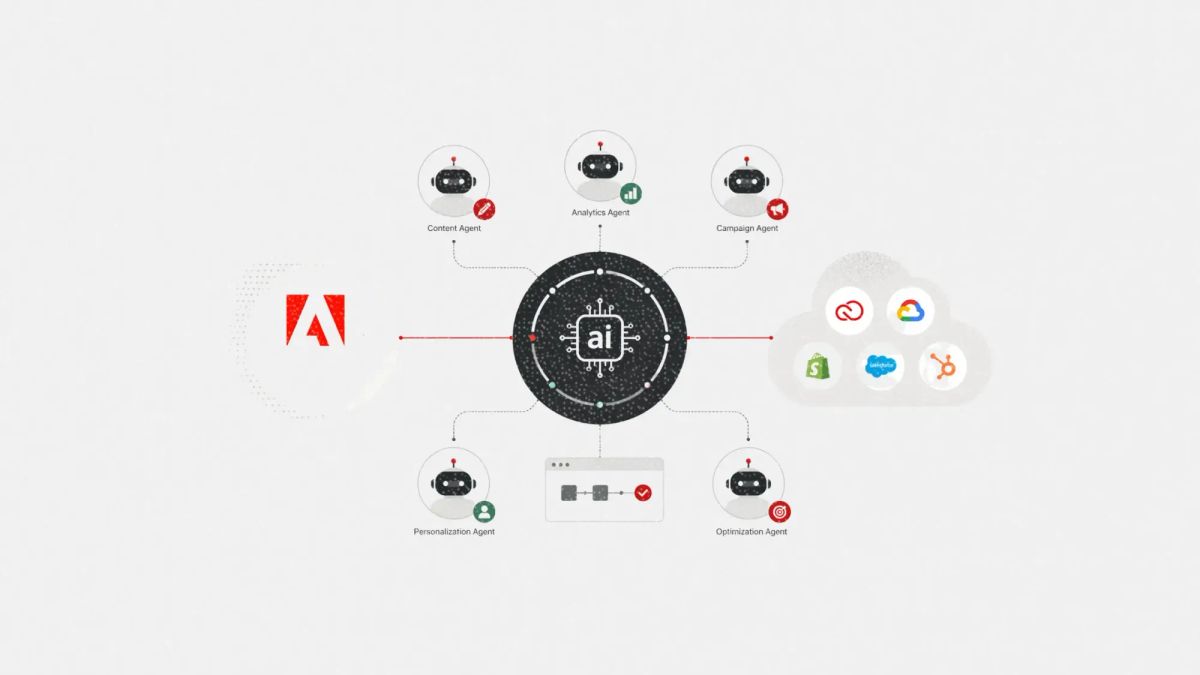
At the heart of CX Enterprise is a comprehensive agentic AI framework that manages the entire customer lifecycle—from acquisition to retention. The platform integrates AI agents, reusable agent skills, and Model Context Protocol endpoints within a governed intelligence layer. This design aims to create workflows that are not only automated but also auditable and context-aware, optimizing the use of customer data, content, and journey mapping.
The platform features several key components, including Adobe Brand Intelligence, which serves as a reasoning engine to ensure brand consistency; Adobe Engagement Intelligence, a system focused on maximizing customer lifetime value; Agent Orchestrator, which coordinates agents across both Adobe tools and third-party environments; and CX Enterprise Coworker, an AI system that translates business objectives into actionable plans. Notably, Adobe is embedding its agents into popular external platforms like ChatGPT Enterprise and Microsoft 365 Copilot, broadening its operational scope beyond its own ecosystem.
Adobe’s approach to CX Enterprise emphasizes interoperability, partnering with technology leaders such as AWS, Google Cloud, and OpenAI to facilitate cross-platform orchestration. This strategy is particularly relevant as many enterprise marketing stacks are already fragmented, making Adobe’s role as an orchestration layer critical. The platform’s composable architecture allows businesses to integrate agent workflows into their existing systems without the need for complete overhaul.
As Adobe looks to transform customer experience orchestration, it acknowledges a shift from traditional rule-based automation to dynamic, AI-driven decision-making. Historically, customer experience platforms relied on predetermined journeys and segmentation logic. With the implementation of agentic AI, these journeys can adapt in real time according to varying contexts, goals, and performance metrics, thus revolutionizing how marketing teams approach campaign management. Instead of treating campaigns as sequential steps, teams can define overarching goals and let the agents coordinate execution.
This transition carries significant implications for marketers. Firstly, teams are encouraged to define objectives rather than just executing campaigns. The shift requires a focus on measurable business goals, such as revenue increases and retention rates, rather than mere task completion. Secondly, governance becomes increasingly important; as AI agents take on more executional responsibilities, ensuring brand safety, compliance, and data governance becomes non-negotiable.
Marketers must also consider interoperability as a strategic decision. The ability of agents to operate across diverse tools necessitates a reevaluation of how workflows span platforms. Moreover, as reusable agent skills gain prominence, they could become valuable assets akin to creative content or customer segments, providing teams with a competitive edge. With major agencies like Omnicom, Publicis, and WPP adopting CX Enterprise, it is evident that the service layer operationalizing marketing at scale is also undergoing a transformation.
In summary, Adobe CX Enterprise is not merely another AI feature but a redefinition of marketing operations. By positioning itself as the orchestration layer for agentic AI, Adobe aims to lead the future of customer experience toward coordinated systems rather than isolated tools. As marketing evolves from manual execution to AI-driven systems that react in real time, the challenge for marketers will be to adapt their processes, governance, and strategies effectively to meet this new landscape.
See also AI Personalization Transforms Kenyan Gambling Market Worth KES 200B Annually
 DIRHAM Framework Revolutionizes Content Distribution for AI Era Businesses
 Philadelphia Small Businesses Boost Online Visibility with Custom SEO Strategies
 TikTok Pauses AI Remix Feature After Creator Backlash Over Content Control Concerns
 India’s VC Power 100: Elevating AI, SaaS & MarTech Investments by 200% in 2023