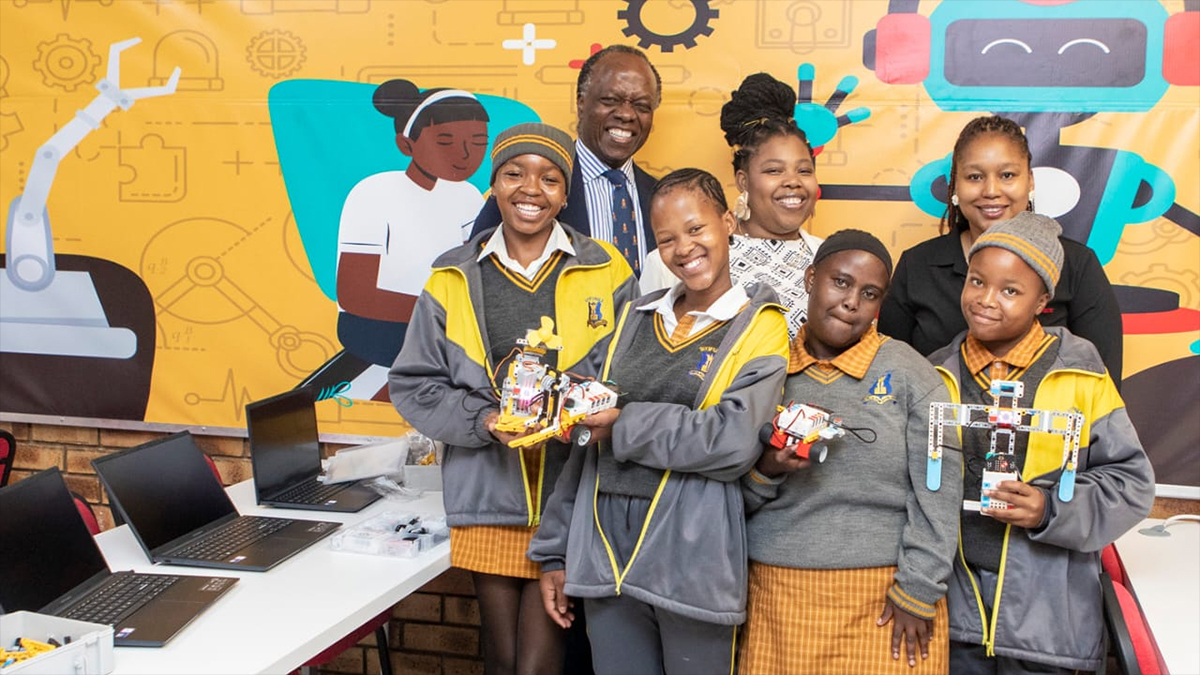
Students in Mpumalanga are now equipped with access to robotics and digital literacy training following the launch of a new laboratory at Siyifunile Secondary School in Dullstroom. The initiative, funded jointly by the Shoprite Foundation and the Development Bank of Southern Africa (DBSA), aims to enhance educational opportunities for learners and prepare them for a technology-driven economy.
Launched on October 3, the lab is part of a broader strategy to improve technology education in South African schools. The facility will provide students with hands-on experience in robotics, coding, and digital skills, essential for their future careers. According to a statement, the initiative seeks to build a more structured approach to technology education, addressing the skills gap in an evolving digital landscape.
Maude Modise, director of the Shoprite Foundation, emphasized the importance of expanding their existing robotics program. “Expanding our robotics programme into Mpumalanga strengthens our focus on building digital capability within the schooling system,” Modise stated. The foundation has previously established four similar labs in KwaZulu-Natal and the Eastern Cape, reinforcing its commitment to enhancing tech education across South Africa.
The new lab introduces a curriculum-aligned pathway from Grade 8 through to matric. Learners in Grades 8 and 9 will engage in coding and robotics during regular school hours, while older students in Grades 10 to 12 will participate in an after-school program that focuses on artificial intelligence and career readiness. This structured approach aims to foster problem-solving, digital fluency, and critical thinking skills.
Zeph Nhleko, chief economist and group executive for strategy and sustainability at the DBSA, noted that this initiative transcends the mere installation of new facilities. “This initiative is more than the handover of a lab; it is the activation of a transformative ecosystem that integrates infrastructure, digital skills development, and community empowerment,” Nhleko remarked. He stressed that the goal is to create opportunities through partnerships, leveraging the DBSA’s resources in conjunction with the technical expertise of organizations like the Shoprite Foundation.
Implementation of the robotics program will be overseen by Sifiso EdTech, which will align the curriculum, train educators, and ensure that coding and robotics are effectively integrated into the school timetable, adhering to the Department of Basic Education’s CAPS curriculum. “Every element of the lab is designed to be technically sound and integrated into the school timetable,” said Xoliswa Mahlangu, head of digital learning and technology at Sifiso EdTech.
The after-school program for Grades 10 to 12 will be delivered by Social Coding South Africa and will focus on applied artificial intelligence projects, innovation challenges, and exposure to competitions and workplace environments. Thembiso Magajana, founder of Social Coding South Africa, highlighted that the modules aim to enhance critical thinking, creativity, collaboration, communication, and computer literacy, establishing the lab as an active learning environment.
The launch of this robotics lab underscores the partners’ commitment to equipping learners with practical digital skills and exposing them to emerging technologies. It reflects a growing recognition of the need to prepare South Africa’s youth for the demands of a rapidly evolving digital economy. This initiative not only seeks to enhance individual learner capabilities but also aims to empower communities through education and technology, setting a precedent for future educational endeavors in the region.
See also University of Phoenix Scholars Reveal Insights on Generative AI’s Role in Higher Education
 Pippit AI Avatars Transform Digital Learning with Enhanced Engagement and Accessibility
 Zambia Launches AI Learning Platform in Secondary Schools to Enhance Education Access
 Huawei Launches AIEC Solution to Accelerate AI Education for 1 Million Students
 University of Phoenix Study Reveals Generative AI’s Role in Enhancing Academic Research