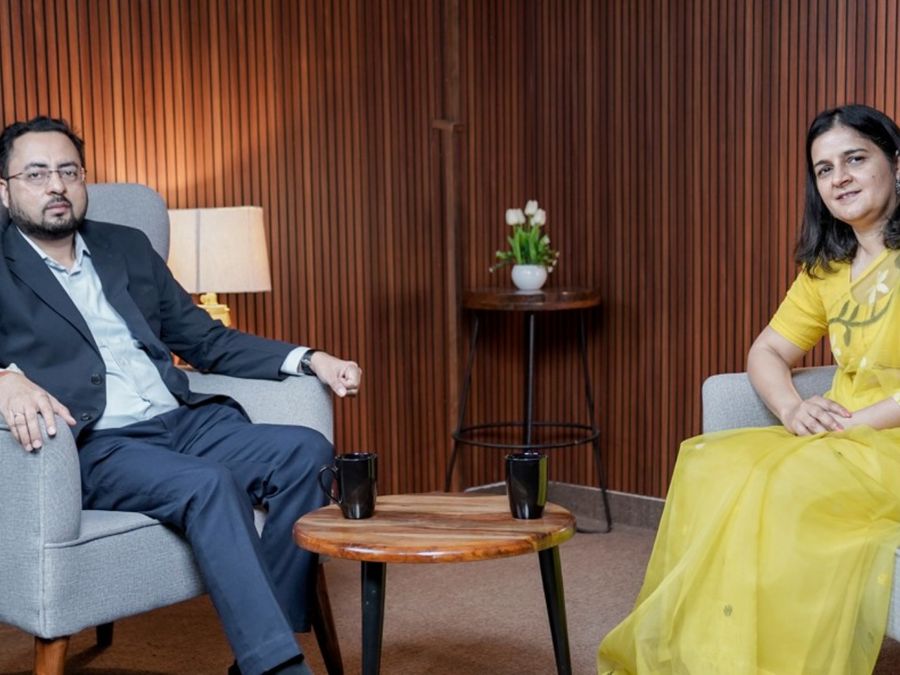
India’s insurance industry is grappling with a paradox of stagnant penetration rates, hovering between seven to eight percent, despite aggressive government initiatives and advances in technology. Shilpa Arora, co-founder and chief operating officer of Insurance Samadhan and a notable participant on Shark Tank India, highlighted these challenges during her appearance on The Startup Caffe podcast with host Sriwant Wariz.
With nearly three decades of experience in the insurance sector prior to founding her grievance resolution platform in 2018, Ms. Arora identified two critical failures that impede mass adoption of insurance services in India. The first issue stems from a growing reliance on artificial intelligence to process health claims, which often results in rejections due to algorithmically generated terminology that policyholders find difficult to comprehend or contest. The second issue involves implementation failures at the ground level, including hospital refusals of government schemes and systemic mis-selling practices that continue to undermine consumer trust, notwithstanding regulatory oversight.
“Insurance in India is operating in a trust deficit market where mis-selling has happened, claim rejections have happened, and the system makes it nearly impossible for people to understand what went wrong,” Ms. Arora stated. She elaborated that when hospitals submit discharge summaries, automated systems analyze documentation with a focus on identifying grounds for rejection rather than facilitating legitimate payments.
The asymmetry in understanding becomes stark during ombudsman hearings. Insurance companies often send legal representatives equipped with complete documentation, while policyholders face the daunting task of appearing alone, often lacking familiarity with insurance jargon and procedures. With only eighteen ombudsmen available for the entire country, hearing times have extended from three to six months or longer in major urban centers.
“There are three entities involved: the hospital, the insurance company, and the TPA desk. A policyholder cannot understand on their own what to write to the insurer. The policy terms are complex; the discharge summary is complex. Not everyone in India is able to represent their case well,” Ms. Arora noted.
Despite expanded digital distribution and government schemes like Ayushman Bharat, barriers persist. Hospitals often refuse to honor treatment under government schemes due to delayed reimbursements, while corporate employees typically depend entirely on employer-provided coverage, eschewing individual policies altogether. Furthermore, a significant awareness gap remains as many consumers continue to view insurance primarily as an investment rather than a protective measure. Senior citizens, in particular, face the issue of being offered inappropriate equity-linked products, while limitations such as room rent capping and sub-limits on modern therapies, including robotic surgery, create coverage shortfalls that consumers often discover only during the claims process.
Regulatory Developments Signal Acknowledgment Of Systemic Issues
Recent regulatory developments indicate growing awareness of these systemic problems. Last week, the Reserve Bank of India ruled that banks will be held accountable for insurance mis-selling, mandating sellers to demonstrate that transactions are appropriate, even if customer consent is documented. Meanwhile, the Insurance Regulatory and Development Authority continues to bolster need-based selling requirements. The introduction of the Abha ID medical record infrastructure is also poised to eliminate the capacity for consumers to conceal pre-existing conditions by creating permanent health records that are accessible during claim processing.
Ms. Arora, who gained visibility after her stint on Shark Tank India, where she negotiated with investor Peyush Bansal and secured funding at three times the initial television commitment valuation, reported that the visibility provided by the show accelerated the company’s growth by eight to ten times. This increase in visibility enhanced consumer trust, prompting individuals to share sensitive documents necessary for processing their claims. Today, Insurance Samadhan operates with a valuation of one hundred seventy-five crore, with a customer base largely concentrated in Maharashtra, Ahmedabad, Uttar Pradesh, and Delhi.
The founder emphasized that Insurance Samadhan’s “Know Your Policy” feature aims to bridge awareness gaps by translating complex insurance terminology into plain language, clarifying waiting periods, moratorium provisions, and coverage limitations that consumers often overlook during the purchasing process. The moratorium period is particularly significant because policies held continuously for five years cannot face claim rejection; however, consumers who port policies to save on premium costs may forfeit this protection.
Looking to the future, Ms. Arora aims to establish the PolyFix application as essential infrastructure for every Indian policyholder. This application will provide centralized document storage, automated claim filing, and family sharing features, positioning itself as a vital tool in navigating the complexities of insurance in India.
See also US Commerce Department Withdraws AI Chip Export Rule Amid Strategic Confusion
 Nevada Deploys Google AI Tool for Unemployment Appeals Amid Lawmaker Concerns
 South Korea Initiates Talks with Anthropic for AI Collaboration and Development
 China Issues Security Warning on OpenClaw as AI Tools Proliferate in Business Environments
 Boris Kriuk’s DWO Transforms AI Agent Deployment for Urban Infrastructure Operations