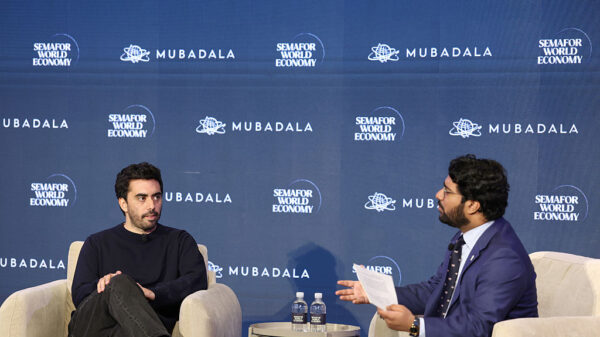
As the NAB Show unfolded this past Sunday, discussions around the future of AI in storytelling took center stage, with Hollywood insiders grappling with the implications of text-to-video technology. During a panel hosted by The Ankler, industry experts including Bryn Mooser, CEO of Asteria; Christina Lee Storm, head of studio at Secret Level; and Michael LoFaso, co-CEO of Dan Lin’s Rideback and Spuree, explored the question: Is Hollywood “cooked”? The panel, which will soon be available on The Ankler’s YouTube channel, revealed a complex landscape without a clear consensus on the industry’s fate amid rapid advancements in AI.
This year has seen a tumultuous period for text-to-video platforms, particularly with the shutdown of Sora, a key player in the market. OpenAI announced the discontinuation of Sora on March 24, with its consumer app set to go dark on April 26. The move prompted Disney, which had intended to take a $1 billion stake in OpenAI while securing a three-year character-licensing deal, to withdraw from both agreements. In the aftermath, the remaining platforms began to sort themselves into a hierarchy: Grok leading the way with meme creation for general consumers, Runway catering to professionals, and Kling and Google’s Veo vying for niche audiences. As Sora’s former users scattered among these platforms, a sense of creative relief seemed to permeate the industry, as though AI-generated content had been vanquished by traditional storytelling.
However, this narrative oversimplifies the dynamics at play. Rather than stabilizing into a coherent product category, text-to-video technology is increasingly diffusing into various features tailored for distinct environments. The once-unified market of AI-generated video is splintering into multiple segments, each serving different creative needs and operational frameworks. Today, the critical question shifts from which platform will dominate to where the technology will ultimately reside and how it will function within established systems of distribution and production.
Current data from Artificial Analysis indicates that Grok is leading in terms of AI video tool traffic, while Runway, Google’s Veo and Flow, and Kling hold significant minority shares. Despite these figures, no single platform has achieved outright dominance, leading to a fragmented landscape without a unified market structure for text-to-video technology. This division may very well define how these tools will be utilized in the future, not as part of a singular industry but as distinct entities each addressing differing demands.
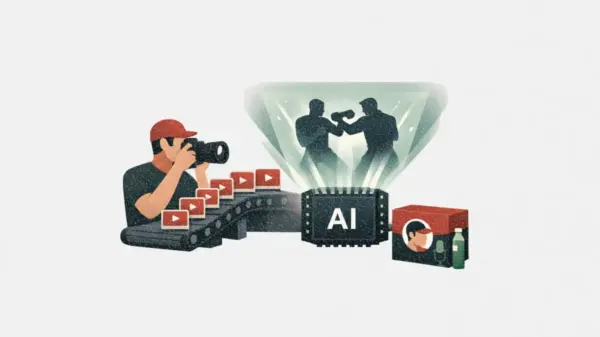
Focusing on three noteworthy platforms reveals varying approaches to integrating AI in video creation. Grok primarily operates within social media feeds, tapping into the casual user base. Runway, on the other hand, is carving a niche in Hollywood’s edit bays by streamlining professional workflows. Kling is industrializing short-form video, aligning closely with the creator economy’s rapid evolution. The critical takeaway for Hollywood is the divergence of these platforms and their user bases, far more significant than the quality of their outputs.
Runway stands out for its genuine inroads into professional editing environments, presenting legacy producers with challenges that extend beyond mere cost competition. Rather than just offering a cheaper alternative, platforms like Runway introduce a fundamentally different paradigm for video production, affecting how storytelling is crafted from the ground up. Meanwhile, Grok’s positioning as a tool for social media content aligns with Elon Musk’s ambitious vision of “movies by 2027,” which may fundamentally misinterpret the nuanced capabilities and limitations of AI in filmmaking.
As Kling quietly revolutionizes short-form video production, it underscores the growing importance of the creator economy. The realities these platforms embody also highlight the incumbent challenges facing traditional Hollywood structures, which are now grappling with technologies that do not merely compete on price but alter the very nature of content creation and consumption.
The fragmentation in the AI video landscape may ultimately prove detrimental to Hollywood, as three separate economies—feeds, creators, and studios—pull video content in incompatible directions. This diversification of platforms and their unique functionalities signals a new chapter in the integration of AI, one that demands an adaptive response from an industry still coming to grips with the implications of these transformative technologies.
See also AI Will Enhance iPhone’s Role as a Personal Digital Passport, Says Perplexity CEO
 Microsoft Warns Legacy Banks Face Pressure as AI Transforms Financial Transactions
 Google DeepMind Reveals LLMs Can’t Achieve Consciousness, Challenging AGI Claims
 Meta’s AI Acquisition Fails as China’s DeepSeek V4 Struggles to Compete
 Microsoft Invests A$25 Billion in Australia’s AI Infrastructure, Skills by 2029