






















































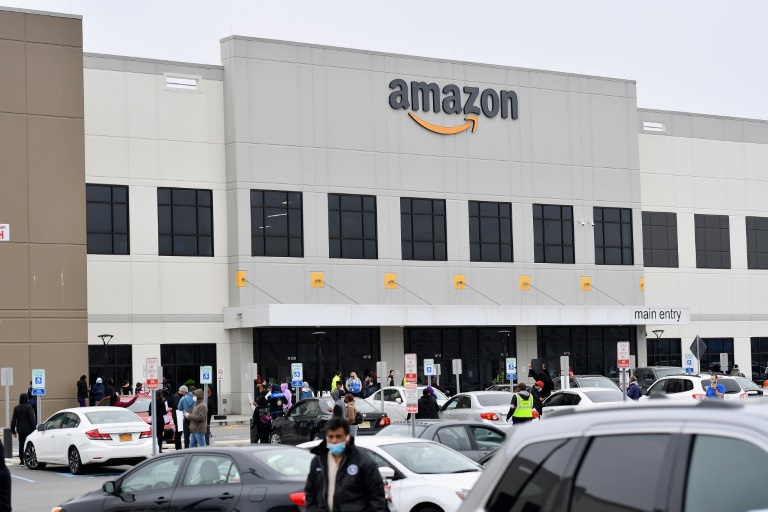
In 2025, advancements in artificial intelligence (AI) have significantly impacted the U.S. job market, contributing to a wave of layoffs across various sectors. Major corporations, including Amazon, have announced substantial job cuts, attributing these reductions to the integration of AI technologies, as reported by The Guardian. As layoffs continue to rise, experts predict that 2026 may become one of the most disruptive years for employment in recent decades, following the trajectory established in the previous year.
A study from the Massachusetts Institute of Technology released in November revealed that AI is capable of performing tasks associated with 11.7% of the U.S. labor force, potentially saving up to $1.2 trillion in wages across industries such as finance, healthcare, and professional services. This finding underscores the growing influence of AI on employment patterns, particularly as companies adopt these technologies to enhance efficiency and reduce costs.
In the latter half of 2025, the firm J&Y Law conducted an analysis of federal labor records, monthly job-cut reports, and employer disclosures to better understand the driving forces behind the surge in job losses. The results indicate that the layoffs are not only numerous but also persistent and unevenly distributed across different industries and regions. With the creation of merely 86,132 new jobs through July 2025, and layoffs averaging about 1.6 million per month, the data reveals a troubling gap—companies are shedding workers at a rate that far surpasses their capacity to replace them.
As of mid-2025, job cuts in the government sector have reached 308,167, marking a staggering increase of 703% year-over-year, largely driven by automation upgrades and federal restructuring. The technology sector has seen 154,445 job cuts, a 36% increase from the previous year, primarily attributed to AI adoption and role consolidation. Retail faces a similar fate, with layoffs surging by 249% in July alone due to automation and store closures. The nonprofit sector has also been affected, with 17,826 job cuts, a 413% increase, highlighting the pressure of funding constraints and the impact of automation.
This year, layoffs have shifted from being temporary fixes to becoming structural changes within companies, partly due to companies’ anticipation of prolonged slower demand. Historically, such patterns arise when organizations expect that economic recovery will not be immediate. With monthly layoffs averaging 1.6 million, businesses are implementing long-term reductions rather than reacting to short-term fluctuations.
Government decisions are increasingly driving national job losses, with public-sector job cuts surpassing those in private industries. Between January and July 2025 alone, 292,294 federal and government-related positions were eliminated, indicating a significant shift from past recessions characterized by private-sector layoffs. At least 54,000 of the layoffs announced this year have been directly linked to automation or AI, illustrating the breadth of the impact across both blue-collar and white-collar job markets.
As the trend toward automation accelerates, hiring plans have dropped to their lowest levels since 2010. Workers displaced by these technological advancements are now facing protracted unemployment spells, raising critical questions about workforce planning and policy responses for 2026 and beyond. The situation is alarming, with July alone witnessing 62,075 job cuts, a staggering 140% increase from the previous year, signifying that the momentum of layoffs continues to build rather than subside.
As AI technology evolves and becomes increasingly embedded in various sectors, the implications for the U.S. workforce are profound. Stakeholders must grapple with the reality that automation is reshaping employment landscapes at a pace that outstrips the market’s ability to adapt. This evolving dynamic not only presents challenges for employees but also necessitates urgent discussions about policy interventions and support systems for those affected by these transitions.
See also DeepSeek AI Refuses to Acknowledge Taiwan’s Independence, Upholds CCP Policy
 Lanner Reveals AstraEdge™ Platforms for AI-RAN and Robotics at NVIDIA GTC 2026
 Pentagon vs. Anthropic: Legal Battle Over AI’s Role in Warfare and Privacy Emerges
 Google and Accel Select Five Indian AI Startups, Rejecting 70% of Wrapper Solutions
 Google Unveils Platform 37 and AI Exchange in London to Advance AI Research and Education















