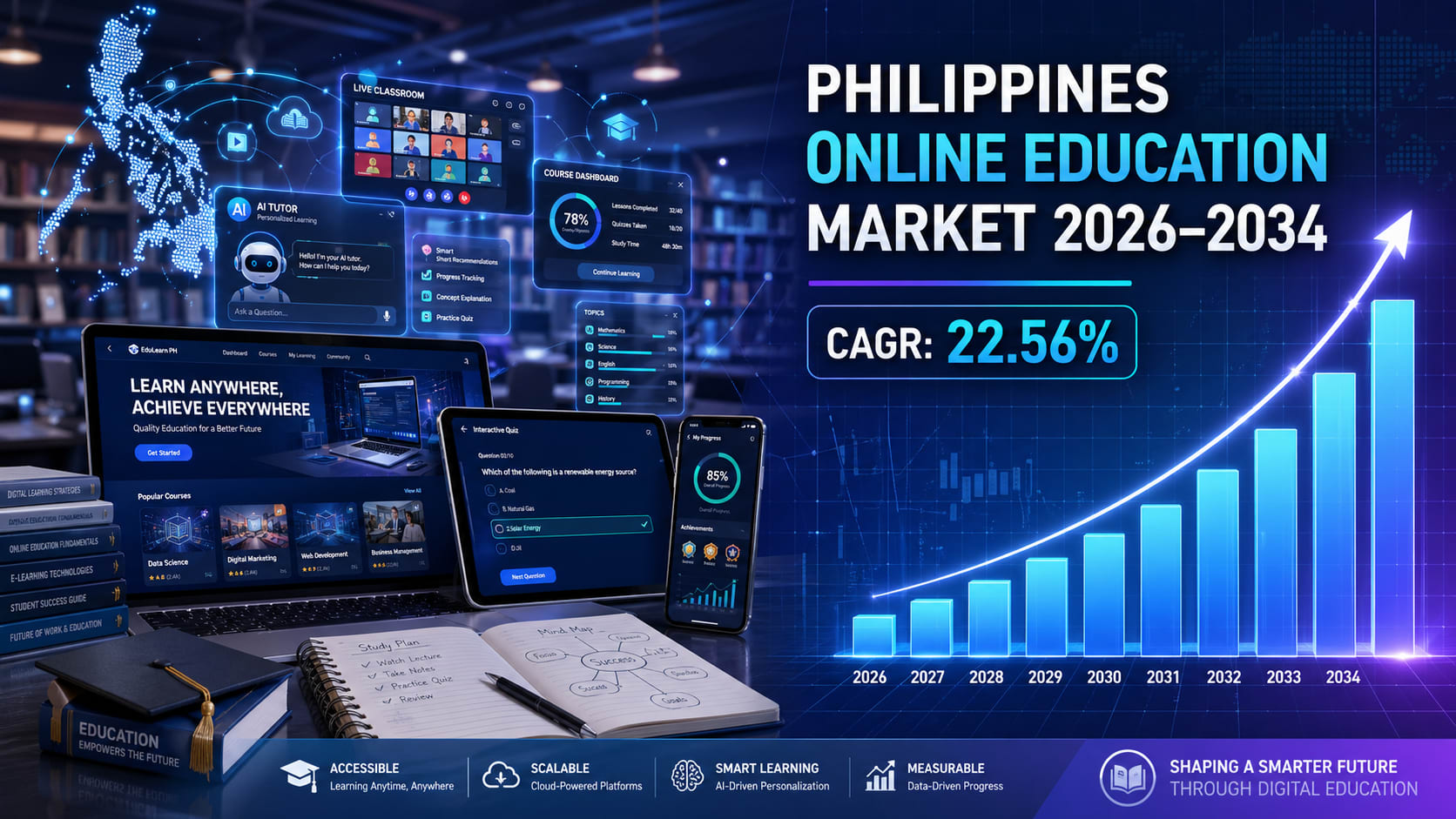
The online education market in the Philippines is undergoing significant transformation, driven by increased digital adoption and innovative learning technologies. As reported by IMARC Group, the market was valued at USD 2,202.9 million in 2025 and is projected to surge to USD 14,463.4 million by 2034, reflecting a robust compound annual growth rate (CAGR) of 22.56% from 2026 to 2034. This growth signals a pivotal shift in the educational landscape, emphasizing the demand for flexible and accessible learning solutions.
Several factors are propelling this growth. Increased internet penetration and improved digital infrastructure are making online education more accessible, particularly in urban and semi-urban areas. With the proliferation of smartphones, more students and professionals are turning to digital platforms that enable them to pursue learning at their own pace, balancing education with work commitments. The demand for such flexible learning formats is rising sharply, reflecting the changing needs of the modern learner.
Furthermore, innovative interactive learning technologies are enhancing user engagement. Platforms featuring gamified content and virtual classrooms are significantly improving learning outcomes, capturing the interest of a broader audience. In tandem with these developments, government initiatives aimed at boosting digital education infrastructure are catalyzing the adoption of online learning platforms throughout the country. Authorities are investing in technology to ensure that educational institutions can effectively transition to or expand their digital offerings.
As the emphasis on skills development escalates, there is an increasing demand for career-oriented courses—particularly in information technology, language learning, and professional certifications. The workforce’s need for upskilling is creating further opportunities within the online education sector.
Opportunities and Recent Developments
The Philippines’ online education market is also poised for expansion through mobile-first learning strategies, leveraging the country’s high mobile usage. As educational institutions collaborate with technology providers, they are developing mobile-based platforms to reach a wider audience, thereby enhancing accessibility.
The integration of artificial intelligence (AI) into educational frameworks is another significant trend shaping the future of this market. AI-driven personalized learning systems and adaptive platforms are being increasingly adopted, improving the efficiency and effectiveness of online education. Corporations are recognizing the value of online training programs, prompting investments to enhance employee skills and productivity.
Demand for K–12 education and test preparation platforms is also on the rise, as students seek academic support and resources to prepare for exams. Hybrid learning models—combining online and traditional education—are becoming more popular in response to the evolving preferences of learners and educational institutions alike.
Recent months have seen important developments in the sector. In April 2026, the Philippines continued to embrace online and blended learning models, with education authorities allowing greater flexibility in class delivery formats. This shift underscores the normalization of digital learning in higher education, reflecting a broader acceptance of online education as a viable alternative to traditional methods.
In March 2026, the Department of Education began expanding AI-driven initiatives aimed at enhancing teaching quality and personalizing learning experiences. This investment in technology strengthens the foundation for a more robust education ecosystem, particularly in public education reform.
February 2026 data confirmed the ongoing demand for online education, with the market projected to grow significantly, driven by digital transformation and flexible learning preferences. January of the same year saw an increased focus on improving educational outcomes through gamification and interactive tools. Institutions are actively pursuing innovative strategies to enhance student engagement and performance, addressing challenges associated with online learning environments.
Partnerships between universities and edtech firms have also gained momentum. Late 2025 saw collaborations aimed at launching online courses and AI-assisted training programs, enhancing access to higher education for students and professionals. These initiatives are crucial for extending learning opportunities to remote learners and working individuals.
The rapidly growing online education market in the Philippines presents a promising landscape for stakeholders within the education and technology sectors. As the market is expected to expand from USD 2.2 billion in 2025 to USD 14.4 billion by 2034, it reflects the profound impact of digital transformation on education. The shift towards online and hybrid models will play a significant role in shaping the future of learning and workforce development in the Philippines, embedding flexibility and accessibility into the educational framework.
See also Edtech Firms Rethink Curriculum, Cut Coding Time in Half as AI Roles Surge
 London AI Taskforce Launches to Tackle Workforce Skills Gap and Boost Employment
 Intel Donates Multimillion-Dollar AI Hardware to ASU, Expanding Processing Power by 10x
 Ed Tech Surge: Superintendents Report 90+ Emails from 79 Companies in One Day
 Los Angeles School Board Limits Tech Use in Classrooms Following Parent Backlash