






















































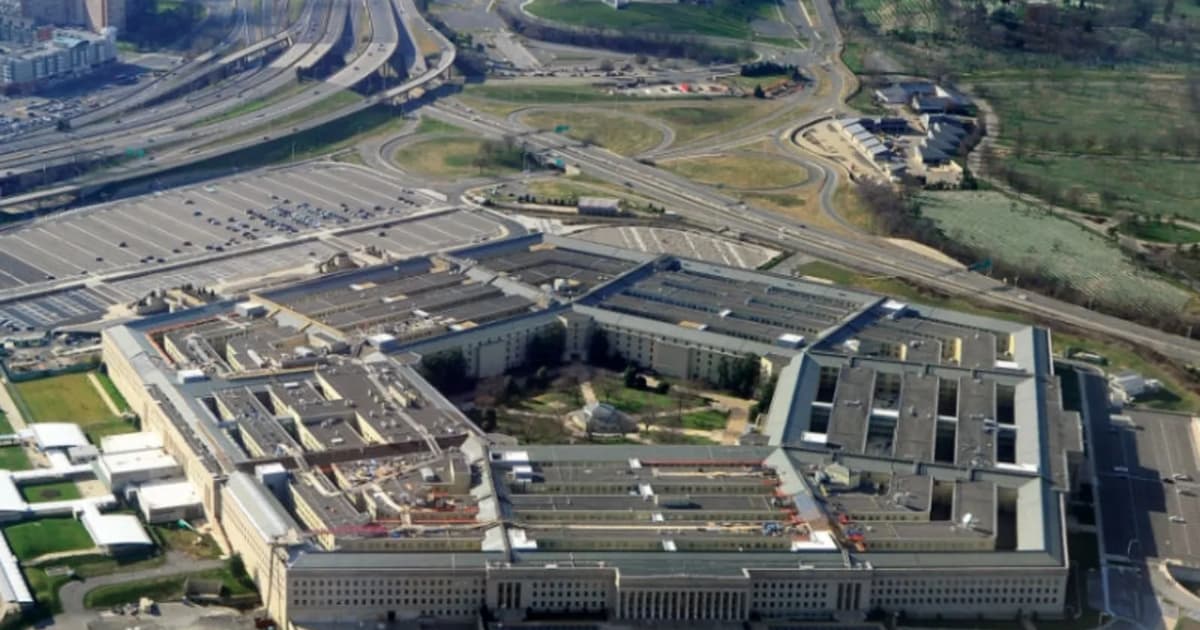
NEW YORK: The Pentagon has reportedly entered into an agreement to enhance its use of Google’s artificial intelligence in classified operations, according to multiple U.S. media outlets. This decision comes amid the military’s efforts to transition away from Anthropic’s AI technology, which the company has opposed being utilized for mass domestic surveillance or autonomous weaponry.
In February, former President Donald Trump directed the U.S. government to “immediately cease” using Anthropic’s technology, following a designation from Pentagon chief Pete Hegseth that labeled the company a national security supply chain risk—an assessment typically reserved for entities from adversarial nations. Anthropic is now contesting these measures in court.
Until recently, Anthropic’s AI model, Claude, was the sole AI authorized for classified military operations within the U.S. As the Pentagon sought alternatives, OpenAI reached an agreement to integrate its AI interfaces into military operations, while Elon Musk’s AI firm, xAI, also secured a deal with the Pentagon following tensions with Anthropic.
Pentagon chief digital officer Cameron Stanley emphasized in a CNBC interview that “overreliance on one vendor is never a good thing,” highlighting the strategic importance of diversifying technology partners. The Pentagon’s agreements with technology providers are said to stipulate that AI tools must be used only in compliance with the law.
The recent developments have ignited concerns within Google, as more than 600 employees demanded the company reject the proposed Pentagon deal. In a letter addressed to Google CEO Sundar Pichai, employees from various divisions expressed unease over the classification of military workloads, which they argued could lead to significant civil liberties violations without public oversight. “Right now, there’s no way to ensure that our tools wouldn’t be leveraged to cause terrible harms or erode civil liberties away from public scrutiny,” one employee noted.
The Pentagon has pushed for broad language in its AI agreements, arguing that this flexibility is necessary for operational adaptability. This stance has historical roots; in 2018, employee protests compelled Google to withdraw from Project Maven, a Pentagon initiative aimed at integrating AI into drone operations.
In recent years, however, Google has shifted its strategy, increasingly re-engaging with military contracts and positioning itself to compete for defense cloud opportunities. The evolving landscape of military AI utilization underscores the delicate balance between national security needs and ethical considerations surrounding technology deployment.
As the Pentagon amplifies its reliance on AI, the implications for privacy, oversight, and accountability remain a focal point of debate among tech workers, military officials, and the broader public. The outcome of these agreements and their implementation will likely shape the future of AI in military contexts, raising questions about the role of technology in modern warfare.
See also Unions Warn NSW Government: AI Adoption Could Lead to Mass Job Losses Without Protections
 AI Experts Warn: Ignorance Hinders Effective Regulation as Anthropic Reveals Mythos Capability
 OnAI Launches Mobile Service, Transforming Government Administration with AI by April 30
 Delhi Government Seeks Collaborations with Tech Firms for AI Solutions in Governance














