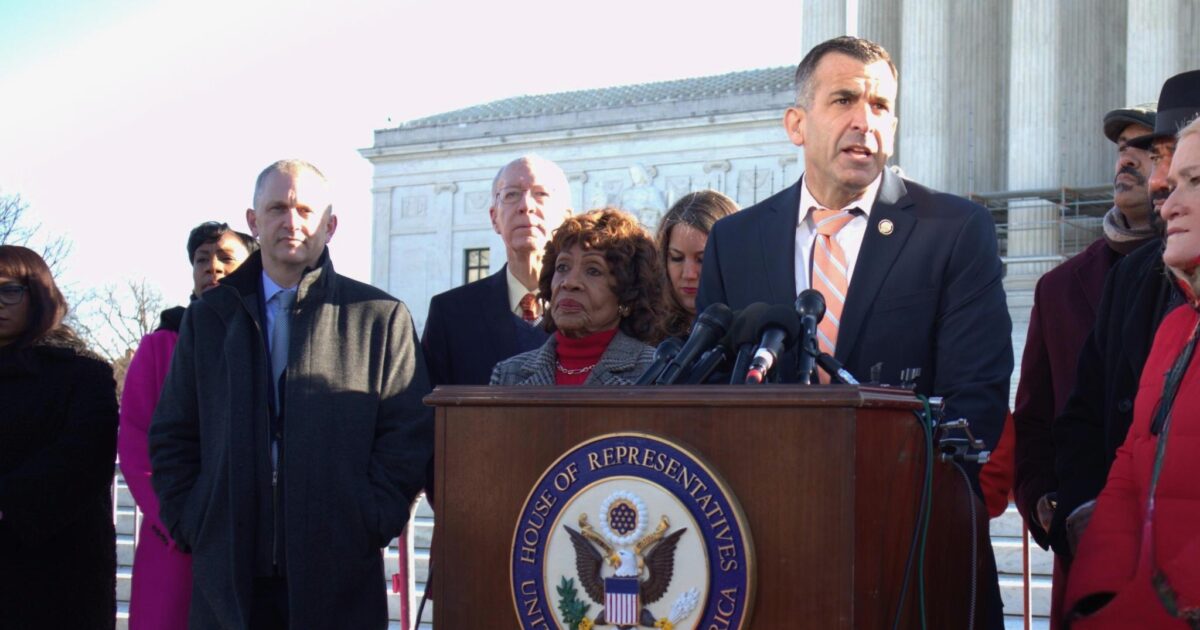
Rep. Sam Liccardo, the former mayor of San Jose, is at the center of a national debate regarding the regulation of artificial intelligence (AI), pitting state authority against federal oversight under the Trump administration. A coalition of child safety and technology watchdog groups is urging Liccardo, alongside other lawmakers, to reject an endorsement from the pro-AI super PAC Leading the Future, which is linked to the Trump administration and companies collaborating with U.S. Immigration and Customs Enforcement.
Founded last year, Leading the Future aims to advance the AI industry’s agenda by stripping states of their regulatory power in favor of federal control. The PAC has garnered more than $100 million in contributions from influential figures and organizations, including OpenAI President Greg Brockman, venture capital firm Andreessen Horowitz, and Palantir co-founder Joe Lonsdale. The PAC has endorsed various lawmakers, including Liccardo, who uniquely represents Silicon Valley’s often contradictory stance toward Washington.
“Silicon Valley has always been the land of first adopters when it comes to tech,” Tracy Rosenberg, executive director of the surveillance watchdog group Oakland Privacy, told San José Spotlight. “In my view, Sam Liccardo has had a front-row seat to the disruptive and potentially harmful consequences of unregulated tech, so I would suggest he think deeply about this endorsement.”
The coalition’s letter to Liccardo, which also includes the Tech Oversight Project and Common Cause, questions the implications of Leading the Future’s endorsement on his stance regarding state regulations. They highlight Colorado’s pioneering law, enacted in 2024, which mandates safeguards against bias, discrimination, and unethical decision-making in AI applications.
While Liccardo did not comment on whether he would reject the endorsement, a spokesperson for his congressional office stated that he supports federal preemption of state regulations within a reasonable framework. “Sam believes that we need a sensible federal regulatory framework to provide transparency, child safety, and agentic risk management as a precondition to federal preemption, considering it superior to the current patchwork of conflicting state regulations,” the spokesperson noted.
Campaign finance records reveal that neither Liccardo nor the independent PAC backing him, the Liccardo Victory Fund, has accepted funds from Leading the Future. Recently, the PAC announced it had raised a total of $140 million.
As a representative of Santa Clara County, a liberal stronghold, Liccardo has positioned himself as a critic of Trump, especially regarding the Pentagon’s dispute with Anthropic over AI technology and the previous year’s initiative to cut government waste through the Department of Government Efficiency (DOGE). Nevertheless, his district includes affluent areas populated by powerful tech figures, prompting him to advocate for a balanced approach to technologies such as AI. Last year, he launched a congressional innovation agenda addressing AI, online privacy, and responsible governance.
In recent months, Liccardo has expressed concerns about the rapid advancement of frontier AI technologies outpacing Congress’s ability to regulate them. He has proposed legislation to establish a bipartisan oversight body to regulate AI safety standards, which companies could meet to attain exemptions from stricter state laws. This proposal echoes an executive order signed by Trump in December, advocating for federal preemption while criticizing state laws as hindrances to innovation and economic growth. However, this approach has garnered skepticism from the coalition, which argues that such preemption would weaken essential safeguards.
“Efforts to preempt state laws would strip away safeguards for children, creators, and consumers—concentrating regulatory authority in Trump’s hands while leaving the public with few protections,” the coalition’s letter to Liccardo states. Rosenberg criticized AI preemption as a form of deregulation favoring the AI industry’s financially powerful interests. “We have seen the influence of tech funding in the Trump administration in ways that promote minimal regulation. Given the real-life harms already occurring, we should resist advocating for the most lenient federal standards possible.”
The urgency of these concerns is underscored by several controversies, including a March ruling by a federal judge in Minnesota requiring UnitedHealth Group to release documents related to allegations of AI misuse in denying patient care. Additionally, there have been alarming reports linking AI chatbots to incidents of teenage suicides.
Rep. Ro Khanna, who has clashed with Silicon Valley leaders over a proposed California billionaire tax, defended Liccardo despite not receiving an endorsement from Leading the Future. “Sam is principled, independent, thoughtful and has led on AI safety,” Khanna stated. “The broader problem is money in politics. I don’t take a dime of PAC money, and I’m leading a bill with Rep. Summer Lee to ban super PACs. Americans on both sides of the aisle are frustrated with special interests dominating our political landscape. We need to eliminate PAC money, whether from tech, big pharma, or any other sector.”
See also Nebraska Supreme Court Suspends Lawyer for Submitting AI-Generated Brief with 57 Errors
 AI-Powered Pricing Models Could Lead to Consumer Exploitation, Research Warns
 ComplianceCow Integrates Continuous Evidence Tools with ServiceNow AI for Enhanced IT Governance