Large Language Models (LLMs) and Generative AI are rapidly reshaping the landscape of business and technology, enabling innovative applications across various sectors. Generative AI, a broad category of technologies, refers to systems that create new outputs—including images, music, and synthetic data—by leveraging extensive databases and advanced machine learning techniques. For example, these technologies can design artwork or simulate complex medical scenarios. A prominent subset of this field, LLMs focus specifically on generating text that closely resembles human writing, with platforms like OpenAI’s ChatGPT exemplifying this innovation.
ChatGPT operates on large language models, such as GPT-4 and GPT-5, but is not classified strictly as an LLM. Instead, it functions as an application that incorporates capabilities like knowledge bases, conversation histories, and web browsing to enhance user interactions. The distinction between these technologies is significant and merits further exploration to help understand their respective roles and functionalities.
Key Distinctions
At its core, the primary function of Generative AI is to create a diverse array of content types, ranging from text and images to music and videos, making it applicable across creative industries, entertainment, and content generation. In contrast, LLMs specialize in generating coherent, contextually relevant text, thus finding applications in educational settings, customer support, and fraud detection. The technologies behind these systems differ as well; Generative AI utilizes methods like Generative Adversarial Networks (GANs) and Variational Autoencoders (VAEs), while LLMs rely on transformer models, which employ a self-attention mechanism to weigh the relevance of different words in a text.
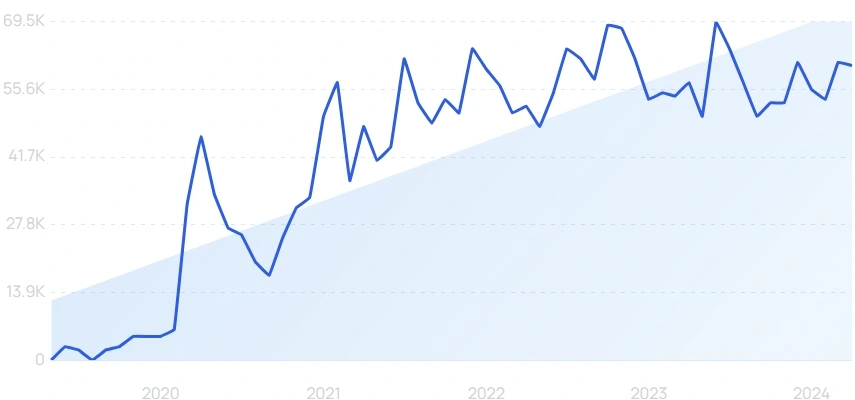
Recent statistics illustrate the growing impact of generative AI tools. For instance, searches for “Suno,” a platform for text-to-music generation, have surged by 411% over the past two years. Generative AI’s influence extends into various industries, including genetics and drug design, where systems integrated with CRISPR technology can create new gene editors, as highlighted by a recent study. Meanwhile, Google’s AlphaFold 3 is pushing boundaries by predicting amino acid interactions and generating novel molecular structures, showcasing the technology’s utility in scientific research.
However, the rise of generative AI is not without challenges. Ethical implications surrounding deepfake technologies remain a pressing concern. A viral incident in October 2025 featured an AI-generated video of OpenAI CEO Sam Altman, highlighting the potential misuse of such advancements in creating misleading content. Additionally, copyright issues surface as generative AI blurs lines between original and derivative works, further complicating the legal landscape.
Large Language Models, specifically, are trained on vast datasets sourced from books, articles, and online discourse, enabling them to mimic human language across diverse contexts. These models utilize an objective function, typically predicting the next word in a sequence, which helps them learn language patterns and structures. Notably, developments in the field have introduced large multimodal models (LMMs), such as OpenAI’s GPT-4o, which integrate capabilities for both text and image generation, further complicating the distinction between traditional LLMs and broader generative AI frameworks.
LLMs have found traction in customer service, content creation, and education, automating interactions and producing text that aligns with specific guidelines. Tools like Freshworks and Zendesk incorporate LLM capabilities to streamline customer interactions, while educational institutions leverage these models for creating lesson plans and grading assignments. Despite their advantages, LLMs pose challenges, including potential job displacement in various sectors and ethical dilemmas related to academic integrity as they enable easier access to generated content for dishonest purposes.
As the implications of both generative AI and LLMs unfold, industries are adapting to capitalize on these technologies while navigating their complexities. The Burning Glass Institute and SHRM have identified financial services, law, and marketing as sectors most likely to undergo significant transformations due to generative AI. In finance, these technologies can analyze market trends and automate document standardization in legal contexts, while marketing professionals benefit from enhanced content creation capabilities.
Ultimately, as LLMs and generative AI evolve, they promise to reshape traditional workflows and create new opportunities across multiple fields. However, this transformation comes with ethical responsibilities that stakeholders must address to ensure these powerful tools are used responsibly and transparently. The integration of these technologies represents both a challenge and an opportunity as society grapples with their implications for the future of work, creativity, and information dissemination.
See also USC Launches AI Institute for Actors to Enhance Creativity and Career Opportunities
 Claude Opus 4.7 Launches with 20% Improvement in Complex Task Execution and Enhanced Vision
 Pixazo Launches Developer API for AI Image, Video, and Music Generation Integration
 Congressional AI Roundtable Reveals Lawmakers’ Fears Over Technology’s Rapid Growth
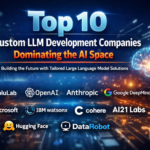 Top 10 LLM Development Companies Driving AI Innovation and Customization Today