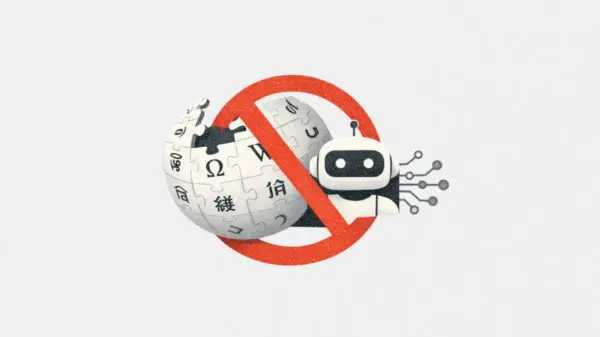
The emergence of generative AI is challenging the very foundations of copyright, with instances of entire books mimicking authors and AI-generated content featuring beloved characters gaining viral traction on social media. This issue is compounded by the fact that many of today’s popular AI tools have been built by appropriating copyrighted material without consent.
A tool named Malus.sh, which is pronounced “malice,” exemplifies this trend by employing AI to “liberate” software from existing copyright licenses, effectively creating a “clean room” clone that avoids infringing on the original code’s copyright. According to 404 Media, this initiative serves as a tongue-in-cheek commentary on the ongoing tensions within the open-source community while being developed by an LLC that markets the tool to paying customers.
Mike Nolan, cofounder and a researcher in the United Nations political economy of open source software, told 404 Media, “It works.” He suggested that if the project were merely satire, it would likely be “dismissed by open source tech workers who felt that they were too special and too unique and too intelligent to ever be the ones on the bad side of the layoffs or the economics of the situation.”
The methodology behind Malus.sh draws upon a “clean room” design process pioneered in the tech industry, notably by IBM’s competitors who reverse-engineered its computers. This involved deploying two teams: one to ascertain specifications for recreating its BIOS, and another team that was kept uninformed of the original code. This approach, famously dramatized in the HBO series “Halt and Catch Fire,” has become simpler with the advent of AI, allowing tools to replicate the functionalities of software without accessing its core code, thereby circumventing copyright licenses.
On its website, Malus.sh claims, “Finally, liberation from open source license obligations.” It boasts that “our proprietary AI robots independently recreate any open source project from scratch,” resulting in “legally distinct code with corporate-friendly licensing.” The site further emphasizes, “No attribution. No copyleft. No problems.”
While Malus.sh may appear as satire, it reflects a genuine issue that is currently unfolding. Recently, a new version of a popular open-source Python library named “chardet” sparked controversy among developers. As reported by Ars Technica, this “ground-up, MIT-licensed rewrite” of the library was built using Anthropic’s Claude Code, igniting a heated discussion about “clean room” copies that do not acknowledge the contributions of the original authors.
Developer Dan Blanchard, who was involved in rewriting the library using Claude Code, shared with 404 Media, “I have seen Malus.sh, and like many people, I wasn’t sure it was satire at first, because I’m sure someone will probably make that for real eventually.”
The emergence of Malus.sh also underscores apprehensions from service-as-a-software companies. Many fear that AI could render their costly offerings obsolete as competitors develop their own customized versions. These concerns have triggered significant sell-offs in the market, with stocks of software companies like Oracle taking substantial hits earlier this year.
For Blanchard, who ultimately assigned an open-source community-approved “zero-clause BSD” license to his revised version of chardet, the situation presents a stark reality: the era when copyright licenses adequately protected software companies may have passed. He remarked, “A rewrite that would’ve taken a team of people months or years can be done in days with AI. As a professional software engineer, I don’t love that much of the business model around selling software is in danger, but I don’t think there’s any putting the genie back in the bottle at this point.”
More on AI and copyright: Researchers Just Found Something That Could Shake the AI Industry to Its Core.
See also Legal AI Tools Exhibit Hallucination Risks, Highlighting AI-Nativity Gap in Law Firms
 AI Criminals Hire Humans via RentAHuman, Raising Legal Responsibility Gaps
 Snowflake Shares Rise 3.2% as Company Reaffirms Fiscal 2027 Guidance and AI Updates
 Lokeshkumar Madabathula Unveils AI-Driven Data Ingestion Framework for Scalable Analytics
 Governance Gaps Cause 77% of AI Pilots to Fail in Scaling, Alteryx Study Reveals