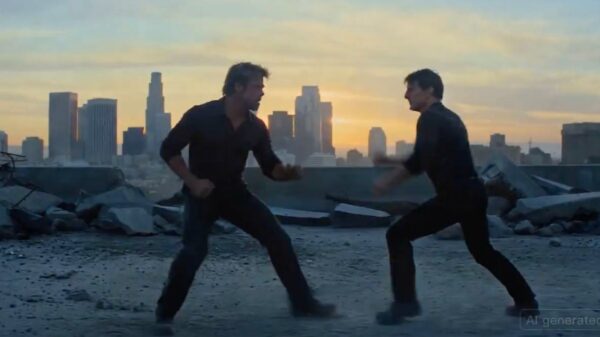
The inaugural World AI Film Festival (WAIFF) took place this week in Cannes, unveiling an ambitious yet surreal vision of cinema fueled by artificial intelligence. The festival showcased a series of AI-generated films featuring bizarre narratives, including characters with fish scales and a heroine with an external heart. The event came just after the 76th Cannes Film Festival, which prohibited AI-generated content from its Palme d’Or competition, insisting that “AI imitates very well but it will never feel deep emotions.”
Despite Cannes’ restrictions, the WAIFF emerged as a significant platform for AI filmmakers and their tech partners amid increasing interest from Hollywood studios. Many entries diverged sharply from the glamorous associations of Cannes, presenting themes that ranged from existential musings to dystopian landscapes reflective of contemporary anxieties surrounding AI. Some films even skirted the contentious issue of copyright, one short film featuring characters strikingly similar to Aardman Animation’s Wallace and Gromit, which raised eyebrows and prompted critical remarks from prominent filmmakers.
Festival organizers acknowledged the “strong resemblance to an existing work” and opted against awarding or screening the film, affirming their commitment to respecting copyright. This incident underscores the concern that the AI models generating these films have been trained on vast datasets of human-created content, leading to calls for compensation and consent from the artists whose work has informed AI learning.
The WAIFF was characterized by its raw and experimental nature, drawing comparisons to the earliest days of cinema in 1895. As AI technology continues to evolve, Hollywood players are exploring its potential to create multiple lower-budget films rather than investing heavily in a single high-cost project. Joanna Popper, a Los Angeles film and tech executive and judge at the festival, noted that studios like Paramount, under David Ellison, recognize AI’s transformative potential for their business models.
However, the films presented at WAIFF often reflected a disconnect between technical prowess and narrative depth. Many featured AI-generated actors lacking in comedic timing, leading to an experience that some attendees found baffling. From peculiar scenarios involving laundry machines to surreal depictions of historical figures, the presentations frequently prioritized hyper-realistic visuals over coherent storytelling. One notable trend involved photorealistic animals in human scenarios, which left some viewers questioning the creative direction.
The festival slogan, “New waves of creation,” could have been better summarized as “Just because you can, doesn’t mean you should.” Many of the filmmakers were relatively unknown, leveraging AI’s capabilities for lower-budget productions. A poignant short film by 22-year-old Dario Cirrincione demonstrated how AI can express complex themes like dementia effectively, costing him €500 compared to conventional special effects that would have reached €20,000.
Prominent figures such as Gong Li and Mathieu Kassovitz attended, expressing a mix of curiosity and caution regarding AI’s evolving role in cinema. Kassovitz, who plans to use AI for his next feature, articulated the duality of embracing technological advancements while protecting artistic integrity. He stated, “Fuck copyright” when asked about AI’s impact on intellectual property but also expressed a willingness to pursue legal action if AI misuses his work.
Gong, serving as the festival president, reflected a broader apprehension about the future of AI cinema, commenting: “AI can be controversial. But it can also open new ways to imagine stories. Let’s explore this together.” The festival’s opening ceremony featured an 80-piece human orchestra performing Ravel’s Boléro, a reminder of the enduring value of human artistry in a landscape increasingly influenced by technology.
Despite the growing investment in AI within mainstream cinema, next month’s Cannes Film Festival will maintain its ban on AI films in competition. Iris Knobloc, its president, reiterated that “a film is not an assembly of data; it is a personal vision” shaped by human experiences. Marco Landi, the WAIFF founder and former Apple executive, cautioned traditional filmmakers to adapt, stating: “You have two solutions: stay there and the wave will destroy you or you start to ask what can I do with this wave.”
See also AI Agents Expand Software Engineering Beyond Code, New Research Reveals
 DeepSeek Launches 1.6 Trillion Parameter V4 Model on Huawei Chips Amid U.S. IP Theft Claims
 Amkor Stock Soars 7%, Elevating Q1 Earnings Expectations Amid AI Packaging Demand
 Japan’s Draft AI IP Code Risks Regulatory Misalignment with US Innovation Goals
 Micron and Amazon Positioned for Growth Amid $34B AI Revenue Surge