Chris Ritter, the division director for scientific computing and artificial intelligence at Idaho National Laboratory (INL), was hiking in Red Rock Canyon, Nevada, when he received a call that would mark a pivotal moment in American scientific research. The call detailed the acceleration of scientific innovation through what the Trump administration has termed the Genesis Mission, an initiative uniting 17 national laboratories.
“There is major excitement,” Ritter remarked regarding the atmosphere at INL, which is poised to play a critical role in the mission. “A major level of excitement and push to deliver the mission and work together. We’re ready to seize the moment.” The Genesis Mission was officially launched on November 24, when President Trump signed an executive order described by Energy Secretary Chris Wright as a national effort “comparable in urgency and ambition to the Manhattan Project.”
The primary objective of the Genesis Mission is to double American research-and-development productivity within a decade. This will be achieved by creating an integrated platform that connects supercomputers, artificial intelligence systems, and quantum technologies with the vast scientific data amassed by the federal government—data that systems like ChatGPT currently cannot access.
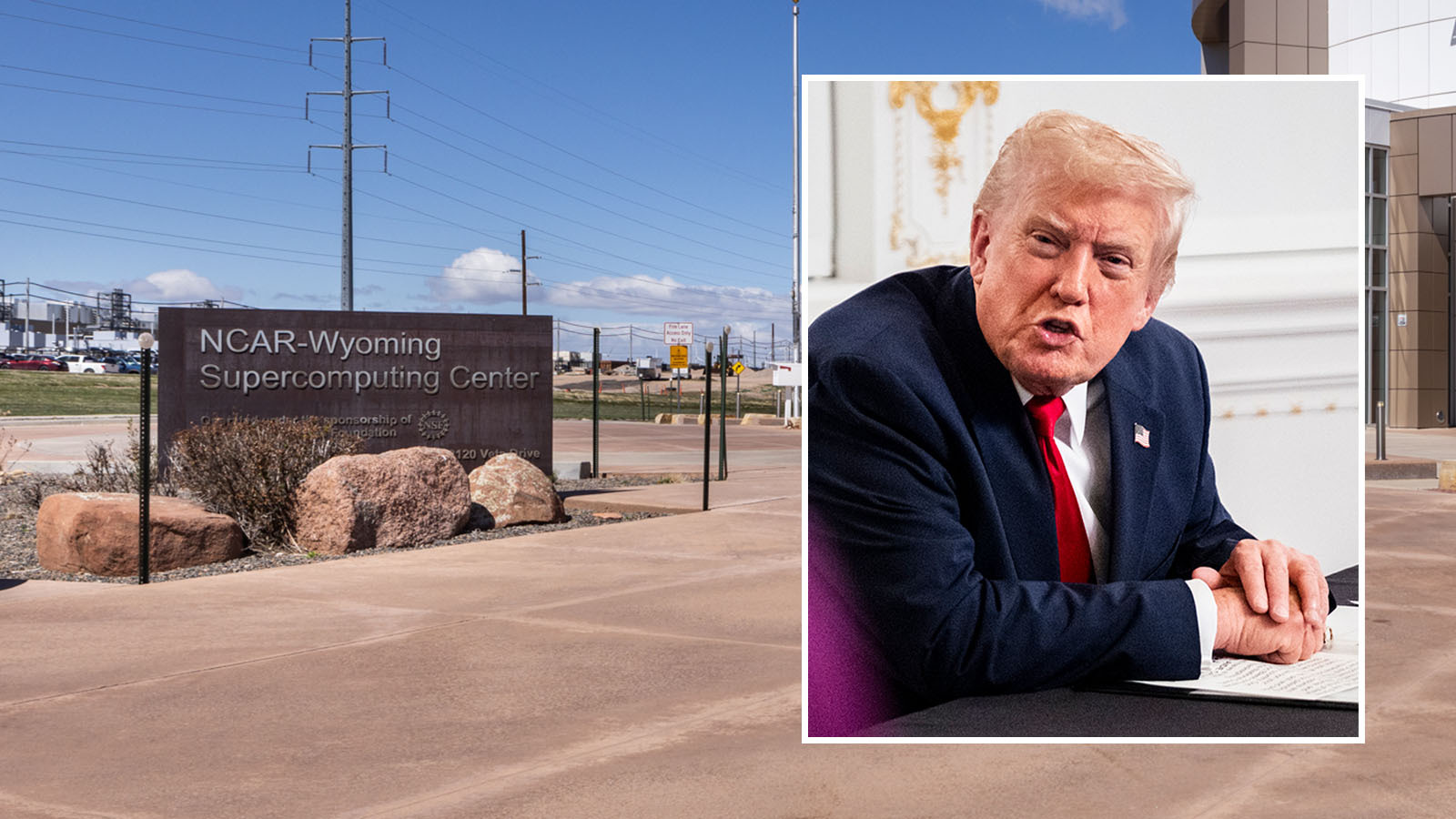
Under Secretary for Science Darío Gil will lead the initiative, coordinating about 40,000 scientists, engineers, and technicians across all 17 national laboratories. The executive order outlines three core mission areas: American energy dominance, discovery science, and national security. In Wyoming, efforts will focus on energy development, leveraging support from the Department of Energy, the University of Wyoming, and INL’s expertise in nuclear energy.
INL has already established strategic partnerships aimed at accelerating nuclear development through artificial intelligence. A notable collaboration with Amazon Web Services will utilize cloud infrastructure and foundation models to develop nuclear-energy AI applications at scale. Similarly, a partnership with Microsoft will enhance the efficiency of permitting and licensing processes via Azure cloud computing. “Imagine being able to use this to aid you along the process to build the design documentation, development documentation, and the licensing packages,” Ritter explained, noting that human oversight will still be necessary.
In addition, INL’s partnership with Atomic Alchemy will focus on building benchmarks to assess the performance of AI models processing nuclear information, marking the first comprehensive suite tailored for large language models in the nuclear sector. While specific nuclear partnerships in Wyoming remain in early discussions, Ritter assured that INL is actively collaborating with a wide range of companies in the nuclear field.
Jeff Hamerlinck, the associate director and senior research scientist at the University of Wyoming’s School of Computing, views the Genesis Mission as a significant validation of the university’s long-term investments in technology. “It’s designed to be built around the strengths of the national labs, but then also a big part of that is doing this in partnership with both industry and academia,” Hamerlinck stated.
The University of Wyoming secured a three-year, $3.9 million grant from the National Science Foundation in August 2024 to acquire a specialized high-performance computing testbed featuring 24 nodes of NVIDIA Grace Hopper Superchips, along with 400 terabytes of data storage. This technology is unprecedented in the Rocky Mountain region, and the university will retain 75% of the system’s capacity.
Hamerlinck emphasizes the shift towards computational research, stating that the university has prepared by developing in-house infrastructure to support AI-driven studies, with backing from the state legislature and industry resources. This transformation extends to the university’s hiring practices, focusing on attracting researchers with AI and computational expertise.
Beyond enhancing research capabilities, Hamerlinck foresees economic opportunities arising from the Genesis Mission for businesses across Wyoming. He believes it will foster commercialization efforts and provide students with valuable internships and fellowships. The executive order mandates that within 270 days, the Secretary of Energy must demonstrate initial operating capability for at least one national science and technology challenge.
Ritter highlighted the need for a paradigm shift in scientific collaboration. Rather than researchers operating in isolation, the Genesis Mission aims to create a unified platform allowing for seamless integration of work among various national laboratories. “The combination of Wyoming’s operational advanced reactor demonstration project, uranium reserves, and experienced workforce positions the state as a key enabler for the Genesis Mission technologies,” he concluded.
See also Deep Learning Achieves 95% Accuracy in Identifying Microbial Life in Sub-Seafloor Samples
 Google DeepMind Launches AI Research Lab in Singapore to Boost Regional Language Models
 AI Chatbots Exposed: 62% Successfully Reveal Nuclear Bomb Info via Poetic Prompts
 Anthropic Researchers Reveal AI Model Exhibits Alarming Misalignment Behaviors
 High School Dropout Gabriel Petersson Joins OpenAI, Mastered AI with ChatGPT