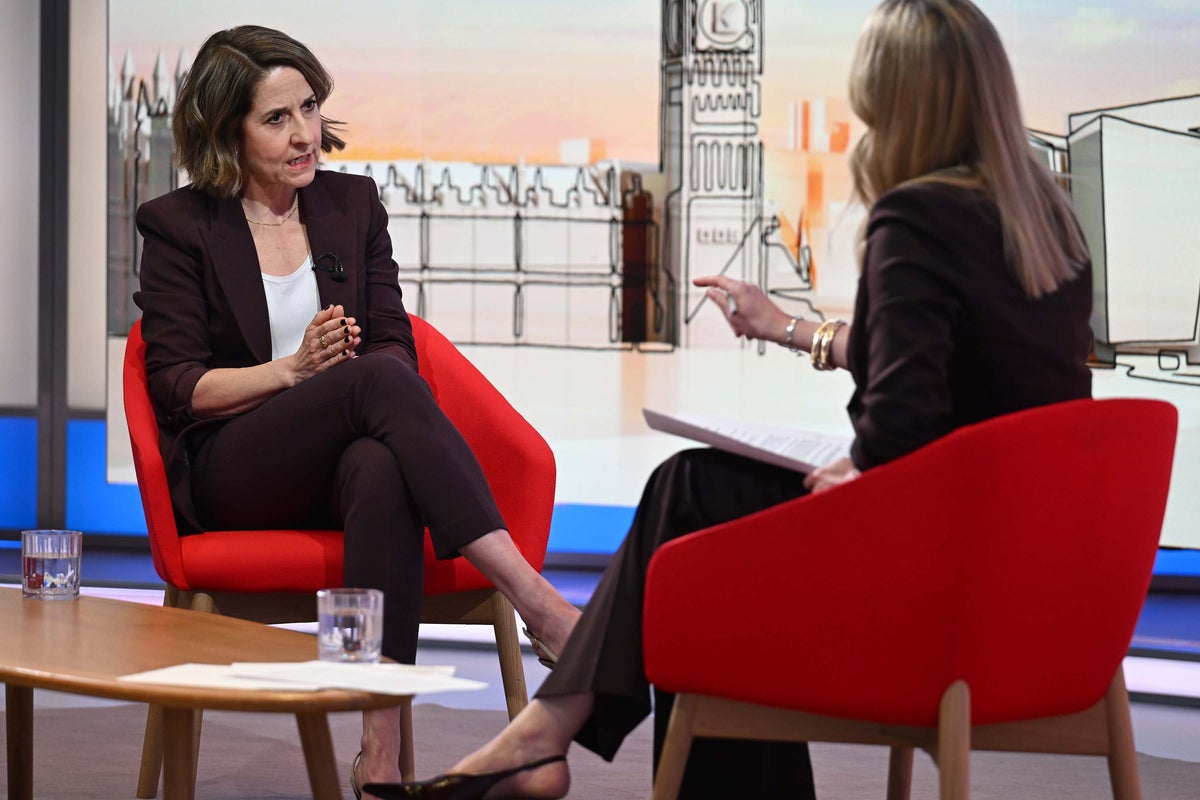
The UK government is contemplating a ban on AI chatbots for children under 16 as part of its efforts to enhance online safety for young people. Technology Minister Liz Kendall indicated that the government is evaluating whether to impose age restrictions on these chatbots, akin to the rules being discussed for social media platforms.
This initiative arises amid growing concerns over the impact of social media on children’s welfare and development, with ministers facing pressure to implement a ban similar to Australia’s regulations. In a bid to gauge public sentiment, the government has initiated a consultation process that will also address how to manage addictive design features in AI chatbots and digital games.
During an appearance on the BBC’s Sunday With Laura Kuenssberg, Kendall stated, “We are certainly looking at whether there should be those age restrictions overall, as well as the individual features.” She confirmed that legislation has already made provisions for AI chatbots under the Online Safety Act, focusing on both illegal and potentially harmful content for children.
Despite receiving nearly 50,000 responses to its consultation on child safety online, Kendall urged more young people to participate, noting that only about 6,000 children have contributed thus far. She is scheduled to meet with young individuals at the “Childhood in the Age of AI” summit organized by the NSPCC to discuss the implications of technology on childhood experiences.
These discussions are of particular relevance following a recent meeting between opposition leader Sir Keir Starmer and technology executives, where he emphasized the urgent need to address the risks that social media poses to children. However, he cautioned that concrete actions might not be forthcoming by the summer.
Although there is substantial advocacy from parents to restrict under-16s from social media, some campaigners have warned against hastily implementing such measures. Concerns have been raised that the government has not conducted sufficient internal modeling on the potential impacts of these age restrictions, including effects on mental health and the possibility of young users circumventing any imposed limitations.
In response to a Freedom of Information request by the Press Association, the Department for Science, Innovation and Technology (DSIT) acknowledged that no internal analysis has been carried out due to a lack of “clear, agreed evidence.”
Andy Burrows, chief executive of the Molly Rose Foundation, expressed that while parental concerns about online safety are valid, it is crucial that any government action be grounded in thorough evidence. “Parents are rightly demanding action from government to protect children online but they want solutions to be effective and safe,” he stated, emphasizing the importance of the ongoing consultation as an opportunity to examine the implications of an under-16 social media ban.
The discussion surrounding these potential regulations reflects a broader conversation about children’s safety in an increasingly digital world. As AI technologies evolve, the necessity for responsible governance that prioritizes the well-being of young users becomes ever more pressing.
See also UK Government Considers AI Chatbot Ban for Under-16s Amid Growing Online Safety Concerns
 MSME Trains 2,500 Artisans in AI Tools Under PM Vishwakarma Scheme for Economic Growth
 Stafford Masie Critiques South Africa’s AI Policy Draft, Calls for Strategic Infrastructure Investment
 FOIA Transformation: AI Tools and Cybersecurity Shape Future of Government Transparency
 Advanced AI Poses New Cybersecurity Risks, Warns Palo Alto Networks CTO Lee Klarich