






















































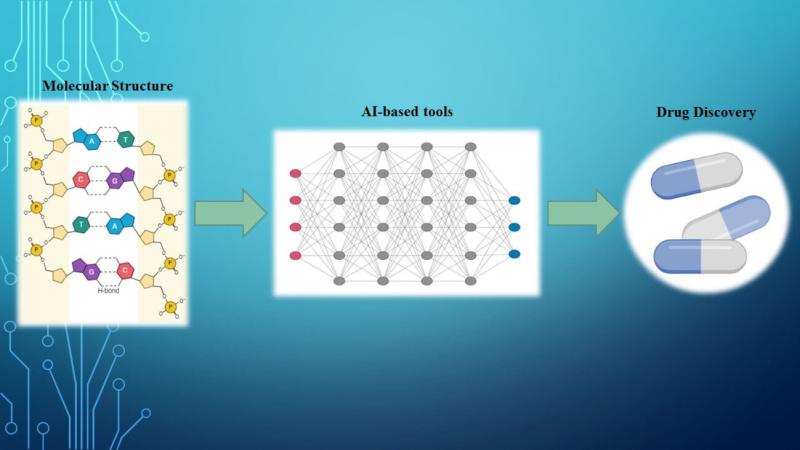
In a rapidly evolving landscape, the Global Artificial Intelligence (AI) in Drug Optimization and Repurposing Market was valued at $450.33 billion in 2024, with projections estimating it could reach $7,874.43 billion by 2030. Over the forecast period from 2025 to 2030, this market is anticipated to grow at a remarkable compound annual growth rate (CAGR) of 43%. The transformative impact of AI is revolutionizing the processes involved in drug optimization and repurposing, significantly enhancing efficiencies in drug discovery.
One of the primary drivers behind this growth is the relentless pursuit of improved efficiency in drug discovery. AI algorithms are uniquely capable of analyzing vast datasets and predicting molecular interactions, which has markedly accelerated the drug development process. The urgency brought about by the COVID-19 pandemic has further underscored the importance of AI in this arena, as the race to develop effective treatments and vaccines has fostered heightened collaboration and investment in AI-driven drug discovery initiatives.
In the short term, the increasing integration of AI technologies by pharmaceutical companies is propelling market expansion. These firms are leveraging AI to streamline their drug discovery pipelines, effectively reducing development costs and expediting the time to market for new therapies. A particular opportunity lies within the realm of personalized medicine, where AI’s capacity to analyze individual patient data could lead to tailored treatment regimens that enhance efficacy while minimizing adverse effects.
The convergence of AI with other disruptive technologies, such as blockchain and machine learning, indicates a notable trend in the industry. This integration is enabling greater data security, interoperability, and predictive analytics, paving the way for unprecedented advancements in drug optimization and repurposing. Such interdisciplinary collaborations are heralding a new era of innovation in healthcare.
Market segmentation reveals several key areas of focus. By therapeutic area, oncology remains the largest segment, driven by extensive AI applications in predicting and automating the diagnosis and treatment of various cancers. These advancements contribute to improved healthcare accuracy and patient outcomes, significantly enhancing life expectancy for cancer patients. In contrast, the fastest-growing segment is focused on infectious diseases, attributed to AI’s role in early detection, treatment strategy optimization, and expediting vaccine development.
Looking at technology, machine learning dominates as the largest segment, employed widely to enhance decision-making in pharmaceutical data analysis. However, deep learning, a subset of machine learning, is rapidly gaining traction due to its ability to handle complex data structures and extract intricate patterns relevant to drug optimization and repurposing.
In terms of offerings, the services segment leads the market, as high demand for accurate and efficient service-based solutions prevails. Companies are increasingly focused on consulting, data analysis, and customized solutions tailored to pharmaceutical needs. This segment is also expected to witness the fastest growth, driven by the rising complexities in drug discovery processes.
The primary end-users of AI in drug optimization and repurposing include biotechnology firms, pharmaceutical companies, and research organizations. The largest segment is dominated by biotechnology and pharmaceutical companies, which benefit from superior funding and collaborative ventures. Research organizations are the fastest-growing segment, fueled by government schemes and initiatives that promote research activities in AI-driven drug optimization.
Regionally, North America holds the largest market share, owing to substantial investments and advanced research infrastructure in the United States and Canada. Conversely, the Asia-Pacific region is identified as the fastest-growing area, driven by regulatory changes, increased funding, and heightened research activities, especially in personalized medicine. China’s emergence as a leader in AI centers further propels the growth potential in this region.
Looking ahead, several trends are shaping the future of the market. Companies are increasingly entering strategic collaborations to leverage complementary expertise and accelerate innovation. This includes partnerships between pharmaceutical companies and AI startups aimed at enhancing drug discovery through advanced algorithms. Moreover, a focus on data integration is critical as companies seek to harness the vast amounts of biomedical data generated today. Utilizing AI and big data analytics, firms can identify novel drug targets and optimize discovery processes effectively.
As companies expand into emerging markets in Asia-Pacific and Latin America, they are establishing local partnerships to capitalize on new opportunities. These strategies underscore the dynamic nature of the AI-driven drug optimization landscape, where global collaboration and innovation are key factors for success.
For more insights into the growing influence of AI in drug optimization and repurposing, visit Virtue Market Research.
See also Motilal Oswal’s Nifty Microcap 250 Fund Achieves 59.36% Return Over 5 Years
 AI Adoption Surges as Companies Shift Focus; Crypto Volatility Signals Market Evolution
 Notre Dame Secures $50.8M Grant to Forge Ethical AI Framework Amid Regulatory Vacuum
 AI Transforms Global Banking: DBS Sees $573M Impact; Akbank and Citi Lead Innovations
 Microsoft and NASA Launch Hydrology Copilot to Enhance Access to Water Risk Data















