






















































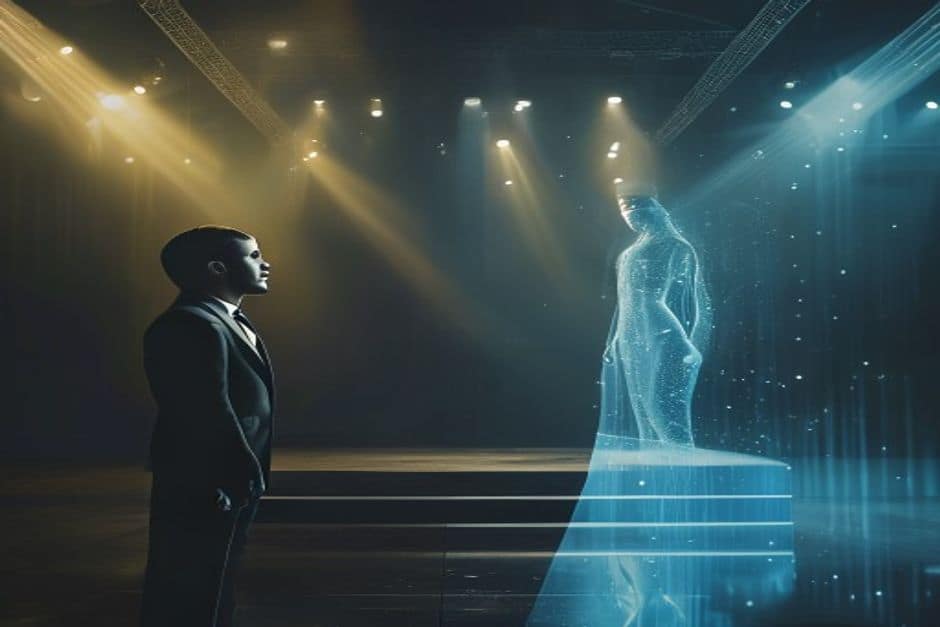
The Academy of Motion Picture Arts and Sciences has formally ruled that **AI-generated performances** and **AI-written work** will not be eligible for Oscars, marking a significant shift in the debate over **creative AI** within the film industry. This decision, reported by outlets including the **BBC** and **Engadget**, moves the conversation from experimentation in studios to a defined institutional standard with real commercial implications. While the ruling addresses the current award season, it underscores a critical delineation in the industry about the boundary where human creativity ends and machine assistance begins.
The Academy’s stance is not a complete ban on AI; rather, it emphasizes that films utilizing AI tools are still eligible as long as the creative authorship remains human. Specifically, works created with the help of AI—like **dubbing and localization platforms** or **visual effects tools**—can compete for Oscars, provided that a human actor or writer has made a substantive contribution. The exclusion arises for synthetic performers generated without human involvement, or scripts produced solely by AI models. This nuanced approach highlights a significant determination regarding the essential nature of human creativity in award-winning films.
The ruling has various implications across the synthetic media landscape. Companies providing AI tools that enhance human creativity are less likely to be impacted, as their offerings are framed as augmentations rather than replacements. This positioning, now supported by the Academy, could bolster their market presence and investor confidence. Conversely, firms developing **synthetic performer technology**—which includes platforms that produce photorealistic AI actors—face a more precarious future. With the exclusion from Oscar eligibility, these products may struggle to penetrate markets that value prestige, potentially limiting their attractiveness to investors.
Startups in the script tool sector are also grappling with the implications of the Academy’s decision. The ruling aligns with the **Writers Guild of America** (WGA) stance, reinforcing the idea that human authorship remains the industry norm, especially in contexts where awards matter. Companies marketing AI writing assistance must clearly position their products as tools for human writers, avoiding any perception that they serve as autonomous creative systems. This clarification is crucial not only for compliance with industry frameworks but also for maintaining a positive reputation in a landscape cautious of AI’s role.
The impact of award eligibility extends beyond artistic recognition; it plays a vital role in shaping investor sentiment towards synthetic media ventures. Productions that garner Academy recognition often set industry standards, attract elite talent, and enhance visibility, all of which contribute to accelerated sales cycles. A synthetic performer or writing tool associated with an Oscar-nominated project possesses a markedly stronger market position than one excluded from such accolades. Thus, the Academy’s ruling may recalibrate how investors assess the growth potential of these companies.
Despite the ruling, it would be misleading to interpret this as an outright rejection of AI in film production. Significant adoption of AI tools is occurring outside the realm of award-seeking films, particularly in **streaming content**, **advertising**, and **gaming cinematics**. These segments represent a far larger market in terms of production volume than films vying for Academy accolades. Synthetic media companies that clearly target these markets, rather than relying on the hope of entering prestigious film circles, are likely to find more fertile ground for growth.
Looking ahead, a pivotal question remains: will the Academy’s standards hold as technology evolves and younger audiences become less attached to the notion of human performance as a prerequisite? Historical precedent shows that standards set by traditional institutions can change as the market advances. The film industry took considerable time to acknowledge the contributions of **special effects**, **animation**, and **documentary filmmaking** as deserving of institutional respect. This ruling represents a moment in an ongoing negotiation within the industry, not a final verdict. It sheds light on where institutional resistance currently lies and offers a roadmap for startups and investors navigating this complex landscape.
Also read: Apple Got Caught Using Anthropic’s Claude and the Internet Had a Field Day • The GUARD Act just passed committee and mandatory ID verification for AI chatbots could reshape the entire consumer AI industry • A lawsuit over AI-generated porn built from Instagram feeds is about to force the synthetic media industry to confront consent.
See also OpenAI Launches GPT Image 2, Surpassing Google Nano Banana 2 in Key Categories
 Google Prepares Omni Model for Gemini Video Generation Ahead of I/O 2026
 Nvidia Expands Partnerships with Asian Firms, Boosting AI Chip Demand by 90%
 AI Achieves 85% Accuracy in Predicting Mental Health Treatment Success, Paving Way for Precision Psychiatry
 Sam Altman Praises ChatGPT for Improved Em Dash Handling















