A marketing automation company, ACME.BOT, recently posited that traditional search engine optimization (SEO) practices have become mere entry requirements rather than competitive advantages, particularly in a landscape increasingly dominated by large language models (LLMs). In a blog post published on May 1, 2026, the company, led by founder Iyer, references remarks from Google’s Senior Search Analyst John Mueller to argue that the basic elements of on-page SEO—such as title tags, H1 headings, and meta descriptions—are no longer sufficient to distinguish one website from another.
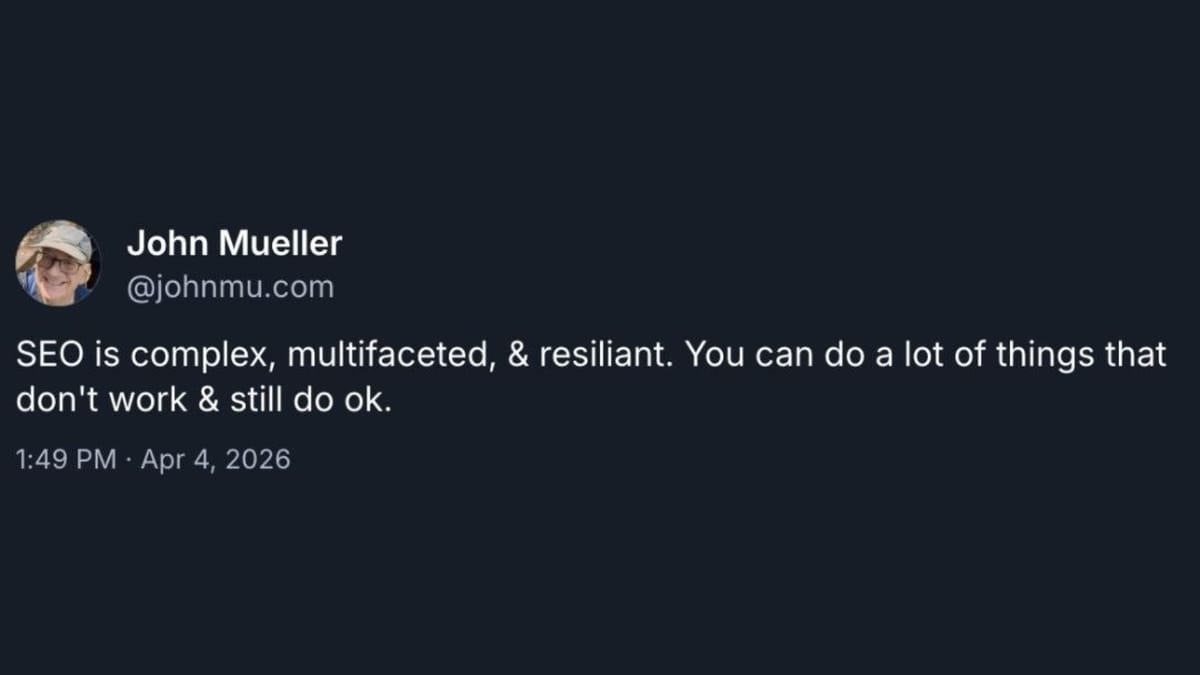
The crux of ACME.BOT’s argument is that standard SEO practices are so universally adopted that they fail to explain variations in site rankings. Mueller is quoted as saying, “SEO is complex, multifaceted, & resilient. You can do a lot of things that don’t work & still do ok.” This implies that even imperfect execution of basic optimization tasks may not inhibit a site’s ability to rank adequately; however, it also indicates a need for more than just basic compliance to achieve top positions.
According to the blog, if the execution of basic SEO is forgiving enough for “half-measures” to suffice, then the checklist itself does not provide a competitive edge. Instead, the focus must shift toward what occurs after these fundamental tasks are completed. The article emphasizes that with most competitors achieving baseline technical compliance—including clean URL structures and optimized metadata—merely meeting these criteria will not enhance a site’s relative standing.
One striking statistic presented in the post suggests that over 90% of content generated by LLMs for non-branded queries comes from third-party sources. This statistic underscores a pivotal shift in content discovery dynamics, indicating that brands and publishers must consider not just their own rankings but also the sources and types of content that AI systems are leveraging. In a landscape where information is increasingly retrieved from AI platforms rather than traditional clicks to websites, the selection of these sources carries considerable weight.
The blog aligns with ongoing research from PPC Land, which recently noted that independent citation patterns of AI systems are unaffected by publishers’ access controls. A study conducted by BuzzStream in March 2026 revealed that around 70.6% of sites blocking live retrieval bots from ChatGPT still appeared in AI citations. This suggests that the routes to AI visibility rely more on content quality and authority than on technical configurations alone.
The commercial implications of these trends are significant. A report from HubSpot revealed on April 14, 2026, that organic traffic for its clients had plummeted by 27% year-over-year, attributing the decline to AI platforms intercepting user queries. This revelation highlights the urgency for brands to adapt their content strategies to remain competitive in an evolving digital landscape.
In discussing Mueller’s insights, ACME.BOT references his April 4, 2026, post, where he discussed the multifaceted nature of SEO. His previous observations, including a December 2025 endorsement of a piece describing SEO-driven content as “digital mulch,” reflect a broader industry shift away from optimization mechanics towards content that engages readers meaningfully. Mueller has frequently challenged the SEO community to reassess metrics that are traditionally deemed crucial, suggesting that the most labor-intensive optimization activities often yield the least impact on rankings.
The ACME.BOT analysis promotes the concept of topical authority as the new differentiator in the digital marketing landscape. This authority is defined not by superficial coverage of a topic but by a deeper, interconnected expertise that can be recognized by AI systems and search engines. The post argues that this form of authoritative content is less about quantity and more about quality, emphasizing the importance of original research and interconnectedness in content creation.
In terms of practical implications, the post suggests that publishers should prioritize producing rich, authoritative content instead of focusing solely on checklist metrics. Notably, a February 2026 report from PPC Land noted that citation sets could change significantly month to month, making frequent, high-quality content production more valuable than sporadic publishing efforts. This observation aligns with ACME.BOT’s call for sustained, interconnected content development.
However, the post also introduces a potentially controversial stance on automation, suggesting it can enable teams to produce the depth of content necessary for success in this new environment. While Mueller has cautioned against the risks posed by automated content generation, ACME.BOT frames automation as a means to liberate human resources for more substantive creative endeavors. This distinction raises questions about the balance between leveraging technology and maintaining content integrity.
As the digital marketing landscape continues to evolve, the ACME.BOT post signifies a critical transition in SEO paradigms—from a checklist approach that focuses on technical compliance to an authority-driven model that prioritizes content quality and engagement. For marketers, the takeaway is clear: while technical SEO remains essential, it has become a baseline condition rather than a distinguishing factor. The future will hinge on producing original, interconnected content that resonates with audiences and earns citations within AI-mediated search environments.
See also Ndovesha AI Launches All-in-One Platform for Marketing and Content Automation
 AI Content Repurposer Launches in 2026, Promising 10x Content Output Efficiency
 BusySeed Launches Rankxa to Measure Brand Visibility in AI-Generated Search Results
 Enhance Your Website”s Clarity for AI Understanding and User Engagement
 FoloToy Halts Sales of AI Teddy Bear After Disturbing Child Interactions Found