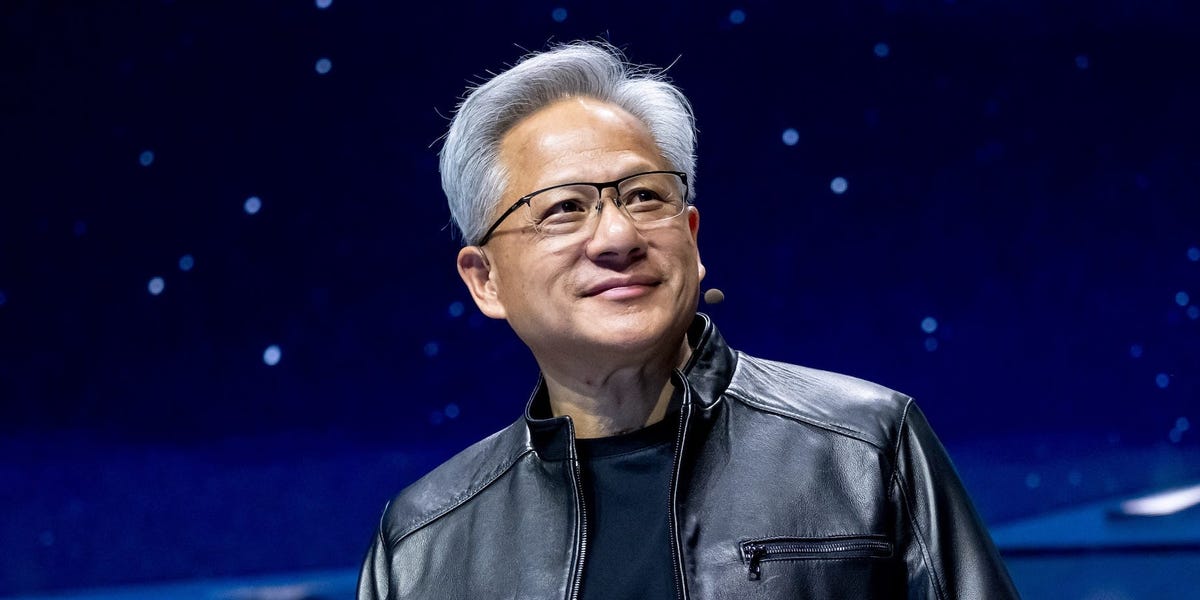
Nvidia CEO Jensen Huang expressed his frustration with exaggerated claims surrounding artificial intelligence (AI) during an appearance on the “Memos to the President” podcast on Thursday. Huang emphasized the importance of measured discourse among industry leaders, warning that sensationalized remarks could mislead the public and policymakers about the technology’s impact.
During the discussion, Huang referred to predictions made by Anthropic CEO Dario Amodei, who suggested that AI might replace 50% of entry-level white-collar jobs in the near future. “These kinds of comments are not helpful,” Huang stated. “They’re made by people who are like me — CEOs. Somehow, because they became CEOs, you adopt a God complex and, before you know it, you know everything.” He called for a more fact-based dialogue about AI’s capabilities and implications.
Huang also took aim at alarmist assertions regarding the potential dangers of AI. He dismissed claims that AI poses an existential threat to humanity. “Saying nonsensical things, which are not going to happen, that this is an existential threat to humanity, there’s 20% chance that it’s existential. That’s ridiculous,” he argued, likely referencing comments made by Elon Musk during a February appearance on “The Joe Rogan” podcast, where Musk suggested that humans face a “20% chance of annihilation” due to AI.
Despite the widespread integration of AI into various sectors of the economy, the long-term effects of the technology on jobs and society remain uncertain. Advocates assert that AI has the potential to enhance efficiency, create new employment opportunities, and address societal challenges. Conversely, skeptics fear it could lead to widespread job displacement and increased isolation among individuals, potentially resulting in catastrophic consequences.
The tension surrounding AI’s transformative potential is exemplified by the recently coined term “Saaspocalypse.” This concept posited that AI could usher in a downturn for the once-thriving software-as-a-service sector. However, recent earnings reports from major companies like Atlassian, Twilio, and Five9, which all delivered strong financial results on Thursday, have challenged this narrative, suggesting that the SaaS industry may be more resilient than previously thought.
As AI continues to evolve and permeate different facets of life and work, the dialogue initiated by leaders like Huang will be crucial in shaping public understanding and policy responses. With the potential for both significant advancement and notable disruption, the tech industry finds itself at a pivotal juncture, underscoring the need for a balanced and informed approach to the future of AI.
See also Cognizant Announces Layoffs Amid AI-Driven Workforce Restructuring, Sees 6,000 New Hires
 Red Hat Reveals Small Language Models as Key to Scaling Enterprise AI Agents
 Bank of America Warns of Wage Concerns Amid AI Spending Surge
 OpenAI Restructures Amid Record Losses, Eyes 2030 Vision
 Global Spending on AI Data Centers Surpasses Oil Investments in 2025