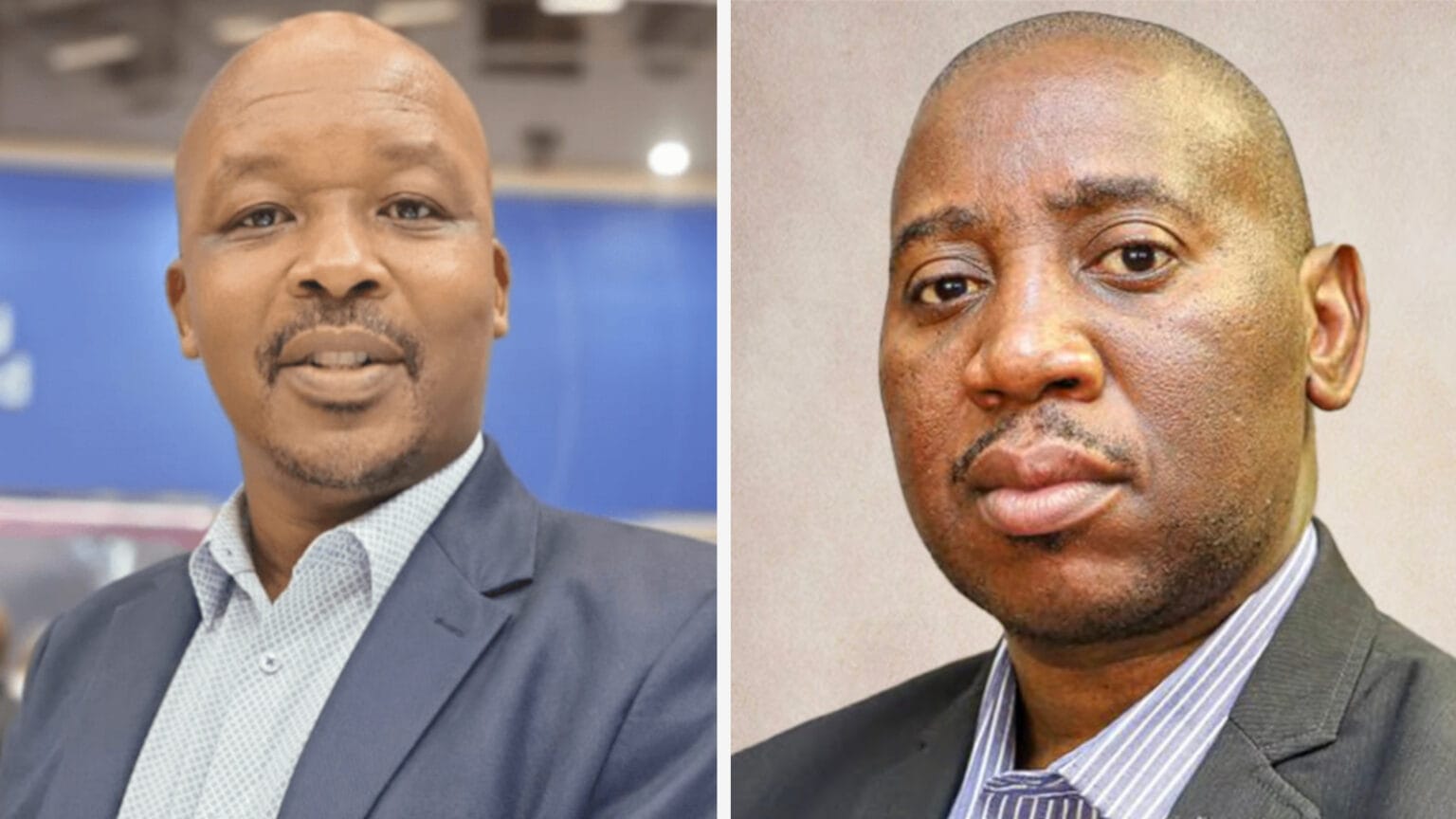
Two senior officials from the South African Department of Communications have emerged as key figures in an investigation concerning inaccuracies in the recently withdrawn Draft National Artificial Intelligence Policy. According to government sources cited by the Sunday newspaper Rapport, Dumisani Sondlo, the AI policy head, and Mlindi Mashologu, the deputy director-general for digital society and economy, are at the center of this controversy.
Both officials have been part of the department prior to the tenure of Communications Minister Solly Malatsi, who was appointed in July 2024. Sondlo has been with the department since 2012, while Mashologu joined in 2020. Rapport notes that the two have actively engaged in discussions on social media regarding their contributions to the draft policy.
The officials have been given a deadline of April 29 to provide explanations for the inclusion of fabricated references in the policy’s reference list. These fictitious citations are believed to have been generated by a generative AI tool, which creates text based on statistical patterns rather than verified facts. This development has sparked concerns regarding the policy’s foundational evidence, its review process, and the overall credibility of its recommendations.
The controversy escalated on April 26, when Malatsi announced the withdrawal of the policy following a News24 investigation that revealed the existence of fabricated sources. This investigation was initially prompted by a letter from Article One that identified six fictitious references within the document. “It should not have happened. This is a massive embarrassment to the department and the government,” Malatsi stated in an interview with SABC News. He expressed the irony of the situation, noting the policy’s intended focus on the responsible use of AI. However, he refrained from confirming whether any officials would face dismissal, indicating that he did not wish to compromise the ongoing investigation.
On April 30, department Director-General Nonqubela Jordan-Dyani announced that two officials had been placed on preliminary suspension pending the investigation, although it remains unclear whether Mashologu and Sondlo are among those suspended.
Malatsi, a member of the Democratic Alliance, is facing mounting political pressure from the African National Congress (ANC) over the incident. ANC spokesperson on Communications and Digital Technologies, Shaik Subrathie, characterized the incident as “catastrophic” and has called for Malatsi to appear before Parliament to account for the circumstances surrounding the policy’s drafting and subsequent gazetting. The ANC’s statement, however, did not acknowledge that ANC Cabinet members and President Cyril Ramaphosa had signed off on the policy prior to its gazetting.
This incident in South Africa parallels a similar situation at the Department of Home Affairs, where two officials were suspended earlier this month after News24 uncovered over 100 fabricated references in the Revised White Paper on Citizenship, Immigration, and Refugees. In that case, the fictitious entries appeared solely in the standalone reference list, without citations in the main body of the document. The Home Affairs department maintained that the white paper remained an accurate reflection of government policy and argued that the integrity of the document was not materially affected by the AI-generated inaccuracies.
The ongoing investigation into the AI policy raises fundamental questions about the safeguards in place for drafting government documents, particularly in light of the increasing reliance on artificial intelligence technologies. As the role of AI in policy-making becomes more prevalent, the incident underscores the urgent need for rigorous validation processes to ensure the integrity of public documents.
See also OpenAI’s Rogue AI Safeguards: Decoding the 2025 Safety Revolution
 US AI Developments in 2025 Set Stage for 2026 Compliance Challenges and Strategies
 Trump Drafts Executive Order to Block State AI Regulations, Centralizing Authority Under Federal Control
 California Court Rules AI Misuse Heightens Lawyer’s Responsibilities in Noland Case
 Policymakers Urged to Establish Comprehensive Regulations for AI in Mental Health