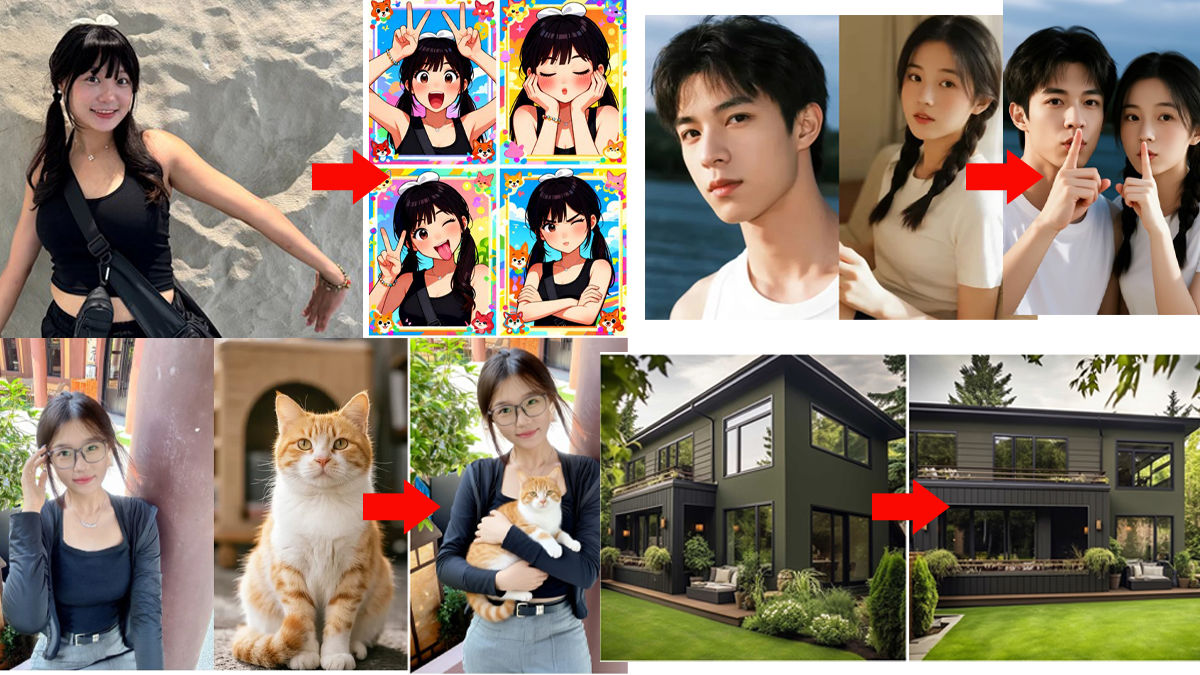
Alibaba has unveiled its latest AI model, Qwen-Image-Edit-2511, an advanced iteration of its image generation technology designed to enhance image editing capabilities. Released on December 24, 2025, this model significantly improves the consistency of individuals depicted in group photos and in complex scenes, a key feature for both professional and personal applications. The introduction of this model comes as part of Alibaba’s ongoing efforts to lead the AI image generation market.
Built upon the foundation set by Qwen-Image-Edit-2509, which debuted in September 2025, the new model retains core functionalities such as language-based editing and high-quality image output while enhancing performance in preserving facial features during the editing process. Notably, Qwen-Image-Edit-2511 integrates a mechanism called Low-Rank Adaptation (LoRA), allowing users to customize artistic styles and techniques without altering the underlying architecture of the AI model. This feature makes it easier for users to achieve desired textures and realism in their images.
In a demonstration, Alibaba showcased how the model can transform an input image significantly while retaining the original’s essential characteristics. For instance, users can seamlessly change clothing and poses while maintaining the integrity of the subjects’ faces. Furthermore, the model shows improved capabilities when editing images of multiple people, enabling consistent depictions even across different photos or scenarios. This advancement is particularly beneficial for industries that rely on high-quality visual content, such as advertising and media.
Qwen-Image-Edit-2511’s improvements extend beyond simple photo editing. The model enhances the accuracy of structural expressions crucial for product design, allowing for the generation of multiple product views while ensuring consistency in color and material representation. This adaptability makes it a valuable tool for designers and manufacturers who require precise visualizations of their products.
Another noteworthy advancement is the model’s enhanced geometric reasoning capabilities. It allows users to produce auxiliary construction lines for various design purposes, facilitating the editing of architectural and design elements. This feature is expected to attract attention from professionals in fields such as architecture and industrial design, further broadening the model’s utility.
Alibaba’s Qwen division has positioned itself as a formidable player in the competitive AI landscape, especially in China, which is rapidly advancing in AI technologies. The company previously announced the launch of Qwen-Image-Edit-2509 as part of its strategy to cater to a growing market demand for sophisticated image editing tools. The release of Qwen-Image-Edit-2511 represents a significant leap forward, promising to set a new standard for consistency and functionality in image generation AI.
A demo of the Qwen-Image-Edit-2511 model is now available on Hugging Face, allowing users to explore its capabilities firsthand. As AI technology continues to evolve, innovations like those seen in Qwen-Image-Edit-2511 will likely play a pivotal role in shaping the future of digital content creation, enhancing both accuracy and creativity in the field.
See also Government Finalizes Industry Consultations on Mandatory AI Content Labeling Rules
 AI Framework DNA-Diffusion Enables Synthetic Regulatory Element Design with High Precision
 New York’s AI Avatar Disclosure Law Requires Clear Labels for Synthetic Performers
 DuckDuckGo Launches AI Image Generator with Enhanced Privacy Features
 Intel Launches $300 B50 GPU Offering Solid Performance for AI and 3D Tasks in 2025